Question
Give the various functions of brain.

Answer

  1. The brain receives information carrying nerve impulses from all the sensory organs of the body.
  2. It responds to the impulses brought in by sensory organs by sending its own instructions through motor nerves to the muscles and glands causing them to function accordingly.
  3. It correlates the various stimuli from different sense organs and produces the most appropriate and intelligent response.
  4. It coordinates the body activities so that the mechanisms and chemical reactions of the body work together efficiently.
  5. It stores information so that behavior can be modified according to the past experience.

Need a full question paper?

Generate a complete, print-ready paper with questions like this in minutes — across 16+ boards, with answer keys.
Start Generating Free

Similar questions

explain the various effects of the disaster of railway accident.
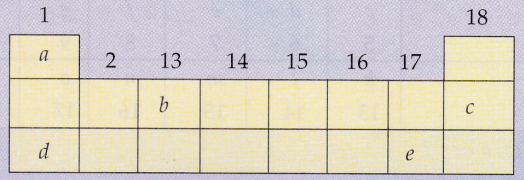
The following diagram shows a part of the periodic table containing first three periods in which five elements have been represented by the letters a, b, c, d and e (which are not their chemical symbols):
  1. Select the letter which represents an alkali metal.
  2. Select the letter which represents a noble gas.
  3. Select the letter which represents a halogen.
  4. What type of bond is formed between a and e?
  5. What type of bond is formed between d and e?
Which precautions will you take during spraying of pesticides?
Describe the merits of Mendeleev’s periodic table?
Why does menstruation occur? Describe the menstrual cycle in human females (or women).
What are the scientific names for the following receptors in animals?
  1. Receptors for light.
  2. Receptors for heat.
  3. Receptors for sound.
  4. Receptors for smell.
  5. Receptors for taste.
Write the various steps involved in the sexual reproduction in plants.
Write a short note on slow speed and fast speed reactions.
Write a note on Salam Mumbai Foundation.
When a black metal compound $XO$ is heated with a colourless gas $Y_2,$ then metal $X$ and another compound $Y_2O$ are formed. Metal $X$ is red-brown in colour which does not react with dilute acids at all. Gas $Y_2$ can be prepared by the action of a dilute acid on any active metal. The compound $Y_2O$ is a liquid at room temperature which can turn anhydrous copper sulphate blue.
  1. What do you think is metal $X?$
  2. What could be gas $Y_2?$
  3. What is compound $XO?$
  4. What is compound $Y_2O?$
  5. Write the chemical equation of the reaction which takes place on heating $XO$ with $Y_2.$
  6. What type of chemical reaction is illustrated in the above equation?