Question
How are sol, solution and suspension different from each other?

Answer

Property Sol Solution Suspension
Nature Heterogenous Homogenous Heterogenous
Particle size $10^{-7}-10^{-5}cm$ Less than 1nm More than $100\ nm$
Stability Quite stable Very stable Unstable
Tyndall effect yes no yes/no
Appearance Generally clear clear opaque
visibility Visible with an ultra microscope Not visible Visible with naked eye
Diffusion Diffuses very slowly Diffuses rapidly Do not diffuse
Settling Get settled in centrifugation Do not settle Settle on their own
Example Milk, blood, smoke Salt and sugar in water Sand in water, dusty air

Need a full question paper?

Generate a complete, print-ready paper with questions like this in minutes — across 16+ boards, with answer keys.

Start Generating Free

Similar questions

An element $X$ forms the following compounds with hydrogen, carbon and oxygen:
$H_2X, CX_2, XO_2, XO_3$
Double Matching:Match the columns I, II and III.
 
Column I
 
Column II
 
Column III
1.
Oil seeds
a.
Red Sindhi
i.
Sahiwal
2.
Intercropping
b.
Mustard
ii.
Sunflower
3.
Local breeds
c.
Vitamin A
iii.
Maize
4.
Poultry feed
d.
Soybean
iv.
Vitamin K
Explain what will happen if in a cultivated field only manures are supplied and in another field only fertilizers are supplied, keeping all other conditions similar.
A boy of mass $50\ kg$ running at $5m/s$ jumps on to a $20\ kg$ trolley travelling in the same direction at $1.5m/s$. What is their common velocity?
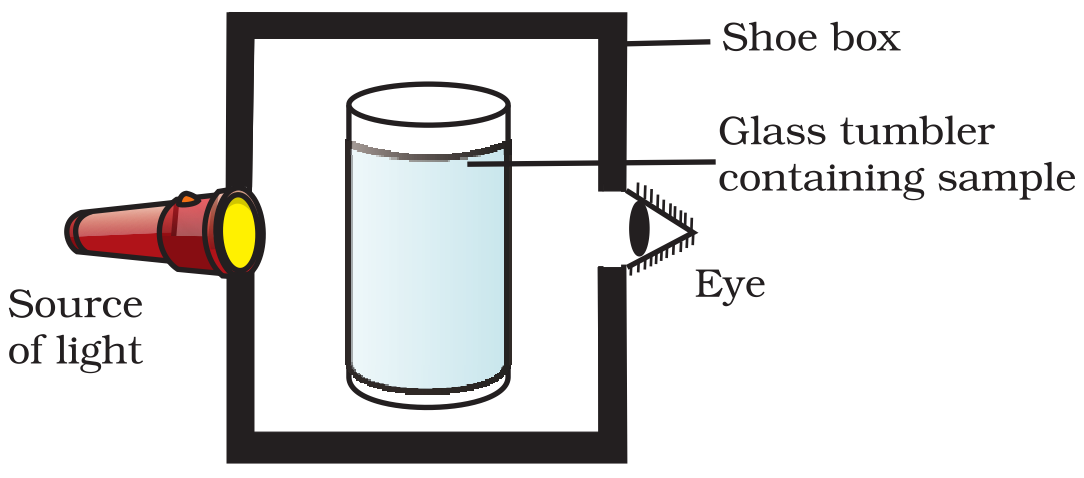
A group of students took an old shoe box and covered it with a black paper from all sides. They fixed a source of light $($a torch$)$ at one end of the box by making a hole in it and made another hole on the other side to view the light. They placed a milk sample contained in a beaker/ tumbler in the box as shown in the they were amazed to see that milk taken in the tumbler was illuminated. They tried the same activity by taking a salt solution but found that light simply passed through it?
  1. Explain why the milk sample was illuminated. Name the phenomenon involved.
  2. Same results were not observed with a salt solution. Explain.
  3. Can you suggest two more solutions which would show the same effect as shown by the milk solution?

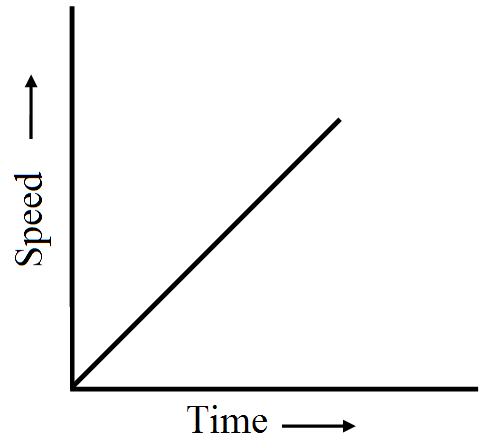
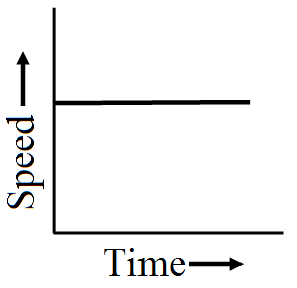
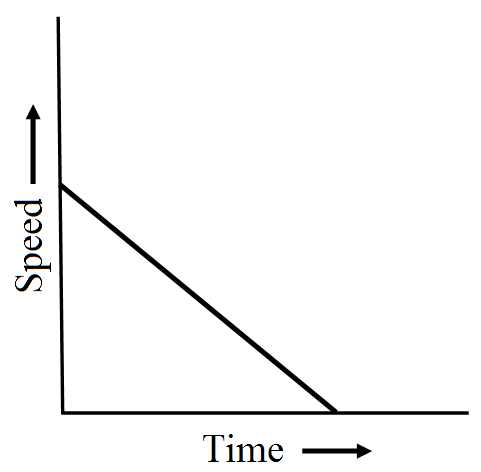
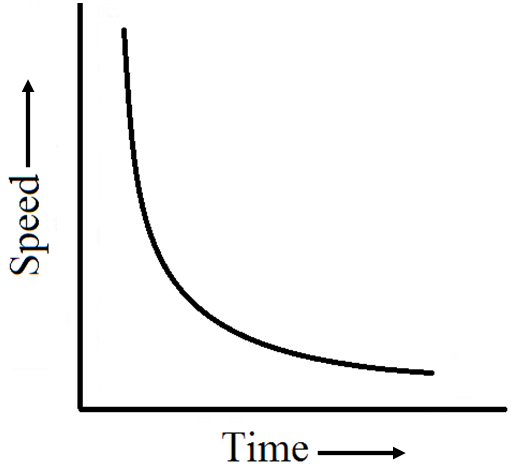
What type of motion is represented by each one of the following graphs?


Mention two ways by which a photosynthesing cell belonging to this group differs from a cell of your body.
Show by means of graphical method that:
v = u + at
where the symbols have their usual meanings.
Give the main differences between physical changes and chemical changes.
Differentiate between a saturated and an unsaturated solution. How will you test whether a given solution is saturated or not?