MCQ
Human eye:
- ACan detect polarized light
- BCannot detect polarization of light
- CCan detect only circularly polarized light
- DCan detect only linearly polarized light
Explanation:
Polarization changes when plane of vibration of polarized light changes.
Human eye is insensitive to change in polarization and hence, cannot detect polarization of light.
Generate a complete, print-ready paper with questions like this in minutes — across 16+ boards, with answer keys.
Two similar spheres having +q and -q charge are kept at a certain distance. F force acts between the two. If in the middle of two spheres, another similar sphere having +q charge is kept, then it experience a force in magnitude and direction as
|
(a) Zero having no direction |
(b) 8F towards +q charge |
|
(c) 8F towards -q charge |
(d) 4F towards +q charge |
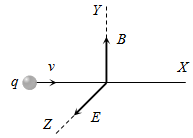
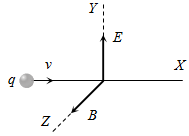
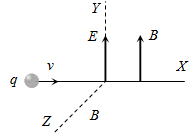
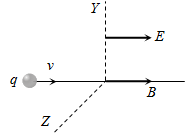
A particle of charge q and mass m is moving along the x -axis with a velocity v and enters a region of electric field E and magnetic field B as shown in figure below for which figure the net force on the charge may be zero
|
(a)
|
(b)
|
(c)
|
(d)
|
A ray of light propagates from glass (refractive index = 3/2) to water (refractive index = 4/3). The value of the critical angle
|
(a) sin–1(1/2) |
(b) |
(c) |
(d) |
A parallel plate capacitor has a capacity C. The separation between the plates is doubled and a dielectric medium is introduced between the plates. If the capacity now becomes 2C, the dielectric constant of the medium is
|
(a) 2 |
(b) 1 |
(c) 4 |
(d) 8 |
Magnets A and B are geometrically similar but the magnetic moment of A is twice that of B. If T1 and T2 be the time periods of the oscillation when their like poles and unlike poles are kept together respectively, then  will be
(a) 
|
(b) 
|
(c) 
|
(d) 
|