Question
✓
Answer
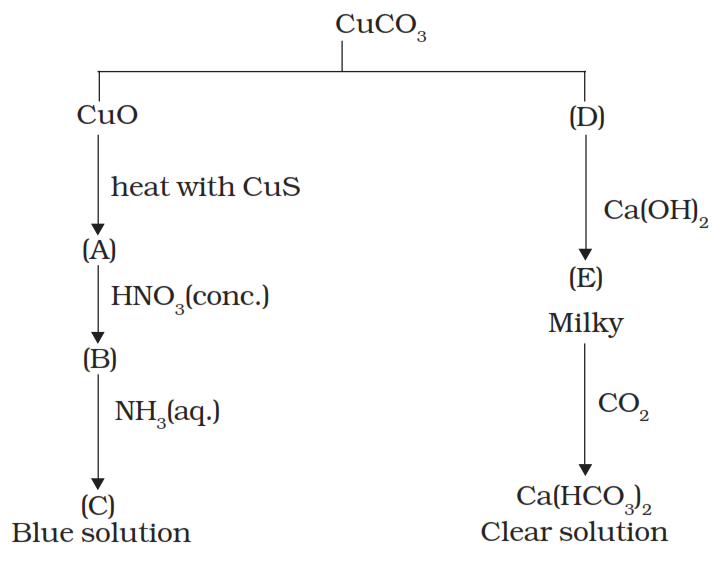
A = Cu
B = Cu(NO3)2
C = [Cu(NH3)4](NO2)2
D = CO2
E = CaCO3
F = Cu2[Fe(CN)6]
G = Ca(HCO3)2
$\text{CuCO}_3\rightarrow\text{CuO}+\text{CO}_2\\ \ \ \ \ \ \ \ \ \ \ \ \ \ \ \ \ \ \ \ \ \ \ \ \ \ \ \ \ \ \ \ \ \ \ ^{\text{(D)}}$
$\text{CuO}+\text{CuS}\rightarrow\text{Cu}+\text{SO}_2\\ \ \ \ \ \ \ \ \ \ \ \ \ \ \ \ \ \ \ \ \ \ \ \ \ \ \ \ \ ^{\text{(A)}}$
$\text{Cu}+\text{4HNO}_3\text{(Conc.)}\rightarrow[\text{Cu(NO}_3)_2+2\text{NO}+2\text{H}_2\text{O}\\ \ \ \ \ \ \ \ \ \ \ \ \ \ \ \ \ \ \ \ \ \ \ \ \ \ \ \ \ \ \ \ \ \ \ \ \ \ \ \ \ \ \ \ \ \ \ \ \ \ \ ^\text{(B)}$
$\text{Cu}^{2+}+\text{NH}_3\rightarrow[\text{Cu(NH}^3)^4]\\ \ \ \ ^\text{(B)} \ \ \ \ \ \ \ \ \ \ \ \ \ \ \ \ \ \ \ \ \ \ \ \ \ \ \ \ \ \ ^\text{(C)}$
$\text{Ca(OH})_2+\text{CO}_2\rightarrow\text{CaCO}_3+\text{H}_2\text{O}\\ \ \ \ \ \ \ \ \ \ \ \ \ \ \ \ \ \ \ \ \ ^\text{(D)} \ \ \ \ \ \ \ \ \ \ \ \ \ ^\text{(E)}$
$\text{CaCO}_3+\text{H}_2\text{O}+\text{CO}_2\rightarrow\text{Ca(HCO}_3)_2$
Need a full question paper?
Generate a complete, print-ready paper with questions like this in minutes — across 16+ boards, with answer keys.
Explore more
Similar questions
Match the graph given in Column I with the order of reaction given in Column II. More than one item in Column I may link to the same item of Column II.
Column I | Column II | ||
(i) | 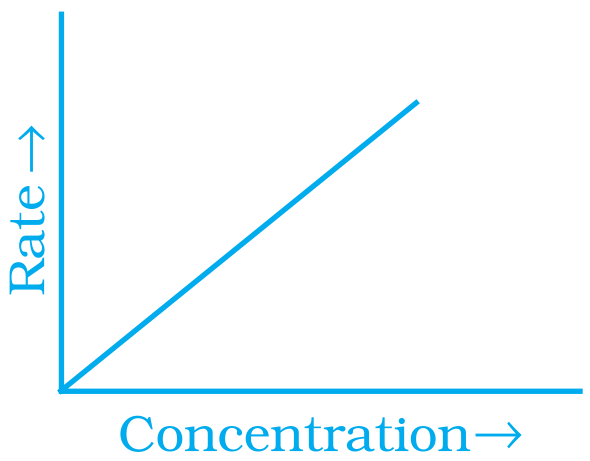 | ||
(ii) | 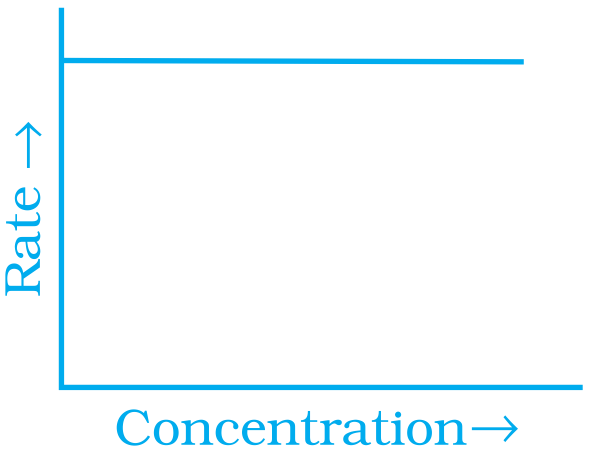 | (a) | Ist order |
(iii) | 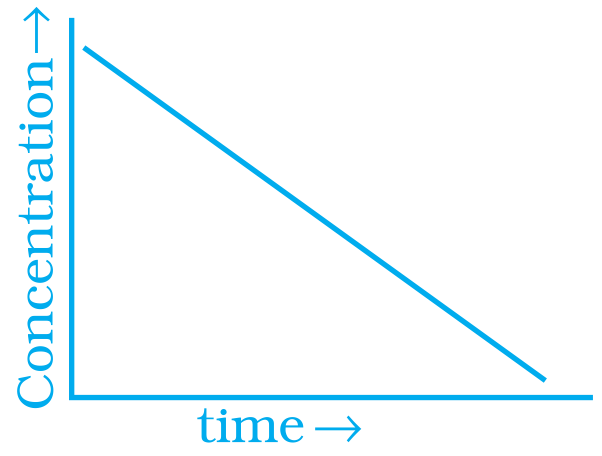 | (b) | Zero order |
(iv) | 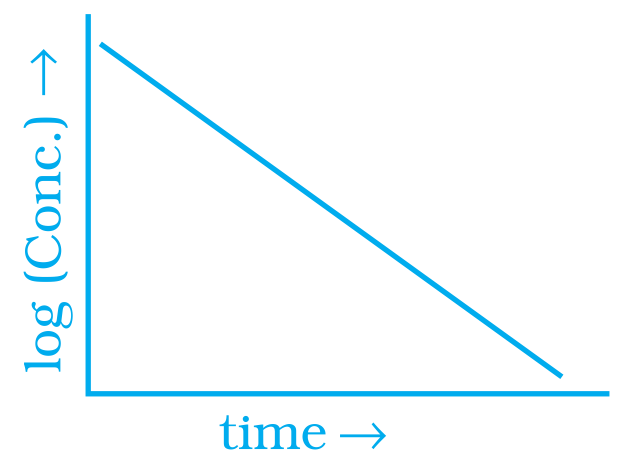 |
What is the relationship between Gibbs free energy of the cell reaction in a galvanic cell and the emf of the cell? When will the maximum work be obtained from a galvanic cell?
What is called a battery? Explain its characteristics and describe dry cell and mercury cell.
Answer the following questions:
Write balanced equations to represent what happens when.
Write balanced equations to represent what happens when.
- Cu2+ is treated with KI.
- Acidified potassium dichromate solution is reacted with iron (II) solution. (ionic equation).
Describe the following with one example in each case :
(i) Analgesic
(ii) Disinfectants
(iii) Antibiotics
(i) Analgesic
(ii) Disinfectants
(iii) Antibiotics
Assign reasons for the following:
- The enthalpies of atomisation of transition elements are high.
- The transition metals and many of their compounds act as good catalyst.
- From element to element the actinoid contraction is greater than the lanthanoid contraction.
- The E0 value for the Mn3+/Mn2+ couple is much more positive than that for Cr3+/Cr2+.
- Scandium (Z = 21) does not exhibit variable oxidation states and yet it is regarded as a transition element.
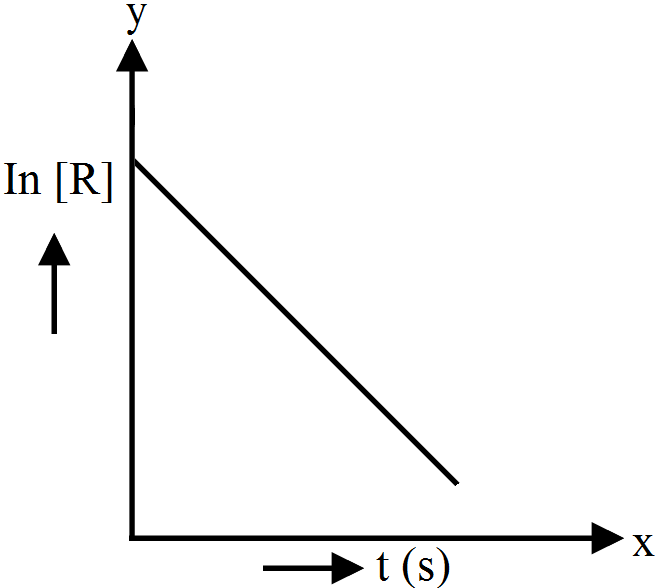
For a certain chemical reaction variation in the concentration ln [R] vs. time plot is given alongside.
For this reaction:
- What is the order of the reaction?
- What are the units of rate constant k?
- Give the relationship between k and t1/2 (half-life period).
- What is the slope of the curve?
- Draw the plot log [R]0 /[R] vs time t(s).
(a). Give reasons for the following:
(i)The reaction of ethanol with acetyl chloride is carried out in the presence of pyridine.
(ii) Cresols are less acidic than phenol.
(b). Williamson's process is used for the preparation of ethers from alkyl halide. Identify the alkyl bromide and sodium alkoxide used for the preparation of 2- Ethoxy-3-methylpentane
(c). Convert:
(i) Toluene to 3-nitrobenzoic acid.
(ii) Benzene to m-nitroacetophenone.
(i)The reaction of ethanol with acetyl chloride is carried out in the presence of pyridine.
(ii) Cresols are less acidic than phenol.
(b). Williamson's process is used for the preparation of ethers from alkyl halide. Identify the alkyl bromide and sodium alkoxide used for the preparation of 2- Ethoxy-3-methylpentane
(c). Convert:
(i) Toluene to 3-nitrobenzoic acid.
(ii) Benzene to m-nitroacetophenone.
Explain the various methods of determining the order of a reaction.
- Why do transition elements show variable oxidation states?
- Name the element showing maximum number of oxidation states among the first series of transition metals form Sc (Z=21) to Zn (Z=30).
- Name the element which shows only +3 oxidation state.
- What is lanthanoid contraction? Name an important alloy which contains some of the lanthanoid metals.