MCQ
Identify $C$ in the following sequence of reactions

- A
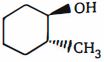
- ✓
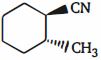
- C

- D
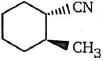

Generate a complete, print-ready paper with questions like this in minutes — across 16+ boards, with answer keys.

$(I)\,\,B{r^ - }{\mkern 1mu} {\mkern 1mu} {\mkern 1mu} {\mkern 1mu} $ $(II)\,\,\begin{array}{*{20}{c}}
{{\mkern 1mu} {\mkern 1mu} {\mkern 1mu} {\mkern 1mu} {\mkern 1mu} O{\mkern 1mu} } \\
{{\mkern 1mu} {\mkern 1mu} {\mkern 1mu} {\mkern 1mu} ||} \\
{{H_3}C - C - {O^ - }}
\end{array}$ $(III)\,\,C{H_3}C{H_2}{O^ - }$ $(IV)\,\,Ph - {O^ - }$
The total number of organic products (ketoxime) formed when the simplest ketone and it's next higher homologue react with $NH_2OH$, is :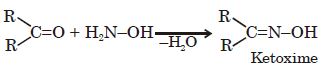

$\begin{array}{*{20}{c}}
{C{H_3} - CH - CH - CH - C{H_3}} \\
{|\,\,\,\,\,\,\,\,\,\,\,\,\,\,|\,\,\,\,\,\,\,\,\,\,\,\,|\,\,\,\,\,} \\
{OH\,\,\,\,\,\,\,OH\,\,\,\,\,OH\,\,}
\end{array}$