MCQ
Identify the incorrect statement among the following
  • Ozone reacts with $SO_2$ to give $SO_3$
  • B
    Fullerene, diamond and graphite all have dangling bond
  • C
    $Cl_2$ reacts with excess $NH_3$ to give $N_2$ and $NH_4Cl$
  • D
    $Br_2$ reacts with hot and conc. $NaOH$ solution to give $NaBr,\, NaBrO_3$ and $H_2O$
Answer

Correct option: A.
Ozone reacts with $SO_2$ to give $SO_3$
a
Both $A$ and $R$ are correct and $R$ is the correct explanation of $A$.

Need a full question paper?

Generate a complete, print-ready paper with questions like this in minutes — across 16+ boards, with answer keys.

Start Generating Free

Similar questions

For the complexes showing the square pyramidal structure, the $d-$ orbital involved  in the hybridisation is
Amongst $SF _{4}, XeF _{4}, CF _{4}$ and $H _{2} O$, the number of species with two lone pairs of electrons ..... .
Which one of the following lanthanides exhibits $+2$ oxidation state with diamagnetic nature ? (Given $\mathrm{Z}$ for $\mathrm{Nd}=60, \mathrm{Yb}=70, \mathrm{La}=57, \mathrm{Ce}=58$ )
Which of the following is an electrophile
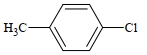
The $IUPAC$ name(s) of the following compound is(are)

$[A]$ $4$-methylchlorobenzene   $[B]$ $4$-chlorotoluene   $[C]$ $1$-chloro-$4$-methylbenzene    $[D]$ $1$-methyl-$4$-chlorobenzene

Match the following aspects with the respective metal.

Aspects Metal
$(a)$ The metal which reveals a maximum number of oxidation states $(i)$ Scandium
$(b)$ The metal although placed in $3 d$ block is considered not as a transition element $(ii)$ Copper
$(c)$ The metal which does not exhibit variable oxidation states $(iii)$ Manganese
$(d)$ The metal which in $+1$ oxidation state in aqueous solution undergoes disproportionation $(iv)$ Zinc

Select the correct option

${\left[ {Co{{\left( {N{H_3}} \right)}_4}C{l_2}} \right]^ + }$ exhibits
In the following reaction, $2H_2O_2 \to 2H_2O + O_2$ rate of formation of $O_2$ is $36\, g\, min^{-1}$, what is rate of disappearance of $H_2O_2$ in $(mol/min)$
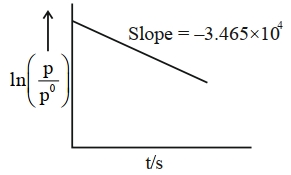
For the decomposition of azomethane. $CH _{3} N _{2} CH _{3}( g ) \rightarrow CH _{3} CH _{3}( g )+ N _{2}$ (g) a first order reaction, the variation in partial pressure with time at $600\,K$ is given as
$\begin{matrix}
   C{{H}_{2}}-O-COR\,  \\
   |\,\,\,\,\,\,\,\,\,\,\,\,\,\,\,\,\,\,\,\,\,\,\,\,\,\,\,\,\,\,\,\,\,\,\,\,\,\,\,\,\,  \\
   CH-O-CO{{R}_{2}}\,  \\
   |\,\,\,\,\,\,\,\,\,\,\,\,\,\,\,\,\,\,\,\,\,\,\,\,\,\,\,\,\,\,\,\,\,\,\,\,\,\,\,\,\,\,  \\
   C{{H}_{2}}-O-CO{{R}_{3}}  \\
\end{matrix}+3NaOH\to (A)+ $ Salt of fatty acid (soap)

Product $(A)$ of the reaction is