MCQ
Identify the quantity which changes when a charged particle moves through a magnetic field?
- AEnergy
- BMass
- CSpeed
- DDirection of motion
Explanation:
When a charged particle moves through a magnetic field it suffers a change in its direction of motion.
Generate a complete, print-ready paper with questions like this in minutes — across 16+ boards, with answer keys.
A thin metal plate P is inserted half way between the plates of a parallel plate capacitor of capacitance C in such a way that it is parallel to the two plates. The capacitance now becomes
|
(a) C |
(b) C/2 |
(c) 4C |
(d) None of these |
The half-life of radioactive Polonium (Po) is 138.6 days. For ten lakh Polonium atoms, the number of disintegrations in 24 hours is
|
(a) 2000 |
(b) 3000 |
(c) 4000 |
(d) 5000 |
In a PN-junction diode not connected to any circuit
|
(a) The potential is the same everywhere |
|
(b) The P-type is a higher potential than the N-type side |
|
(c) There is an electric field at the junction directed from the N- type side to the P- type side |
|
(d) There is an electric field at the junction directed from the P-type side to the N-type side |
Wave nature of light is verified by
|
(a) Interference |
(b) Photoelectric effect |
(c) Reflection |
(d) Refraction |
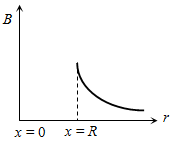
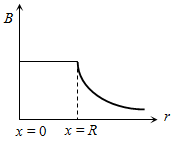
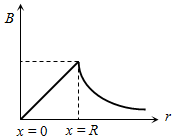
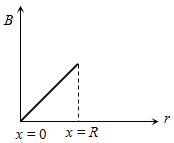
A long thin hollow metallic cylinder of radius 'R' has a current i ampere. The magnetic induction 'B'-away from the axis at a distance r from the axis varies as shown in
|
(a)
|
(b)
|
(c)
|
(d)
|