Question
If fa and ff represent the carrier wave frequencies for amplitude and frequency modulations respectively, then
|
(a) |
(b) |
(c) |
(d) |
If fa and ff represent the carrier wave frequencies for amplitude and frequency modulations respectively, then
|
(a) |
(b) |
(c) |
(d) |
(b) 
Generate a complete, print-ready paper with questions like this in minutes — across 16+ boards, with answer keys.
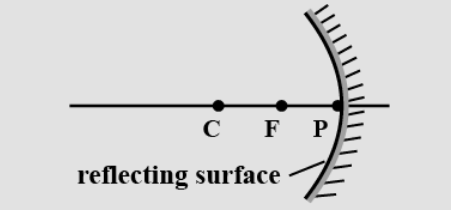
The distance CP is the:
A candle placed 25 cm from a lens, forms an image on a screen placed 75 cm on the other end of the lens. The focal length and type of the lens should be
|
(a) + 18.75 cm and convex lens |
(b) – 18.75 cm and concave lens |
|
(c) + 20.25 cm and convex lens |
(d) – 20.25 cm and concave lens |
The brightness of a bulb will be reduced, if a resistance is connected in
|
(a) Series with it |
(b) Parallel with it |
|
(c) Series or parallel with it |
(d) Brightness of the bulb cannot be reduced |
A copper wire of length 1 m and radius 1 mm is joined in series with an iron wire of length 2 m and radius 3 mm and a current is passed through the wires. The ratio of the current density in the copper and iron wires is
|
(a) 18 : 1 |
(b) 9 : 1 |
(c) 6 : 1 |
(d) 2 : 3 |
The rays of different colours fail to converge at a point after going through a converging lens. This defect is called:


