MCQ
In adiabatic expansion
  • A
    $\Delta U = 0$
  • $\Delta U = $negative
  • C
    $\Delta U = $positive
  • D
    $\Delta W = $zero

Answer

Correct option: B.
$\Delta U = $negative
b
(b) In case of adiabatic expansion $\Delta W$= positive and $\Delta Q = 0$
from FLOT $\Delta Q = \Delta U + \Delta W$

==> $\Delta U = - \Delta W$ i.e., $\Delta U$will be negative.

Need a full question paper?

Generate a complete, print-ready paper with questions like this in minutes — across 16+ boards, with answer keys.
Start Generating Free

Similar questions

A ball is released from the top of a tower. The ratio of work done by force of gravity in first, second and third second of the motion of the ball is
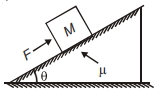
A block (mass $=M kg$ ) is placed on a rough inclined plane. A force $F$ is applied parallel to the inclined (as shown in figure) such that it just starts moving upward. The value of $F$ is
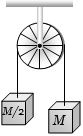
Two masses $M$ and $M/2$ are joint together by means of a light inextensible string passes over a frictionless pulley as shown in figure. When bigger mass is released the small one will ascend with an acceleration of
On a calm day, a boat can go across a lake and return in time $T_0$ at a speed $V$. On a rough day, there is uniform current at speed $v$ to help the onward journey and impede the return journey. If the time taken to go across and return on the rough day be $T$, then $T / T_0$ is
A string is rigidly tied at two ends and its equation of vibration is given by $y = \cos 2\pi \,t\sin \sin \pi x.$ Then minimum length of string is .... $m$
At a certain instant a stationary transverse wave is found to have maximum kinetic energy. The appearance of string at that instant is
The acceleration of a train travelling with speed of $400 \,m/s$ as it goes round a curve of radius $160\,m$, is
Let $l$ be the moment of inertia of an uniform square plate about an axis $AB$ that passes through its centre and is parallel to two of its sides. $CD$ is a line in the plane of the plate that passes through the centre of the plate and makes an angle $\theta $ with $AB$. The moment of inertia of the plate about the axis $CD$ is then equal to 
The moment of inertia of a uniform cylinder of length $l$ and radius $R$ about its perpendicular bisector is $I$. What is the ratio $l/R$ such that the moment of inertia is minimum?
A man crosses a $320\, m$ wide river perpendicular to the current in $4$ minutes. If in still water he can swim with a speed $5/3$ times that of the current, then the speed of the current, in $m/min$ is