Question
In the above question, potential difference across the 40Ω resistance will be(a) Zero(b) 80 V(c) 40 V(d) 120 V
       

Answer

(a) Zero

Need a full question paper?

Generate a complete, print-ready paper with questions like this in minutes — across 16+ boards, with answer keys.
Start Generating Free

Similar questions

A semi conductor device with both active and passive electronic elements diffused into a silicon water to form a functional circuit is called.
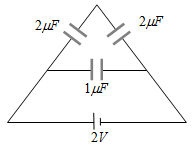
The charge on any one of the $2\  \mu F$ capacitors and $1\  \mu F$ capacitor will be given respectively $($in $\mu C )$ as
Refractive index of material is equal to tangent of polarising angle. It is called (a) Brewster’s law(b) Lambert’s law(c) Malus’s law(d) Bragg’s law
       
A particle moves in a circular path with a uniform speed. Its motion is:
  1. Periodic.
  2. Oscillatory.
  3. Simple harmonic.
  4. Angular simple harmonic.
S.I. unit of power of a lens is :
Boron rods in a nuclear reactor are used to:
A radioactive reaction is $92^{\mathrm{U}^{238}} \Rightarrow 82^{\mathrm{Pb}^{206}}.$ How many $\alpha$ and $\beta$ particles are emitted
At a place the value of horizontal component of the earth's magnetic field $H$ is $3 \times 10^{-5}$ Weber $/ \mathrm{m}^2$. A metallic rod $AB$ of length $2 m$ placed in east$-$west direction, having the end A towards east, falls vertically downward with a constant velocity of $50 m/s.$ Which end of the rod becomes positively charged and what is the value of induced potential difference between the two ends
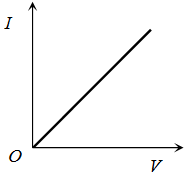
$I-V$ characteristic of a copper wire of length $L$ and area of cross$-$section $A$ is shown in figure.  The slope of the curve becomes
Three light bulbs of 40 W, 60 W and 100 W are connected in series with 220 V source. Which one of the bulbs will glow brightest(a) 40 W(b) 60 W(c) 100 W(d) All with the same brightness