Question
In what way, the biotic components of an ecosystem are different from abiotic components?

Answer

Difference between Biotic and Abiotic:
Biotic Abiotic
(a) Biotic is referred to all living parts of an ecosystem. Abiotic is referred to all nonliving parts of an ecosystem.
(b) Biotic factors depend on abiotic factors to survive for their survival. Abiotic factors don’t rely on the biotic factors for their survival.
(c) Directly or indirectly affect the individual species, community, biosphere, the population of species and ecosystem. Affect the survival of individual species, community, biosphere, the population of species and ecosystem.
(d) Obtained directly from the biosphere and are capable of reproduction. Obtained directly from the lithosphere, atmosphere, and hydrosphere.
(e) The measurement is often subjective. The measurement is often objective.
(f) Involved in determining the total number of living things, directly or indirectly affecting the organisms in the environment. Involved in determining the total number and different types and of organisms existing in the environment.
(g) Have an ability to adapt to changes in the environment. Unable to adapt to changes in the environment.
(h) Resources include forests, animals, plants, fungi, bacteria and more. Resources include land, fossil fuels, water and more.
(i) Renewable resource of energy. Non-renewable resource of energy.
(j) Few examples of biotic factors are all living things including, animals, plants, fungi, bacteria, etc. Few examples of abiotic factors are sunlight, air, climate, temperature, moisture minerals, soil and more.

Need a full question paper?

Generate a complete, print-ready paper with questions like this in minutes — across 16+ boards, with answer keys.
Start Generating Free

Similar questions

a. What is a hydrocarbon? Give its one example.
b. Give the structural difference between saturated and unsaturated hydrocarbons with two examples each.
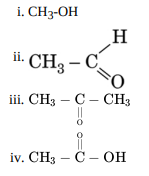
c. Name the following compounds:

Image
With the help of an activity; demonstrate how do we know that a chemical reaction has taken place?
Describe the process of fertilisation in humans and development of embryo briefly.
Esters are When ester treated with an alkali, the reaction gives ethanol and sodium ethanoate. This reaction is called saponification reaction because this reaction forms the basis of preparation of soap. This can be given by following equation.
A scientist removed some cells from the growing point of a plant and placed it in a suitable medium leading to the formation of a shapeless lump of mass X. X is then transferred to another medium which stimulates it to develop roots. When X with developed roots is placed in a yet another medium, then it develops shoots to form tiny plantlets. These plantlets can then be transplanted in pots or soil where they can grow to form mature plants.
  1. What is the shapeless lump of mass X known as?
  2. What name is given to this method of producing new plants?
  3. The growth medium used in this method contains plant nutrients in the form of a 'jelly'. Name this jelly.
  4. What is the general name of chemicals used to stimulate the growth of plant cells and development of roots and shoots?
  5. Name any two plants which are produced by this method.
  6. State any two advantages of this method of producing plants.
  7. What is the other name of this method [other then that given in (b) above]?
If a concave mirror has a focal length of 10cm, find the two positions where an object can be placed to give, in each case, an image twice the height of the object.
A four carbons atoms containing neutral organic compound $X$ reacts with sodium metal to evolve a gas which burns with 'pop' sound. Another four carbon atoms containing carbon compound reacts with sodium hydrogen carbonate to evolve a gas which turns lime water milky. When compounds $X$ and $Y$ are heated together in the presence of a little of concentrated sulphuric acid, then a new compound $Z$ is formed.
a. What is compound $X$ ? Also write its formula.
b. What is compound Y? Also write its formula.
c. What is compound Z? Also write its formula.
d. What type of smell is given by compound Z?
e. What is the general name of compounds like $Z$ ?
f. What is the general name of the reaction which which takes place between $X$ and $Y$ to form $Z$ ?
What is meant by ‘rusting of iron’? With the help of labelled diagrams, describe an activity to find out the conditions under which iron rusts.
What is hydroelectricity? Explain the basic principle of generation of hydroelectricity with the help of a labelled diagram.
What are the methods used by plants to get rid of their waste products?