MCQ
$\int_{}^{} {\frac{{{x^2}dx}}{{{{(a + bx)}^2}}}} = $
  • A
    $\frac{1}{{{b^2}}}\left[ {x + \frac{{2a}}{b}\log (a + bx) - \frac{{{a^2}}}{b}\frac{1}{{a + bx}}} \right]$
  • B
    $\frac{1}{{{b^2}}}\left[ {x - \frac{{2a}}{b}\log (a + bx) + \frac{{{a^2}}}{b}\frac{1}{{a + bx}}} \right]$
  • C
    $\frac{1}{{{b^2}}}\left[ {x + \frac{{2a}}{b}\log (a + bx) + \frac{{{a^2}}}{b}\frac{1}{{a + bx}}} \right]$
  • $\frac{1}{{{b^2}}}\left[ {x + \frac{a}{b} - \frac{{2a}}{b}\log (a + bx) - \frac{{{a^2}}}{b}\frac{1}{{a + bx}}} \right]$
Answer

Correct option: D.
$\frac{1}{{{b^2}}}\left[ {x + \frac{a}{b} - \frac{{2a}}{b}\log (a + bx) - \frac{{{a^2}}}{b}\frac{1}{{a + bx}}} \right]$
d
(d) Put $a + bx = t \Rightarrow x = \frac{{t - a}}{b}$ and $dx = \frac{{dt}}{b}$
$\therefore \,\,\,I = {\int_{}^{} {\left( {\frac{{t - a}}{b}} \right)} ^2} \times \frac{1}{{{t^2}}}\frac{{dt}}{b}$
$ = \frac{1}{{{b^2}}}\int_{}^{} {\left( {1 - \frac{{2a}}{t} + {a^2}.{t^{ - 2}}} \right)} \,dt = \frac{1}{{{b^2}}}\left[ {t - 2a\,\,\log t - \frac{{{a^2}}}{t}} \right]$
$ = \frac{1}{{{b^2}}}\left[ {x + \frac{a}{b} - \frac{{2a}}{b}\log (a + bx) - \frac{{{a^2}}}{b}\frac{1}{{(a + bx)}}} \right]$.

Need a full question paper?

Generate a complete, print-ready paper with questions like this in minutes — across 16+ boards, with answer keys.

Start Generating Free

Similar questions

The value of the integral $\int_0^{\pi /4} {\frac{{\sqrt {\tan x} }}{{\sin x\cos x}}\,dx} $ equals
Which one of the following functions is not homogeneous?
A random variable has the following probability distribution:

X = xi 0 1 2 3 4 5 6 7
P(X = Xi) 0 2p 2p 3p p2 2p2 7p2 2p
  1. $\frac{1}{10}$

  2. $-1$

  3. $-\frac{1}{10}$

  4. $\frac{1}{5}$

If $f(x) = x^2 + 2bx + 2c^2$ and $g(x) = -x^2 -2cx + b^2$ such that $\min . f(x) > \max . g(x),$ then relation between $b$ and $c$ is
A solid hemisphere is mounted on a solid cylinder, both having equal radii. If the whole solid is to have a fixed surface area and the maximum possible volume, then the ratio of the height of the cylinder to the common radius is
Which of the following is not a decreasing function on the interval $\left( {0,{\pi \over 2}} \right)$
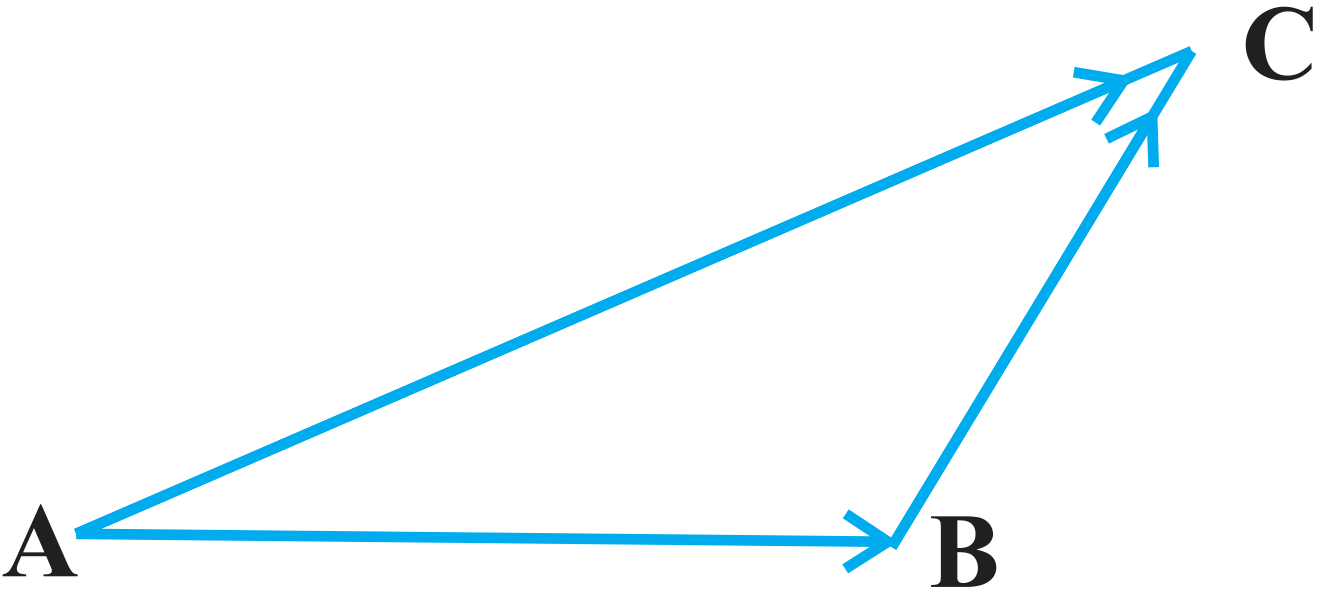
In triangle ABC (Fig 10.18), which of the following is not true:

  1. $\overrightarrow{\text{AB}}+\overrightarrow{\text{BC}}+\overrightarrow{\text{CA}}=\vec{0}$
  2. $\overrightarrow{\text{AB}}+\overrightarrow{\text{BC}}-\overrightarrow{\text{AC}}=\vec{0}$
  3. $\overrightarrow{\text{AB}}+\overrightarrow{\text{BC}}-\overrightarrow{\text{CA}}=\vec{0}$
  4. $\overrightarrow{\text{AB}}-\overrightarrow{\text{CB}}+\overrightarrow{\text{CA}}=\vec{0}$
The feasible solution of an LP problem, is ________.
  1. Must satisfies all of the problems constraints simultaneously.
  2. Must be a corner point of the feasible region.
  3. Need not satisfy all of the constraints, only some of them.
  4. Must optimize the value of the objective function.
Let f(x) = (x + |x|) |x|. Then, for all x:
  1. f is continuous.
  2. f is differentiable for some x
  3. f' is continuous.
  4. f'' is continuous.
If the function f : R → A given by $\text{f(x)}=\frac{\text{x}^2}{\text{x}^2+1}$ is a surjection, then A =
  1. R
  2. [0, 1]
  3. [0, 1)
  4. [0, 1)