MCQ
$\int {{e^x}\left( {\frac{{1 - \sin x}}{{1 - \cos x}}} \right)\,\,dx} $ is equal to
  • A
    $ - {e^x}\tan \,\left( {x/2} \right)$
  • $ - {e^x}\cot \,\left( {x/2} \right)$
  • C
    $ - \frac{1}{2}{e^x}\tan \,\left( {\frac{x}{2}} \right)$
  • D
    $\frac{1}{2}{e^x}\cot \,\left( {\frac{x}{2}} \right)$
Answer

Correct option: B.
$ - {e^x}\cot \,\left( {x/2} \right)$
b
(b) $I = \int {{e^x}\left( {\frac{{1 - \sin x}}{{1 - \cos x}}} \right)dx} $$ = \int {{e^x}\left( {\frac{{1 - \sin x}}{{2{{\sin }^2}(x2)}}} \right)\,dx} $
==> $I = \int {{e^x}\left( {\frac{1}{2}{\rm{cose}}{{\rm{c}}^2}\frac{x}{2} - \cot \frac{x}{2}} \right)} \,dx$
$\left( \because \,\,\int{{{e}^{x}}\left( f(x)+f'(x) \right)}={{e}^{x}}f(x)+c \right)$
$\therefore \,\,I = {e^x}\left( { - \cot \frac{x}{2}} \right) + c = - {e^x}\cot \frac{x}{2} + c$.

Need a full question paper?

Generate a complete, print-ready paper with questions like this in minutes — across 16+ boards, with answer keys.

Start Generating Free

Similar questions

If $\theta$ is the angle between two vectors $\vec{\text{a}}$ and $\vec{\text{b}},$ then $\vec{\text{a}}.\vec{\text{b}}\geq0$ only when:
Statement $-1 :$  The point $A(1, 0, 7)$ is the mirror image of the point $B( 1, 6, 3)$ in the line:  $\frac{x}{1} = \frac{{y - 1}}{2} = \frac{{z - 2}}{3}$

Statement $-2 :$ The line $\frac{x}{1} = \frac{{y - 1}}{2} = \frac{{z - 2}}{3}$ bisects the line joining $A(1, 0, 7)$ and $B( 1, 6, 3)$

The distance of the point (-1, -5, -10) from the point of intersection of the line $\vec{\text{r}}.=2\hat{\text{i}}-\hat{\text{j}}+2\hat{\text{k}}+\lambda(3\hat{\text{i}}+4\hat{\text{j}}+12\hat{\text{k}})$ and the plane $\vec{\text{r}}.=(\hat{\text{i}}-\hat{\text{j}}+\hat{\text{k}})=5$ is:
If ${\sin ^{ - 1}}\frac{1}{2} = {\tan ^{ - 1}}x,$ then $ x =$
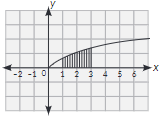
Shown below is the curve defined by the equation $y=\log (x+1)$ for $x \geq 0$.
Image
Which of these is the area of the shaded region?
Let $\quad \vec{a}=9 \hat{i}-13 \hat{j}+25 \hat{k}, \vec{b}=3 \hat{i}+7 \hat{j}-13 \hat{k} \quad$ and $\overrightarrow{\mathrm{c}}=17 \hat{\mathrm{i}}-2 \hat{\mathrm{j}}+\hat{\mathrm{k}}$ be three given vectros. If $\overrightarrow{\mathrm{r}}$ is a vector such that $\vec{r} \times \vec{a}=(\vec{b}+\vec{c}) \times \vec{a}$ and $\vec{r} .(\vec{b}-\vec{c})=0$, then $\frac{|593 \vec{r}+67 \vec{a}|^2}{(593)^2}$ is equal to...........
Let ${I_n} = \smallint {\tan ^n}xdx,\left( {n > 1} \right).$   ${I_4} + {I_6} = a{\tan ^5}x + b{x^5} + C$, where $C$ is constant of integration , then ordered pair $\left( {a,b} \right)$ equal to :
Each side of equilateral is increasing at the rate of 8cm/hr. The rate of increase of its area when side 2cm, is:
If $y = f \left( {\frac{{3x\,\, + \,\,4}}{{5x\,\, + \,\,6}}} \right)  \& f'(x) = tan x^2$ then  $\frac{{dy}}{{dx}}$=
What is the degree of the differential equation : $\text{y}=\text{x}\frac{\text{dy}}{\text{dx}}+\Big(\frac{\text{dy}}{\text{dx}}\Big)^{-2}\ ?$