MCQ
$\int_{\, - \pi /2}^{\,\pi /2} {{{\sin }^4}x{{\cos }^6}x\,dx = } $
  • A
    $\frac{{3\pi }}{{64}}$
  • B
    $\frac{{3\pi }}{{572}}$
  • $\frac{{3\pi }}{{256}}$
  • D
    $\frac{{3\pi }}{{128}}$

Answer

Correct option: C.
$\frac{{3\pi }}{{256}}$
c
(c) $I = \int_{ - \pi /2}^{\pi /2} {{{\sin }^4}x{{\cos }^6}x\,dx} $

$ = 2\int_0^{^{\pi /2}} {{{\sin }^4}x\,{{\cos }^6}x.\,dx} $

$\begin{matrix}
   \because \int_{-a}^{a}{f(x)\,dx=2\int_{0}^{a}{f(x)\,dx,}} & \text{if }f(-x)=f(x)  \\
   \,\,\,\,\,=0, & \text{if }f(-x)=-f(x)  \\
\end{matrix}$

Applying Gamma function, we get 

$I = \frac{{2\,\Gamma 5/2\,.\,\Gamma 7/2}}{{2\,.\Gamma 6}}$

$ = \frac{{3/2.1/2.\sqrt {\pi .} 5/2.3/2.1/2.\sqrt \pi }}{{5.4.3.2.1}}$

$ = \frac{{3\pi }}{{{2^8}}} = \frac{{3\pi }}{{256}}$.

Need a full question paper?

Generate a complete, print-ready paper with questions like this in minutes — across 16+ boards, with answer keys.
Start Generating Free

Similar questions

The solution of the differential equation $\frac{\text{dy}}{\text{dx}}=\frac{\text{y}}{\text{x}}+\frac{\phi(\frac{\text{y}}{\text{x}})}{\phi'(\frac{\text{y}}{\text{x}})}$ is:
  1. $\phi(\frac{\text{y}}{\text{x}})=\text{Kx}$
  2. $\text{x}\phi(\frac{\text{y}}{\text{x}})=\text{K}$
  3. $\phi(\frac{\text{y}}{\text{x}})=\text{Ky}$
  4. $\text{y}\phi(\frac{\text{y}}{\text{x}})=\text{K}$ 
Let $q$ be the maximum integral value of $p$ in $[0,10]$ for which the roots of the equation $x ^2- px +\frac{5}{4} p =0$ are rational. Then the area of the region $\{(x, y): 0 \leq y$ $\left.\leq(x-q)^2, 0 \leq x \leq q\right\}$ is
The solution of the equation $\frac{{dy}}{{dx}} = \frac{x}{{2y - x}}$ is
If $p = 7i - 2j + 3k$ and $q = 3i + j + 5k,$ then the magnitude of $p - 2q$ is
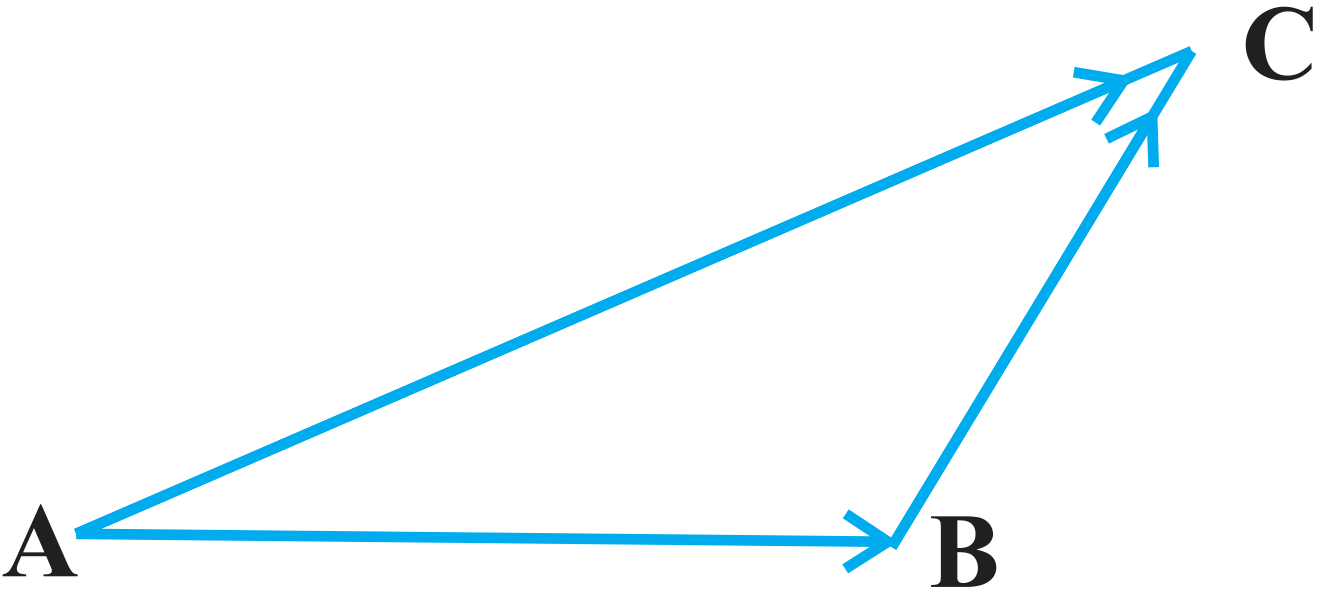
In triangle ABC (Fig 10.18), which of the following is not true:

  1. $\overrightarrow{\text{AB}}+\overrightarrow{\text{BC}}+\overrightarrow{\text{CA}}=\vec{0}$
  2. $\overrightarrow{\text{AB}}+\overrightarrow{\text{BC}}-\overrightarrow{\text{AC}}=\vec{0}$
  3. $\overrightarrow{\text{AB}}+\overrightarrow{\text{BC}}-\overrightarrow{\text{CA}}=\vec{0}$
  4. $\overrightarrow{\text{AB}}-\overrightarrow{\text{CB}}+\overrightarrow{\text{CA}}=\vec{0}$
Let $\quad \mathrm{f}: \mathbb{R}-\{0\} \rightarrow \mathbb{R}$ be a function satisfying $f\left(\frac{x}{y}\right)=\frac{f(x)}{f(y)}$ for all $x, y, f(y) \neq 0$. If $f^{\prime}(1)=2024$ then
length of the 1er from the point (0, -1, 3) to the plane 2x + y - 2z + 1 = 0 is:
Integrating factor of the differential equation $\left(1-x^2\right) \frac{d y}{d x}-x y=1$ is
The area enclosed by the curves $y=\log _{ t }\left( x + e ^{2}\right)$, $x=\log _{ e }\left(\frac{2}{ y }\right)$ and $x =\log _{ e } 2$, above the line $y =1$ is.
Let $f (x)$ be diffrentiable at $x = h$ then $\mathop {\lim }\limits_{x \to h} \,\frac{{(x + h)\,f(x)\, - 2h\,f(h)}}{{x - h}}$ is equal to