MCQ
The solution of the equation $\frac{{dy}}{{dx}} = \frac{x}{{2y - x}}$ is
  • $(x - y){(x + 2y)^2} = c$
  • B
    $y = x + c$
  • C
    $y = (2y - x) + c$
  • D
    $y = \frac{x}{{2y - x}} + c$

Answer

Correct option: A.
$(x - y){(x + 2y)^2} = c$
a
(a) $\frac{{dy}}{{dx}} = \frac{x}{{2y - x}}$. Put $y = vx$ ==> $v + x\frac{{dv}}{{dx}} = \frac{{dy}}{{dx}}$

$v + x\frac{{dv}}{{dx}} = \frac{x}{{2v - x}} = \frac{1}{{2v - 1}}$

$x\frac{{dv}}{{dx}} = \frac{1}{{2v - 1}} - v = \frac{{1 - 2{v^2} + v}}{{2v - 1}} = - \frac{{(v - 1)(2v + 1)}}{{2v - 1}}$

$\frac{{(2v - 1)}}{{(2v + 1)(v - 1)}} = \frac{{ - dx}}{x}$; $\frac{1}{{3(v - 1)}} + \frac{4}{{3(2v + 1)}} = \frac{{ - dx}}{x}$

$\frac{1}{3}\log (v - 1) + \frac{4}{3}.\frac{1}{2}\log (2v + 1) = \log \frac{1}{x} + \log c$

$\log {(v - 1)^{1/3}} + \log {(2v + 1)^{2/3}} = \log \frac{c}{x}$

$ = {(v - 1)^{1/3}}{(2v + 1)^{2/3}} = \frac{c}{x}$

$\left( {\frac{{y - x}}{x}} \right){\rm{ }}{\left( {\frac{{2y + x}}{x}} \right)^2} = \frac{{{c^3}}}{{{x^3}}}$ ==> $(x - y){(x + 2y)^2} = c$.

Need a full question paper?

Generate a complete, print-ready paper with questions like this in minutes — across 16+ boards, with answer keys.
Start Generating Free

Similar questions

The number of continuous functions $f:[0,1] \rightarrow(-\infty, \infty)$ satisfying the condition $\int \limits_0^1(f(x))^2 dx =2 \int_0^1 f( x ) dx$ is
The maximum value of Z = 4x + 3y subjected to the constraints $2\text{x}+3\text{y}\leq18,$ $\text{x}+\text{y}\geq10;\text{x},\text{y}\geq0$ is:
$\int_{}^{} {\frac{{dx}}{{(x + 1)(x + 2)}} = } $
If $I = \int\limits_0^{\frac{\pi }{2}} {\,\,\ell n\,(\sin \,x)} dx$ then $\int\limits_{\frac{{ - \pi }}{4}}^{\frac{\pi }{4}} {\,\,\ell n\,(\sin \,x\,\, + \,\,\cos \,x)} dx =$
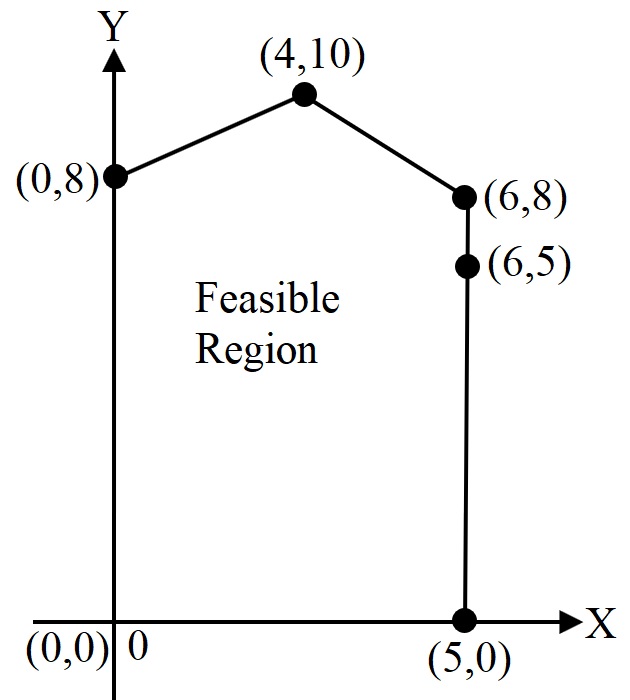
The feasible region for a LPP is shown shaded in the figure. Let Z = 3x - 4y be the objective function. Minimum of Z occurs at.

$\int\limits^1_0\frac{\text{x}}{(1-\text{x})^{54}}\text{ dx}=$
  1. $\frac{15}{16}$
  2. $\frac{3}{16}$
  3. $-\frac{3}{16}$
  4. $-\frac{16}{3}$
The total number of point of non-differentiability of    $f\left( x \right) = \min \left\{ {\left| {\sin x} \right|,\left| {\cos x} \right|,\frac{1}{4}} \right\}$ in $(0, 2\pi)$ is
Let $A=\left[a_{i j}\right]_{2 \times 2}$ where $a_{i j} \neq 0$ for all $i, j$ and $A^2=I$. Let a be the sum of all diagonal elements of $A$ and $b =| A |$, then $3 a ^2+4 b ^2$ is equal to
If X follows a binomial distribution with parameter $\text{n}=100$ and $\text{p}=\frac{1}{3},$ then P(X = r) is maximum when r = 
  1. 32
  2. 34
  3. 33
  4. 31
The values of the constants a, b and for which the function $\text{f(x)}=\begin{cases}(1+\text{ax})^{\frac{1}{\text{x}}},&\text{x}>0\\\text{b},&\text{x}=0\\\frac{(\text{x}+\text{c})^{\frac{1}{2}}-1}{(\text{x}+1)^{\frac{1}{2}}-1},&\text{x}>0\end{cases}$ may be continuous at x = 0, are:
  1. $\text{a}=\log_{\text{e}}\Big(\frac{2}{3}\Big),\text{ b}=-\frac{2}{3},\text{ c}=1$
  2. $\text{a}=\log_{\text{e}}\Big(\frac{2}{3}\Big),\text{ b}=\frac{2}{3},\text{ c}=-1$
  3. $\text{a}=\log_{\text{e}}\Big(\frac{2}{3}\Big),\text{ b}=\Big(\frac{2}{3}\Big),\text{ c}=1$
  4. none of these