MCQ
$\int {x\sin x\ {{\sec }^3}\ x\,\,\,dx} $  equal to
  • A
    $\frac{1}{2}\left( {{{\sec }^2}\ x - \tan x} \right) + C$
  • $\frac{1}{2}\left( {x\ {{\sec }^2}\ x - \tan x} \right) + C$
  • C
    $\frac{1}{2}\left( {x\ {{\sec }^2}\ x + \tan x} \right) + C$
  • D
    $\frac{1}{2}\left( {{{\sec }^2}\ x + \tan x} \right) + C$
Answer

Correct option: B.
$\frac{1}{2}\left( {x\ {{\sec }^2}\ x - \tan x} \right) + C$
b
$\int x \sin x \sec ^{3} x d x=\int x \tan x \sec ^{2} x d x$

${=\left(x \frac{\tan ^{2} x}{2}\right)-\int\left(1 \cdot \frac{\tan ^{2} x}{2}\right) d x} $

${=\frac{x \tan ^{2} x}{2}-\frac{1}{2} \int\left(\sec ^{2} x-1\right) d x} $

${=\frac{x}{2} \tan ^{2} x-\frac{1}{2} \tan x+\frac{1}{2} x+c} $

${=\frac{x}{2} \sec ^{2} x-\frac{1}{2} \tan x+c} $

${=\frac{1}{2}\left(x \sec ^{2} x-\tan x\right)+c} $

Need a full question paper?

Generate a complete, print-ready paper with questions like this in minutes — across 16+ boards, with answer keys.

Start Generating Free

Similar questions

Let $A $ and $ B$  be points with position vectors $a$  and  $b $ with respect to the origin O. If the point C on OA is such that $2AC = CO,\,\,CD$ is parallel to OB and $|\overrightarrow {CD} |\,\, = \,\,3|\overrightarrow {OB} |,$ then $\overrightarrow {AD} $ is equal to
$\int_{}^{} {\sqrt {1 - \sin 2x} \;} dx = ........,\;\;x \in (0,\;\pi /4)$
Area of the region bounded by the curve $y=x|x|$, X -axis and lines $x=0$ and $x=1$ is ___________ sq. units.
A constraint in an LP model becomes redundant because:
Shortest distance between the lines $\frac{{x - 2}}{3} = \frac{{y - 4}}{4} = \frac{{z - 5}}{5}\,and\,\frac{{x - 1}}{2} = \frac{{y - 2}}{3} = \frac{{z - 3}}{4}$ is equal to -
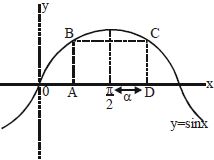
A rectangle $ABCD$ is inscribed in the region bounded by $y = \sin x, \, x-$ axis where $x \in [0,\pi ]$ (as shown in figure), then area of rectangle is maximum when $'\alpha '$ satisfies
Choose the correct answer from the given four options.
The probability of guessing correctly at least 8 out of 10 answers on a true-false type examination is:
ABCD is a parallelogram with AC and BD as diagonals. Then, $\overrightarrow{\text{AC}}-\overrightarrow{\text{BD}}=$
  1. $4\overrightarrow{\text{AB}}$
  2. $3\overrightarrow{\text{AB}}$
  3. $2\overrightarrow{\text{AB}}$
  4. $\overrightarrow{\text{AB}}$
$\int\limits^{2\text{a}}_0\text{f}(\text{x})\text{dx}$ is equal to:

  1. $2\int\limits^{\text{a}}_0\text{f(x)}\text{dx}$

  2. $0$

  3. $\int\limits^{\text{a}}_0\text{f}(\text{x})\text{dx}+\int\limits^{\text{a}}_0\text{f}(2\text{a}-\text{x})\text{dx}$

  4. $\int\limits^{\text{a}}_0\text{f}(\text{x})\text{dx}+\int\limits^{2\text{a}}_0\text{f}(2\text{a}-\text{x})\text{dx}$

A linear programming problem is as follows:
Minimize $Z=30 x+50 y$
Subject to the constraints,
$\begin{array}{l}3 x+5 y \geq 15 \\ 2 x+3 y \leq 18 \\ x \geq 0, y \geq 0\end{array}$
In the feasible region, the minimum value of $Z$ occurs at