MCQ
Iodine is formed when $ KI $ reacts with a solution of
  • $CuS{O_4}$
  • B
    ${(N{H_4})_2}S{O_4}$
  • C
    $ZnS{O_4}$
  • D
    $FeS{O_4}$

Answer

Correct option: A.
$CuS{O_4}$
(a)Iodine being a strong reducing agent reduce $C{u^{2 + }}$ ions to $C{u^ + }$ ions and itself gets oxidised to iodine.
$\mathop {2CuS{O_4}}\limits_{{\rm{Reduced}}}^{ + 2} + \mathop {4KI}\limits_{{\rm{Oxidised}}}^{ - 1} \to \mathop {C{u_2}{I_2}}\limits^{ + 1} + \mathop {{I_2}}\limits^0 + 2{K_2}S{O_4}$

Need a full question paper?

Generate a complete, print-ready paper with questions like this in minutes — across 16+ boards, with answer keys.

Start Generating Free

Similar questions

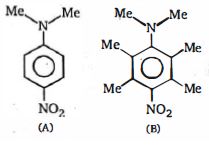
The major product of the following reaction is
Larger number of oxidation states are exhibited by the actinoids than those by the lanthanoids, the main reason being
Two nucleotides are joined together by a linkage known as :
The rate of a reaction doubles when its temperature changes from $300\, K$ to $310\, K.$ Activation energy of such a reaction will be .......... $kJ\, mol^{-1}$. $(R= 8.314\,JK^{-1} \,mol^{-1}$ and $\log 2=0.301)$
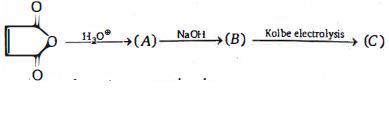
Product $(C)$ of above reaction is
Which element out of $He,$ $Ar,$ $Kr,$ and $Xe$ forms least number of compounds
The correct formula to calculate the hydroxyl ion concentration of an aqueous solution of $NH_4NO_3$ is
Dipole moments of given compound will be
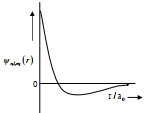
The wave function $\psi_{n / m m}$ is a mathematical function whose value depends upon spherical polar coordinates $(r, \theta, \phi)$ of the electron and characterized by the quantum numbers $n, l$ and $m_l$. Here $r$ is distance from nucleus, $\theta$ is colatitude and $\phi$ is azimuth. In the mathematical functions given in the Table, $\mathrm{Z}$ is atomic number and $a_0$ is Bohr radius.

$column 1$ $column 2$ $column 3$
$(I)$ $1$s orbital $(i)$ $\psi_{n, l, m_l} \propto\left(\frac{Z}{a_0}\right)^{\frac{3}{2}} e^{-\left(\frac{Z r}{a_0}\right)}$ $image$
($II$) $2 \mathrm{~s}$ orbital $(ii)$ One radial node $(Q)$ Probability density at nucleus $\propto \frac{1}{a_0^3}$
$(III)$ $2 p_z$ orbital $(iii)$ $\psi_{n, l m_l} \propto\left(\frac{Z}{a_0}\right)^{\frac{5}{2}} r e^{-\left(\frac{Z r}{2 a_0}\right)} \cos \theta$ $(R)$ Probability density is maximum at nucleus
$(IV)$ $3 \mathrm{~d}_{\mathrm{z}}^2$ orbital $(iv)$ $x y$-plane is a nodal plane $(S)$ Energy needed to excite electron from $n=2$ state to $n=4$ state is $\frac{27}{32}$ times the energy needed to excite electron from $n=2$ state to $n=6$ state

($1$) For the given orbital in Column $1$, the only $CORRECT$ combination for any hydrogen-like species is

$[A] (IV) (iv) (R)$   $[B] (II) (ii) (P)$    $[C] (III) (iii) (P)$    $[D] (I) (ii) (S)$

($2$)  For $\mathrm{He}^{+}$ion, the only INCORRECT combination is

$[A] (II) (ii) (Q)$ $[B] (I) (i) (S)$ $[C] (I) (i) (R)$ $[D] (I) (iii) (R)$

($3$) For hydrogen atom, the only $CORRECT$ combination is

$[A] (I) (iv) (R)$   $[B] (I) (i) (P)$    $[C] (II) (i) (Q)$   $[D] (I) (i) (S)$

Give the answer quetion ($1$) ($2$) and ($3$)
Geometrical and optical isomerism exihibted by