MCQ
Iodoform can be obtained on warming $NaOH$ and iodine with
  • $CH_3CH_2CH(OH)CH_3$
  • B
    $\begin{array}{*{20}{c}}
      {\,\,\,\,\,\,\,\,\,\,\,\,\,\,\,O} \\ 
      {\,\,\,\,\,\,\,\,\,\,\,\,\,\,\,||} \\ 
      {{{(C{H_3})}_2}CHC{C_2}{H_5}} 
    \end{array}$
  • C
    $\begin{array}{*{20}{c}}
      {C{H_3} - C - OC{H_3}} \\ 
      {||\,\,\,\,\,} \\ 
      {O\,\,\,\,\,} 
    \end{array}$
  • D
    $(CH_3)_2CHCH_2OH$

Answer

Correct option: A.
$CH_3CH_2CH(OH)CH_3$
a
Methyl ketone and Alkan $-2-$ ol give Iodoform test

Need a full question paper?

Generate a complete, print-ready paper with questions like this in minutes — across 16+ boards, with answer keys.

Start Generating Free

Similar questions

The complexes $[Co{(N{H_3})_6}]\,[Cr{({C_2}{O_4})_3}]$ and $[Cr{(N{H_3})_6}]\,\,[Co{({C_2}{O_4})_3}]$
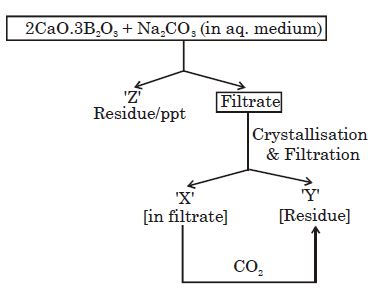
Consider the following flow diagram :-

Compound $X$ and $Y$ are respectively.

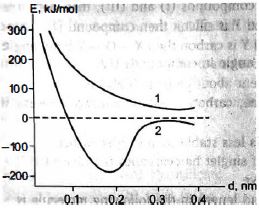
Consider the given figure showing the formation of $H^+_2$ ion depending on  internuclear distance versus potential energy of the system.

which is correct statement

Red lead is
Which of the following statement is wrong ?
Which among the following reactions is favoured in forward direction by increase of temperature?
Which one of the following reactions is $NOT$ possible?
The volume (in $mL$ ) of $0.1\, N$ $NaOH$ required to neutralise $10\, mL$ of $0.1\, N$ phosphinic acid is........
$p$-Amino- $N, N$-dimethylaniline is added to a strongly acidic solution of ${X}$. The resulting solution is treated with a few drops of aqueous solution of ${Y}$ to yield blue coloration due to the formation of methylene blue. Treatment of the aqueous solution of ${Y}$ with the reagent potassium hexacyanoferrate$(II)$ leads to the formation of an intense blue precipitate. The precipitate dissolves on excess addition of the reagent. Similarly, treatment of the solution of ${Y}$ with the solution of potassium hexacyanoferrate$(III)$ leads to a brown coloration due to the formation of ${Z}$.

$1.$ The compound ${X}$ is

$(A)$ $\mathrm{NaNO}_3$ $(B)$ $\mathrm{NaCl}$ $(C)$ $\mathrm{Na}_2 \mathrm{SO}_4$ $(D)$ $\mathrm{Na}_2 \mathrm{~S}$

$2.$ The compound ${Y}$ is

$(A)$ $\mathrm{MgCl}_2$ $(B)$ $\mathrm{FeCl}_2$ $(C)$ $\mathrm{FeCl}_3$ $(D)$ $\mathrm{ZnCl}_2$

$3.$ The compound ${Z}$ is

$(A)$ $\left.\mathrm{Mg}_2 \mid \mathrm{Fe}(\mathrm{CN})_6\right]$ $(B)$ $\operatorname{Fe}\left[\mathrm{Fe}(\mathrm{CN})_6\right]$

$(C)$ $\mathrm{Fe}_4\left[\mathrm{Fe}(\mathrm{CN})_6\right]_3$ $(D)$ $\mathrm{K}_2 \mathrm{Zn}_3\left[\mathrm{Fe}(\mathrm{CN})_6\right]_2$

Give the answer question $1,2$ and $3.$
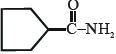
(image) $\xrightarrow[\Delta ]{{{P_2}{O_5}}}A,$ product $A$ is