MCQ
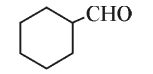
IUPAC name of the following compound is:
Image
  • A
    Cyclohexanal
  • B
    Cyclohexane aldehyde
  • Cyclohexane carbaldehyde
  • D
    None of the above

Answer

Correct option: C.
Cyclohexane carbaldehyde
c

Need a full question paper?

Generate a complete, print-ready paper with questions like this in minutes — across 16+ boards, with answer keys.

Start Generating Free

Similar questions

Which of the following solid salt on heating with solid $K_2Cr_2O_7$ and conc. $H_2SO_4$ orange red vapours are evolved which tum aquous $NaOH$ solution yellow ?
The molal elevation constant of water $ = {0.52\,^o}C$. The boiling point of $1.0$  molal aqueous $KCl$ solution (assuming complete dissociation of $KCl$), therefore, should be ......... $^oC$
Which one is highest melting halide
On the basis of information given below mark the correct option.Information:
  1. In bromoethane and chloroethane mixture intermolecular interactions of $A–A$ and $B–B$ type are nearly same as $A–B$ type interactions.
  2. In ethanol and acetone mixture $A–A$ or $B–B$ type intermolecular interactions are stronger than $A–B$ type interactions.
  3. In chloroform and acetone mixture $A–A$ or $B–B$ type intermolecular interactions are weaker than $A–B$ type interactions.
The Van't Hoff factor of the compound ${K_3}[Fe{(CN)_6}]$ is
Elements which generally exhibit multiple oxidation states and whose ions are usually coloured are
From the following statements regarding $H_2O_2,$ choose the incorrect statement :
Which of the following solutions has highest osmotic pressure
Name the gas released at the cathode when acidulated water is electrolysed.
For the cell reaction......$kJ\, mol^{-1}$

$2 \mathrm{Fe}^{3+}(\mathrm{aq})+2 \mathrm{I^-}(\mathrm{aq}) \rightarrow 2 \mathrm{Fe}^{2+}(\mathrm{aq})+\mathrm{I}_{2}(\mathrm{aq})$

$\mathrm{E}_{\text {call }}^{\mathrm{e}}=0.24 \mathrm{V}$ at $298\; \mathrm{K}$. The standard Gibbs energy $\left( {{\Delta _r}{{\rm{G}}^ \ominus }} \right)$ of the cell reaction is:

[Faraday constant $\mathrm{F}=96500 \;\mathrm{C} \mathrm{mol}^{-1} $]