- A$\frac{1}{\text{RC}}$
- B$\frac{\text{R}}{\text{L}}$
- C$\frac{1}{\sqrt{\text{LC}}}$
- D$\text{C}/\text{L}$
$\frac{1}{\text{RC}}$
$\frac{\text{R}}{\text{L}}$
$\frac{1}{\sqrt{\text{LC}}}$
Explanation:
þ Time constant t = RC in RC circuit
frequency $=\frac{1}{\tau}=\frac{1}{\text{RC}} \ ...(\text{i})$
þ Time constant in LR circuit is $\tau=\frac{\text{L}}{\text{RC}}$
frequency $\frac{1}{\tau}=\frac{\text{R}}{\text{L}} \ ...(\text{ii})$
þ eq. (i) & (ii) multiply
frequency $=\frac{1}{\text{LC}}$
frequency $=\frac{1}{\sqrt{2\text{C}}}$
Generate a complete, print-ready paper with questions like this in minutes — across 16+ boards, with answer keys.
The potential difference across the 100 W resistance in the following circuit is measured by a voltmeter of 900 W resistance. The percentage error made in reading the potential difference is
|
(a) |
(b) 0.1 |
(c) 1.0 |
(d) 10.0 |
A spherical drop of capacitance 1 mF is broken into eight drops of equal radius. Then, the capacitance of each small drop is ......
|
(a) |
(b) 8μF |
(c) |
(d) |
The earth’s magnetic field at a given point is 0.5
. This field is to be annulled by magnetic induction at the center of a circular conducting loop of radius 5.0cm. The current required to be flown in the loop is nearly
|
(a) 0.2 A |
(b) 0.4A |
(c) 4A |
(d) 40A |
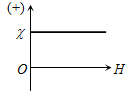
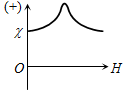
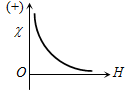
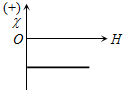
The variation of magnetic susceptibility (x) with magnetising field for a paramagnetic substance is
|
(a)
|
(b)
|
(c)
|
(d)
|
20 μA current flows for 30 seconds in a wire, transfer of charge will be
|
(a) 2 |
(b) 4 |
(c) 6 |
(d) 8 |
Assertion : Silicon is preferred over germanium for making semiconductor devices.
Reason : The energy gap for germanium is more than the energy gap of silicon.
|
(a) If both assertion and reason are true and the reason is the correct explanation of the assertion. |
|
(b) If both assertion and reason are true but reason is not the correct explanation of the assertion. |
|
(c) If assertion is true but reason is false. |
|
(d) If the assertion and reason both are false. |
The temperature (T) dependence of resistivity (r) of a semiconductor is represented by
|
(a)
|
(b)
|
(c)
|
|
Consider an NPN transistor amplifier in common-emitter configuration. The current gain of the transistor is 100. If the collector current changes by 1 mA, what will be the change in emitter current
|
(a) 1.1 mA |
(b) 1.01 mA |
(c) 0.01 mA |
(d) 10 mA |