Question
List the advantages of recombinant insulin.

Answer

Insulin used for diabetes was earlier extracted from pancreas of slaughtered cattle and pigs. Insulin from an animal source, though caused some patients to develop allergy or other types of reactions to the foreign protein. Insulin consists of two short polypeptide chains: chain A and chain B, that are linked together by disulphide bridges. In mammals, including humans, insulin is synthesised as a pro-hormone (like a pro-enzyme, the pro-hormone also needs to be processed before it becomes a fully mature and functional hormone) which contains an extra stretch called the C peptide. This C peptide is not present in the mature insulin and is removed during maturation into insulin. The main challenge for production of insulin using rDNA techniques was getting insulin assembled into a mature form. In 1983, Eli Lilly an American company prepared two DNA sequences corresponding to A and B, chains of human insulin and introduced them in plasmids of E. coli to produce insulin chains. Chains A and B were produced separately, extracted and combined by creating disulfide bonds to form human insulin.
Need a full question paper?

Generate a complete, print-ready paper with questions like this in minutes — across 16+ boards, with answer keys.

Start Generating Free

Similar questions

Draw a diagram of replication of AIDS virus, Name the pathogen of AIDS and describe the infection and symptoms of AIDS.
Describe the various evidences from palaeontology which support organic evolution.
Discuss transgenic animals. Explain any four ways in which such animals can be beneficial for humans.
Write the conclusions Mendel arrived at on dominance of traits on the basis of monohybrid crosses that he carried out in pea plants.
Study the following flow chart. Name the hormones involved at each stage. Explain their functions.
Hypothalamus → Pituitary → Testes → Sperms.
Draw a picture of viral replication. Write the full name of AIDS pathogen. How does hybridization occur? Explain the symptoms of AIDS in human body.
A flower of tomato plant following the process of sexual reproduction produce 240 viable seeds.
Answer the following questions giving reasons:
What is the minimum number of pollen grains that must have been involved in the pollination of its pistil?
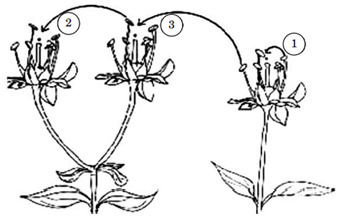
Study the diagram given below showing the modes of pollination. Answer the questions that follow.
Image
i. The given diagram shows three methods of pollen transfer in plants. What are the technical terms used for pollen transfer methods 1, 2 and 3?
ii. How do the following plants achieve pollination successfully?
1. Water lily
2. Vallisneria
iii. Flowering plants have developed many devices to avoid inbreeding depression. Explain one hereditary and one physiological device which helps plants to achieve this target.
Answer the following questions:
When and where does spermatogenesis occur in a human male?
Write critical notes on the following :
(a) Eutrophication
(b) Biological magnification
(c) Ground water depletion and measures for its replenishment