Question
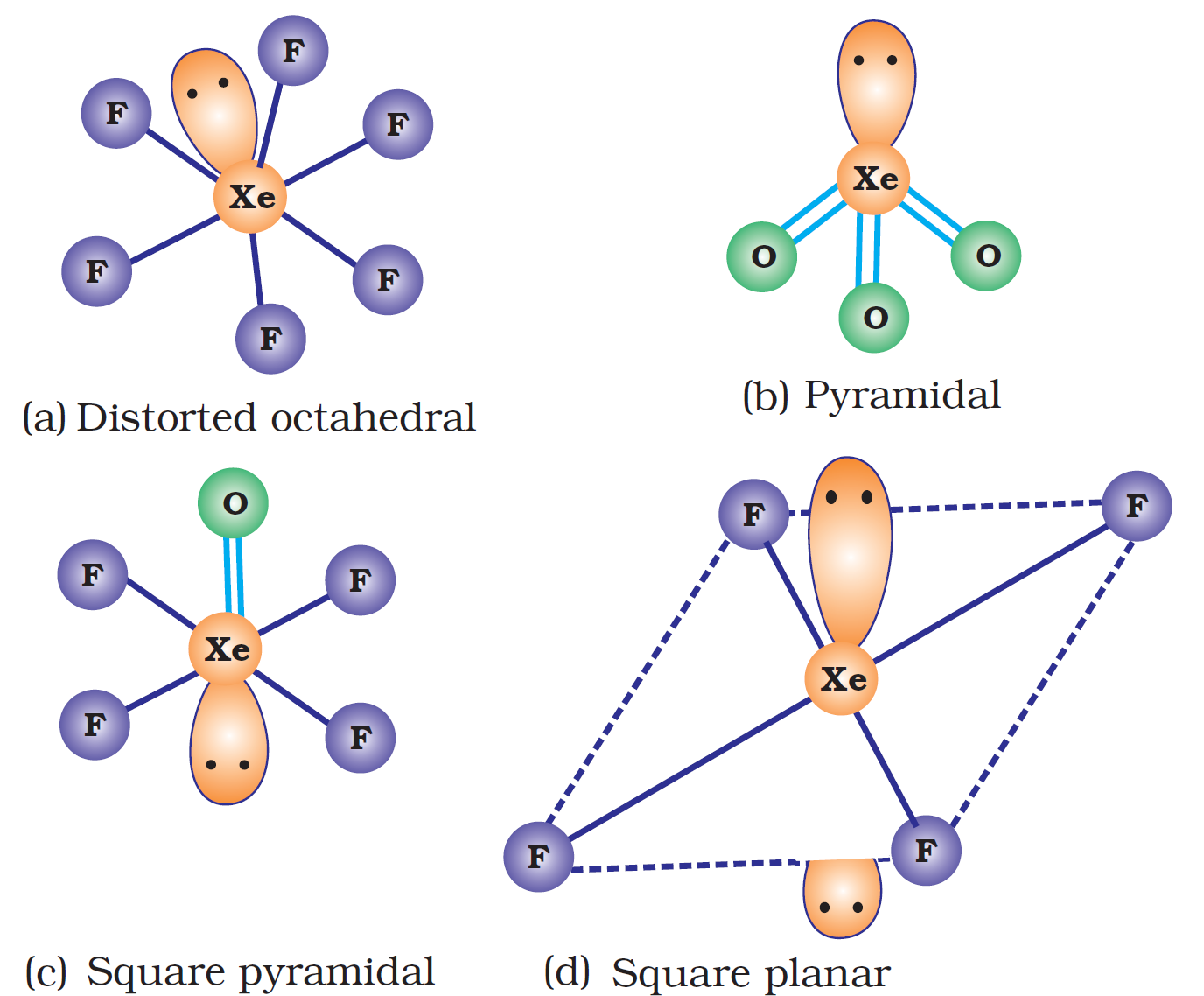
Match the compounds given in Column I with the hybridisation and shape given in Column II and mark the correct option.
  Column I   Column II
(A) $XeF_6$ (1) $sp^3d^3$– distorted octahedral
(B) $XeO_3$ (2) $sp^3d^2$ - square planar
(C) $XeOF_4$ (3) $sp^3$- pyramidal
(D) $XeF_4$ (4) $sp^3d^2$ - square pyramidal
  1. A (1) B (3) C (4) D (2)
  2. A (1) B (2) C (4) D (3)
  3. A (4) B (3) C (1) D (2)
  4. A (4) B (1) C (2) D (3)

Answer

  Column I   Column II
(A) $XeF_6$ (1) $sp^3d^3$ – distorted octahedral
(B) $XeO_3$ (3) $sp^3$​​​​​​​ - pyramidal
(C) $XeOF_4$ (4) $sp^3d^2$ - square pyramidal
(D) $XeF_4$ (2) $sp^3d^2​​​​​​​$​​​​​​​ - square planar
  1. A (1) B (3) C (4) D (2)
Explanation:

Need a full question paper?

Generate a complete, print-ready paper with questions like this in minutes — across 16+ boards, with answer keys.

Start Generating Free

Similar questions

Describe the physical properties of amines.
Write the $S _{ N } 2$ mechanism of bimolecular nucleophilic substitution.
  1. Account for the following:
  1. Transition metals show variable oxidation states.
  2. $Zn, Cd$ and $Hg$ are soft metals.
  3. $E^o$ value for the $Mn^{3+}/Mn^{2+}$ couple is highly
positive $(+ 1·57\ V)$ as compared to $Cr^{3+}/Cr^{2+}.$
  1. Write one similarity and one difference between the chemistry of lanthanoid and actinoid elements.
  1. State two main differences between globular proteins and fibrous proteins.
  2. Based on their chemical composition, state how are lipids classified Give one example of each class.

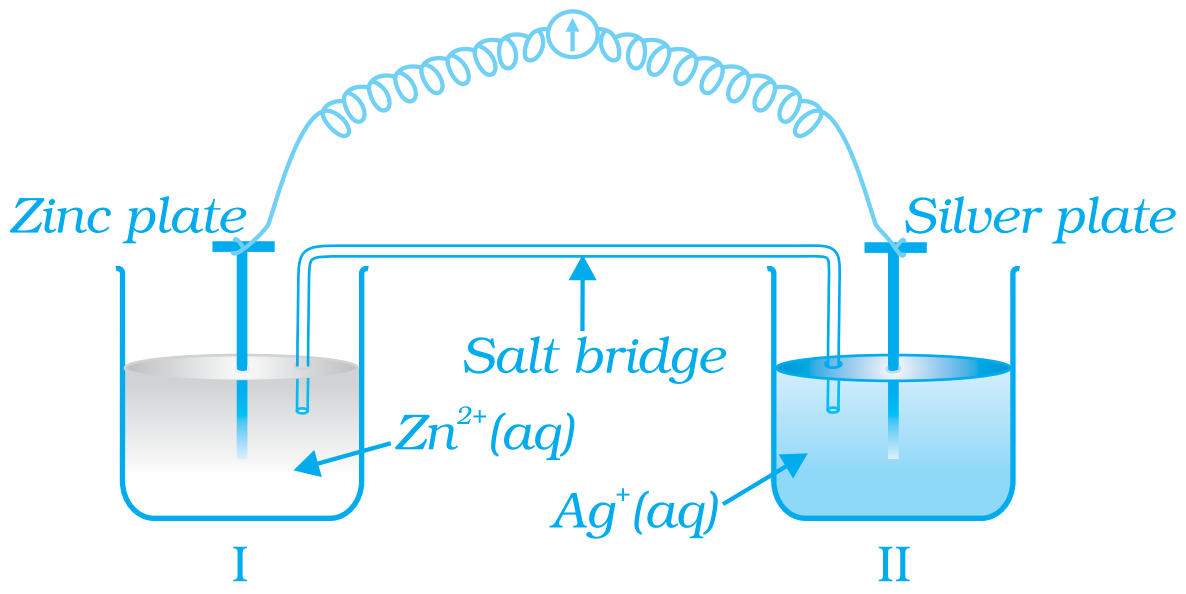
Consider and answer the questions (i) to (vi) given below.
  1. Redraw the diagram to show the direction of electron flow.
  2. Is silver plate the anode or cathode?
  3. What will happen if salt bridge is removed?
  4. When will the cell stop functioning?
  5. How will concentration of $Zn^{2+}$^ ions and $Ag^+$^ ions be affected when the cell functions?
  6. How will the concentration of$ Zn^{2+}$^ ions and $Ag^+$^ ions be affected after the cell becomes ‘dead’?
$i. \text{IUPAC} $ Write structures of different isomeric amines corresponding to the molecular formula, $C_4H_{11}N.$
$ii.$ Write $ \text{IUPAC} $ names of all the isomers.
$iii.$ What type of isomerism is exhibited by different pairs of amines?
Describe the methods of studying various first order reactions with examples.
Answer the following question:
Account for the following:
  1. $SnCl_4$​​​​​​​ is more covalent than $SnCl_2​​​​​​​$​​​​​​​.
  2. Tendency to form pentahalides decreases down the group in group $15$ of the periodic table.
Explain the oxidation of primary, secondary and tertiary alcohols.
The edge length of unit cell of a metal having molecular weight $75g/ mol$ is $5\mathring{\text{A}}$ which crystallises in cubic lattice. If the density is $2g/ cm^3$ then find the radius of metal atom. $(N_A = 6.022 \times 10^{23}​​​​​​​)$