MCQ
$\mathop {\lim }\limits_{n \to \infty } \frac{1}{n}\sum\limits_{r = 1}^{2n} {\frac{r}{{\sqrt {{n^2} + {r^2}} }}} $ equals
  • A
    $1 + \sqrt 5 $
  • $ - 1 + \sqrt 5 $
  • C
    $ - 1 + \sqrt 2 $
  • D
    $1 + \sqrt 2 $

Answer

Correct option: B.
$ - 1 + \sqrt 5 $
b
(b) $L = \mathop {\lim }\limits_{n \to \infty } \,\,\sum\limits_{r = 1}^{2n} {} \frac{1}{n}\,.\,\frac{{r/n}}{{\sqrt {1 + {{(r/n)}^2}} }}$

$= \int_0^2 {} \frac{x}{{\sqrt {1 + {x^2}} }}\,dx = \sqrt 5 - 1$.

Need a full question paper?

Generate a complete, print-ready paper with questions like this in minutes — across 16+ boards, with answer keys.
Start Generating Free

Similar questions

Let $\vec{a}$ be a vector which is perpendicular to the vector $3 \hat{ i }+\frac{1}{2} \hat{ j }+2 \hat{ k }$. If $\overrightarrow{ a } \times(2 \hat{ i }+\hat{ k })=2 \hat{ i }-13 \hat{ j }-4 \hat{ k }$, then the projection of the vector $\vec{a}$ on the vector $2 \hat{ i }+2 \hat{ j }+\hat{ k }$ is
Consider $f(x) = [x] + \sqrt {\left\{ X \right\}}$ where $[.]$ denotes greatest integer function and $\{.\}$ denotes fractional part function. Identify the correct statement-
Let $g(t)=\int \limits_{-\pi / 2}^{\pi / 2} \cos \left(\frac{\pi}{4} t+f(x)\right) \,d x$, where $f(x)=\log _{e}\left(x+\sqrt{x^{2}+1}\right), x \in R$. Then which one of the following is correct?
Choose the correct answer from the given four options.

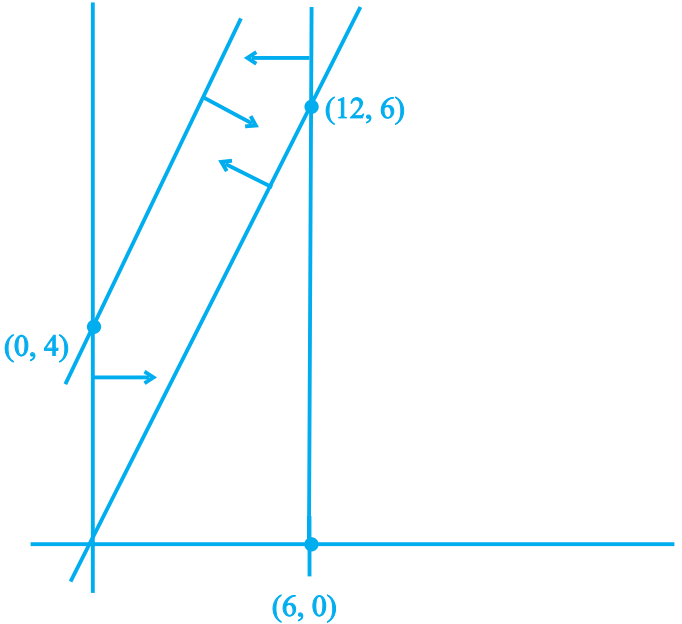
Let F = 3x - 4y be the objective function. Maximum value of F is:

Out of 30 consecutive integers, 2 are chosen at random. The probability that their sum is odd, is

  1. $\frac{14}{29}$

  2. $\frac{16}{29}$

  3. $\frac{15}{29}$

  4. $\frac{10}{29}$

${\tan ^{ - 1}}\frac{x}{{\sqrt {{a^2} - {x^2}} }} = $
Let $R _{1}=\{( a , b ) \in N \times N :| a - b | \leq 13\}$ and $R _{2}=\{( a , b ) \in N \times N :| a - b | \neq 13\} .$ Thenon $N$
Write the direction cosines of a line parallel to the line $\frac{3-x}{3}=\frac{y+2}{-2}=\frac{z+2}{6}$.
If $\left| {\begin{array}{*{20}{c}}
{a - b - c}&{2a}&{2a}\\
{2b}&{b - c - a}&{2b}\\
{2c}&{2c}&{c - a - b}
\end{array}} \right|$ $ = \left( {a + b + c} \right)\,{\left( {x + a + b + c} \right)^2}$ , $x   \ne 0$ and $a + b + c \ne 0$, then $x$ is equal to
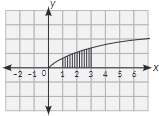
Shown below is the curve defined by the equation $y=\log (x+1)$ for $x \geq 0$.
Image
Which of these is the area of the shaded region?