MCQ
$'O-N-O'$ bond angle is maximum in ?
  • A
    $N_2O$
  • $NO_2^ + $
  • C
    $NO_2^ - $
  • D
    $NO_3^ - $

Answer

Correct option: B.
$NO_2^ + $
b
The ONO angle is maximum in $NO _{2}^{+}$ In $NO _{3}^{-}$, bond angle is $=120^{\circ}$ due to sp $^{2}$ -hybridization with no lone pair $N O _{2}^{+}, N O _{2}^{-}$ and $NO _{2}$ have bond angles nearly $180^{\circ}( sp )$ with one lone pair, $115^{\circ}\left( sp ^{2}\right)$ with one lone pair and $134^{\circ}$ respectively.

Thus, ON O angle is maximum in $NO _{2}^{+}$.

Need a full question paper?

Generate a complete, print-ready paper with questions like this in minutes — across 16+ boards, with answer keys.

Start Generating Free

Similar questions

The ionic radii of $O _{2}- F ^{-}, Na ^{+}$ and $Mg ^{2+}$ are in the order :
In  $C{H_3}C{H_2}OH\mathop {\xrightarrow{X}}\limits_{{{350}\,^o}C} C{H_2} = C{H_2} + {H_2}O;$   $'X' $ is
Given below are two statements:

Statement $I$ : Aniline does not undergo Friedel-Crafts alkylation reaction.

Statement $II$ : Aniline cannot be prepared through Gabriel synthesis.

In the light of the above statements, choose the correct answer from the options given below:

The electronic configuration of four elements $L, P, Q$ and $R$ are given the brackets

$L(1s^2, 2s^2 2p^4); Q(1s^2, 2s^2 2p^6, 3s^2 3p^5)$
$P(1s^2, 2s^2 2p^6, 3s^1); R(1s^2, 2s^2 2p^6, 3s^2)$

The formulae of ionic compounds that can be formed between these elements are

Structure of $3,4-$ dimethyl pent $-1-$ en $-3-$ ol is
The dissociation constant of $n-$ butyric acid is $1.6\times10^{-5}$ and the molar conductivity at infinite dilution is $380\times10^{-4}\, S\,m^2\,mol^{-1}$. The specific conductance of the $0.01\, M$ acid solution is
The order of energy absorbed which is responsible for the color of complexes

$(A)$ $\left[ Ni \left( H _{2} O \right)_{2}( en )_{2}\right]^{2+}$

$(B)$ $\left[ Ni \left( H _{2} O \right)_{4}(\text { en })\right]^{2+}$ and

$(C)$ $\left[ Ni ( en )_{3}\right]^{2+}$ is ...... .
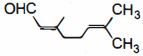
Which $IUPAC$ name is correct for the given compound ?
Hydrogen bonding plays a central role in the following phenomena :

$(A)$ Ice floats in water.

$(B)$ Higher Lewis basicity of primary amines than tertiary amines in aqueous solutions.

$(C)$ Formic acid is more acidic than acetic acid.

$(D)$ Dimerisation of acetic acid in benzene.

The addition of $HBr$ is easiest with