MCQ
Ozone with dry iodine give
  • ${I_4}{O_4}$
  • B
    ${I_2}{O_3}$
  • C
    $I{O_2}$
  • D
    ${I_2}{O_4}$

Answer

Correct option: A.
${I_4}{O_4}$
a
(a) $4{O_3} + 6{I_2}(dry) \to 3{I_4}{O_4}$

Need a full question paper?

Generate a complete, print-ready paper with questions like this in minutes — across 16+ boards, with answer keys.
Start Generating Free

Similar questions

The most important buffer in the blood consists of
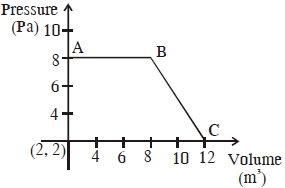
The magnitude of work done by a gas that undergoes a reversible expansion along the path $ABC$ shown in the figure is .............. $\mathrm{Joule}$
 $1$ molal $K _{4} Fe ( CN )_{6}$ solution has a degree of dissociation of $0.4 .$ Its boiling point is equal to that of another solution which contains $18.1$ weight percent of a non electrolytic solute $A$. The molar mass of $A$ is $.......\, u$. (Round off to the Nearest Integer). [Density of water $\left.=1.0\, g\, cm ^{-3}\right]$
Transition element makes complex compound due to 
${K_3}\left[ {Fe{{(CN)}_6}} \right]$ is called
Consider the following reactions

$(a)\;\left(\mathrm{CH}_{3}\right)_{3} \mathrm{CCH}(\mathrm{OH}) \mathrm{CH}_{3} \stackrel{\mathrm{conc.H}, \mathrm{SO}_{4}}{\longrightarrow}$

$(b)\;\left(\mathrm{CH}_{3}\right)_{2} \mathrm{CHCH}(\mathrm{Br}) \mathrm{CH}_{3} \stackrel{\text { alc.KOH }}{\longrightarrow}$

$(c)\;\left(\mathrm{CH}_{3}\right)_{2} \mathrm{CHCH}(\mathrm{Br}) \mathrm{CH}_{3} \xrightarrow[\text { It should be }\left(\mathrm{CH}_{3}\right)_{3} \mathrm{CO}^{-} \mathrm{K}^{+}]{\text { given by } \mathrm{NTA}\left(\mathrm{CH}_{3}\right)_{3} \mathrm{O}^{-} \mathrm{K}^{+}}$

$(d)\;\begin{array}{*{20}{c}}
  {{{(C{H_3})}_2}C - C{H_2} - CHO} \\ 
  {|\,\,\,\,\,\,\,\,\,\,\,\,\,\,\,\,\,\,} \\ 
  {OH\,\,\,\,\,\,\,\,\,\,\,\,\,\,} 
\end{array}\xrightarrow{\Delta }$

Which of these reaction(s) will not produce Saytzeff product ?

The unit of the van der Waals gas equation parameter $'a'$ in $\left(\mathrm{P}+\frac{\mathrm{an}^{2}}{\mathrm{~V}^{2}}\right)(\mathrm{V}-\mathrm{nb})=\mathrm{n} \mathrm{RT}$ is :
In which of the following, oxygen has $+ 2$ oxidation number
Oxidation state of $"S"$ in Peroxodisulphuric acid and Sodium tetrathionate are
The four quantum numbers of the outermost orbital of $K$ (atomic no. $=19$ ) are