MCQ
Peroxo acids of sulphur are
- A$H_2SO_5, \,H_2SO_3$ and $H_2S_2O_8$
- B$H_2SO_4, \,H_2S_2O_8$ and $H_2SO_3$
- C$H_2S_2O_7, \,H_2SO_3$ and $H_2SO_4$
- ✓$H_2S_2O_8$ and $H_2SO_5$
$S ^{2-}$ will give $H _{2} S ( g )$, will turns lead acetate paper black.
$SO _{3}{ }^{2-}$ will give $SO _{2}( g )$, which will turns acidified potassium dichromate solution green.
$NO _{2}^{-}$will give brown $NO _{2}( g )$ will turn $KI$ solution blue.
Generate a complete, print-ready paper with questions like this in minutes — across 16+ boards, with answer keys.
Kaushal's method : $\begin{array}{*{20}{c}}
{C{H_3} - CH - C{H_3}\xrightarrow{{KCl}}} \\
{|\,\,\,\,\,\,\,\,\,\,\,\,\,\,\,\,\,\,\,\,} \\
{OH\,\,\,\,\,\,\,\,\,\,\,\,\,\,\,\,\,\,}
\end{array}$
Preeti's method : $C{H_3} - CH = C{H_2}\xrightarrow{{C{l_2} + {H_2}O}}$
Raghav's method : $\begin{array}{*{20}{c}}
{C{H_3} - CH - C{H_3}\xrightarrow[{Pyridine}]{{SOC{l_2}}}} \\
{|\,\,\,\,\,\,\,\,\,\,\,\,\,\,\,\,\,\,\,\,\,\,\,\,\,\,\,} \\
{OH\,\,\,\,\,\,\,\,\,\,\,\,\,\,\,\,\,\,\,\,\,\,}
\end{array}$
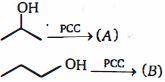
$(I)$ $1\,mol$ of $A$ and $2\,mol$ of $B$ in a $1\,L$ vessel
$(II)$ $2\,mol$ of $A$ and $2\,mol$ of $B$ in a $2\,L$ vessel
$(III)$ $0.2\,mol\, A$ and $0.2\,mol\,B$ in $0.1\,L$ vessel
Which reactant sample reacts by highest rate if reactant is in gaseous state and do not follow zero order reaction ?