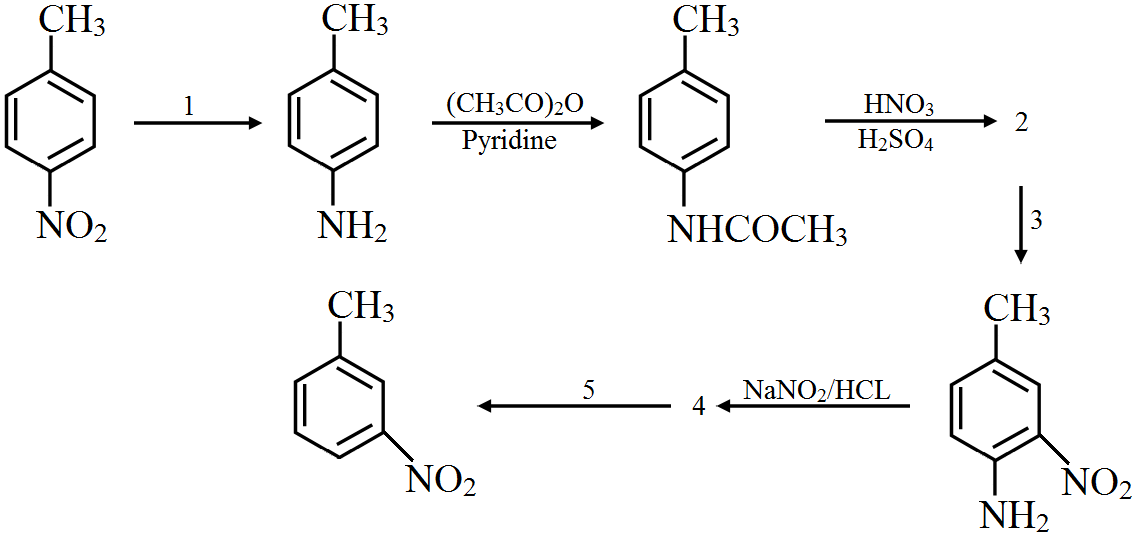
Answer

Get the step-by-step solution for this question inside the Vidyadip app.

Get the answer in the app

Need a full question paper?

Generate a complete, print-ready paper with questions like this in minutes — across 16+ boards, with answer keys.

Start Generating Free

Similar questions

Explain the properties and uses of methanol and ethanol.
Explain the various methods of determining the order of a reaction.
Discus in detail the following $C - H$ bond cleavage reactions of ether :
(i) Peroxide formation
(ii) Halogenation
The activation energy of a reaction is 75.2kJ mol-1 in the absence of a catalyst and it lowers to 50.14kJ mol-1with a catalyst. How many times will the rate of reaction grow in the presence of a catalyst if the reaction proceeds at 25°C?
Give reasons for the following:
On electrolysis in acidic solution amino acids migrate towards cathode, while in alkaline solution these migrate towards anode.
Primary alkyl halide C4H9Br (a) reacted with alcoholic KOH to give compound (b). Compound (b) is reacted with HBr to give (c) which is an isomer of (a). When (a) is reacted with sodium metal it gives compound (d), C8H18 which is different from the compound formed when n-butyl bromide is reacted with sodium. Give the structural formula of (a) and write the equations for all the reactions.
Write a detailed note on enzymes.
 Match the compounds given in Column I with the oxidation state of cobalt present in it (given in Column II) and assign the correct code.

 
Column I (Compound)
 
Column II (Oxidation state of Co)
a.
[Co(NCS)(NH3)5](SO3)
1.
+4
b.
[Co(NH3)4Cl2]SO4
2.
0
c.
Na4[Co(S2O3)3]
3.
+1
d.
[Co2(CO)8]
4.
+2
 
 
5.
+3

Code:

  1. A (1), B (2), C (4), D (5).
  2. A (4), B (3), C (2), D (1).
  3. A (5), B (1), C (4), D (2).
  4. A (4), B (1), C (2), D (3).
Write the $S _{ N } 1$ mechanism of unimolecular nucleophilic substitution reaction.
What is abnormal molar mass? Explain.