MCQ
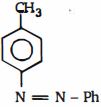
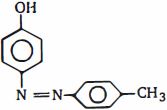
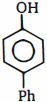
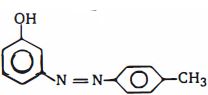
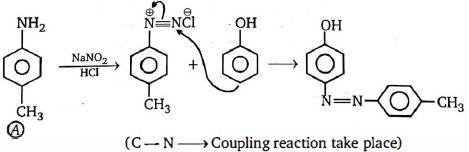
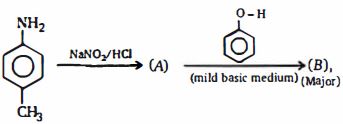
Product $(B)$ of this reaction is
  • A


  • C

  • D

Answer

Correct option: B.

b

Need a full question paper?

Generate a complete, print-ready paper with questions like this in minutes — across 16+ boards, with answer keys.
Start Generating Free

Similar questions

Reduction reactions of carbonyl compounds is known to be:
In which of the following reaction $SN^1$ reaction takes place ?
In which of the following reactions $H_2O_2$ acts as a reducing agent ?
For the reaction, the major product is formed by:
Which of the following transition metal cation has maximum unpaired electrons
${C_6}{H_6}\xrightarrow[{{\text{Conc}}{\text{. }}{{\text{H}}_2}{\text{S}}{{\text{O}}_4}}]{{{\text{Conc}}{\text{. HN}}{{\text{O}}_3}}}B\xrightarrow{{{\text{Sn  +  HCl}}}}C\xrightarrow[{O - {5\,^o}C}]{{{\text{HN}}{{\text{O}}_2}}}D\xrightarrow{{{\text{HB}}{{\text{F}}_4}}}E\xrightarrow{\Delta }F$

$F$ will be

Vapours of an alcohol $X$ when passed over hot reduced copper, produce an alkene, the alcohol is:
Cyanides exists in:
A trinitro compound, $1, 3,5$ tris-($4$-nitrophenyl) benzene, on complete reaction with an excess of $\mathrm{Sn} / \mathrm{HCl}$ gives major product, which on treatment with an excess of $NaNO_2 /  HCl$ at $0^{\circ} C$ provides $P$ as the product. $P$, upon treatment with excess of $H_2 O$ at room temperature, gives the product $Q$. Bromination of $Q$ in aqueous medium furnishes the product $R$. The compound $P$ upon treatment with an excess of phenol under basic conditions gives the product $S$.

The molar mass difference between compounds $Q$ and $R$ is $474 \mathrm{~mol}^{-1}$ and between compounds $P$ and $S$ is $172.5 \mathrm{~g} \mathrm{~mol}^{-1}$.

($1$)The number of heteroatoms present in one molecule of $R$ is. . . . .  .

[Use: Molar mass (in g mol ${ }^{-1}$ ): $\mathrm{H}=1, \mathrm{C}=12, \mathrm{~N}=14, \mathrm{O}=16, \mathrm{Br}=80, \mathrm{Cl}=35.5$

Atoms other than $\mathrm{C}$ and $\mathrm{H}$ are considered as heteroatoms]

($2$)The total number of carbon atoms and heteroatoms present in one molecule of $S$. . . . . .

[Use: Molar mass in $\mathrm{g} \mathrm{mol}^{-1}$ ]: $\mathrm{H}=1, \mathrm{C}=12, \mathrm{~N}=14, \mathrm{O}=16, \mathrm{Br}=80, \mathrm{Cl}=35.5$

Atoms other than $\mathrm{C}$ and $\mathrm{H}$ are considered as heteroatoms

Give the answer quetion ($1$) and ($2$)

Which of the following is not correctly matched