Question
Read the extract given below and answer the questions that follow:

Source - Swaraj in the Plantations

Workers too had their own understanding of Mahatma Gandhi and the notion of Swaraj. For plantation workers in Assam, freedom meant the right to move freely in and out of the confined space in which they were enclosed, and it meant retaining a link with the village from which they had come. Under the Inland Emigration Act of 1859, plantation workers were not permitted to leave the tea gardens without permission, and in fact they were rarely given such permission. When they heard of the Non-Cooperation Movement, thousands of workers defied the authorities, left the plantations and headed home. They believed that Gandhi Raj was coming and everyone would be given land in their own villages. They, however, never reached their destination. Stranded on the way by a railway and steamer strike, they were caught by the police and brutally beaten up.
Q.1. Explain the understanding of 'Swaraj' for plantation workers in Assam.
Q.2. Explain the Inland Emigration Act of 1859 as a barrier to freedom of plantation workers.
Answer

Q.1. For plantation workers in Assam, 'Swaraj meant the right to move freely in and out of the confined space in which they were inclosed.
Q.2. Under the Inland Emigration Act of 1859, plantation workers were not permitted to leave the tea gardens without permission, and in fact they were rarely given such permission.

Need a full question paper?

Generate a complete, print-ready paper with questions like this in minutes — across 16+ boards, with answer keys.

Start Generating Free

Similar questions

Read the source given below and answer the following questions:
Globalisation has been facilitated by several factors. Three of these have been highlighted: rapid improvements in technology, liberalisation of trade and investment policies and, pressures from international organisations such as the WTO. But with the development of an economy, environmental protection is also necessary. ln June 1992, more than 100 heads of states met in Rio-de-Janeiro in Brazil, for the first international Earth Summit. The summit was convened for addressing urgent problems of environmental protection and socio-economic development at the global level. The assembled leaders signed the Declaration on Global Climatic Change and Biological Diversity. The Rio Convention endorsed the global Forest Principles and adopted Agenda 21 for achieving Sustainable Development in the 21st century.
Answer the following MCQs by choosing the most appropriate option:
  1. The so called first international Earth summit was convened for:
  1. Addressing urgent problems of environmental protection.
  2. Addressing socio-economic development at the global level.
  3. Both (a) and (b).
  4. None of these.
  1. The passage is mainly related to
  1. Globalisation and environment.
  2. Rio-de-Janeiro Earth Summit 1992.
  3. Sustainable development.
  4. Agenda 21.
  1. Agenda 21 is the flowchart of action to be taken by the assembled nations to:
  1. Achieve environmental protection.
  2. Fulfil the needs of future generations.
  3. Combat the hurdles that debar sustainable development.
  4. Attain socio-economic development at global level.
  1. The term used to achieve development without damaging the environment and without compromising with the needs of the future generations is:
  1. Socio-economic development.
  2. Agenda 21.
  3. Global environmental development.
  4. Sustainable development.
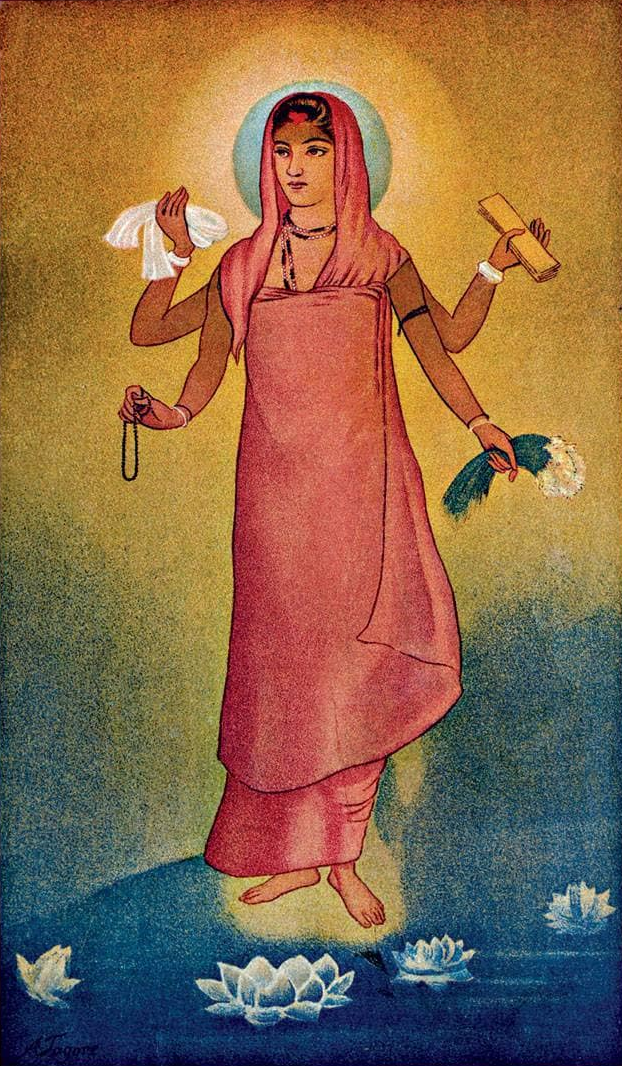
Observe the picture below and answer the questions that follow:
  1. How is Bharat Mata portrayed in the above picture?
  2. Who has painted this image?
  3. What does the mala in one hand emphasise?
Read the case given below and answer the questions that follow: Suppose for the present that a particular country is quite developed. We would certainly like this level of development to go up further or at least be maintained for future generations. This is obviously desirable. However, since the second half of the twentieth century, a number of scientists have been warning that the present type, and levels, of development are not sustainable. Groundwater is an example of renewable resources. These resources are replenished by nature as in the case of crops and plants. However, even these resources may be overused. For example, in the case of groundwater, if we use more than what is being replenished by rain then we would be overusing this resource. Consequences of environmental degradation do not respect national or state boundaries; this issue is no longer region or nation specific. Our future is linked together. Sustainability of development is comparatively a new area of knowledge in which scientists, economists, philosophers and other social scientists are working together.
Q.1. What is the main cause that enhances environmental degradation?
Q.2. Define sustainable development.
Q.3. What kind of development should be achieved by making a sincere attempt to preserve the environment and resources?
Read the given extract and answer the following questions.
In a democracy, we are most concerned with ensuring that people will have the right to choose their rulers and people will have control over the rulers. Whenever possible and necessary, citizens should be able to participate in decision making, that affects them all. Therefore, the most basic outcome of democracy should be that it produces a government that is accountable to the citizens, and responsive to the needs and expectations of the citizens. Some people think that democracy produces less effective government. It is, of course, true that nondemocratic rulers are very quick and efficient in decision making and implementation, whereas, democracy is based on the idea of deliberation and negotiation. So, some delay is bound to take place. But, because it has followed procedures, its decisions maybe both more acceptable to the people and more effective. Moreover, when citizens want to know if a decision was taken through the correct procedures, they can find this out. They have the right and the means to examine the process of decision making. This is known as transparency. This factor is often missing from a non-democratic government. There is another aspect in which democratic government is certainly better than its alternatives: democratic government is legitimate government. It may be slow, less efficient, not always very responsive, or clean. But a democratic government is people's own government.
Answer the following MCQs by choosing the most appropriate option:
  1. People's right to choose their own rulers is called as the:
  1. Right to Initiate.
  2. Right to Plebiscite.
  3. Right to Vote.
  4. Right to Referendum.
  1. Which of the following options helps in promoting transparency in the governance?
  1. Right to education.
  2. Right to information.
  3. Right against exploitation.
  4. Right to speech and expression.
  1. __________ make/ s the government legitimate.
  1. Credibility of politicians.
  2. People's movements.
  3. Free and fair elections.
  4. Holding of powers.
  1. Decisions in a democracy are more acceptable to the people because they are:
  1. Taken swiftly and implemented quickly.
  2. Taken by giving privileges to the people.
  3. Taken through elites' votes.
  4. Taken after following due processes.
Read the source given below and answer the questions that follow:
During the 1830s, Giuseppe Mazzini had sought to put together a coherent programme for a unitary Italian Republic. He had also formed a secret society called Young Italy for the dissemination of his goals. The failure of revolutionary uprisings both in 1831 and 1848 meant that the mantle now fell on Sardinia-Piedmont under its ruler King Victor Emmanuel II to unify the Italian states through war. In the eyes of the ruling elites of this region, a unified Italy offered them the possibility of economic development and political dominance.
Answer the following MCQs by choosing the most appropriate options:
  1. What was the name of the secret society formed by Giuseppe Mazzini?
  1. Giuseppe Mazzini formed a secret society called Young Italy.
  2. Giuseppe Mazzini formed a secret society called Old Italy.
  3. Giuseppe Mazzini formed a secret society called Traditional Italy.
  4. Giuseppe Mazzini formed a secret society called Old France.
  1. When did Giuseppe Mazzini seek to put together a coherent programme for a unitary Italian Republic?
  1. During the 1860s, Giuseppe Mazzini had sought to put together a coherent programme for a unitary Italian Republic.
  2. During the 1730s, Giuseppe Mazzini had sought to put together a coherent programme for a unitary Italian Republic.
  3. During the 1930s, Giuseppe Mazzini had sought to put together a coherent programme for a unitary Italian Republic.
  4. During the 1830s, Giuseppe Mazzini had sought to put together a coherent programme for a unitary Italian Republic.
  1. Who was the ruler of Sardinia-Piedmont?
  1. King Victor David I was the ruler of Sardinia-Piedmont.
  2. King Victor Davis II was the ruler of Sardinia-Piedmont.
  3. King Victor Emmanuel II was the ruler of Sardinia-Piedmont.
  4. King Victor Emmanuel III was the ruler of Sardinia-Piedmont.
  1. What did a unified Italy offer the ruling elites of this region?
  1. A unified Italy offered them the possibility of underdevelopment and political dominance.
  2. A unified Italy offered them the possibility of economic development and political dominance.
  3. A unified Italy offered them the possibility of underdevelopment and political failure.
  4. A unified Italy offered them the possibility of social breakdown and political failure.
Read the source given below and answer the questions that follow:
Like Germany, Italy too had a long history of political fragmentation. Italians were scattered over several dynasty states as well as the multi-national Habsburg Empire. During the middle of the nineteenth century, Italy was divided into seven states, of which only one, Sardinia Piedmont was ruled by an Italian princely house. The north was under Austrian Habsburg's, the centre was ruled by the Pope and the southern regions were under the domination of the Bourbon king of Spain. Even the Italian language had not acquired one common form and still had many regional and local variations.
Answer the following MCQs by choosing the most appropriate options:
  1. What could be the reason behind that the Italian language had not acquired one common form and still had many regional and local variations?
  1. Italy never had a long history of political fragmentation. Italians were not scattered over several dynastic states and the Habsburg Empire.
  2. Italy had a long history of political fragmentation. Italians were scattered over several dynastic states and the Habsburg Empire.
  3. Italy never had a long history of political fragmentation. Italians were not scattered over several dynastic states and the French Empire.
  4. Italy had a long history of political fragmentation. Italians were scattered over only two dynastic states and the Dutch Empire.
  1. When was Italy divided into seven states?
  1. Italy divided into seven states during middle of sixteenth century.
  2. Italy divided into seven states during end of nineteenth century.
  3. Italy divided into seven states during middle of twentieth century.
  4. Italy divided into seven states during middle of nineteenth century.
  1. Who ruled Sardinia Piedmont?
  1. Italian princely house ruled Sardinia Piedmont.
  2. German princely house ruled Sardinia Piedmont.
  3. French princely house ruled Sardinia Piedmont.
  4. Italian army ruled Sardinia Piedmont.
  1. Which part was under Austrian Habsburg?
  1. East was under Austrian Habsburg.
  2. West was under Austrian Habsburg.
  3. South was under Austrian Habsburg.
  4. North was under Austrian Habsburg.
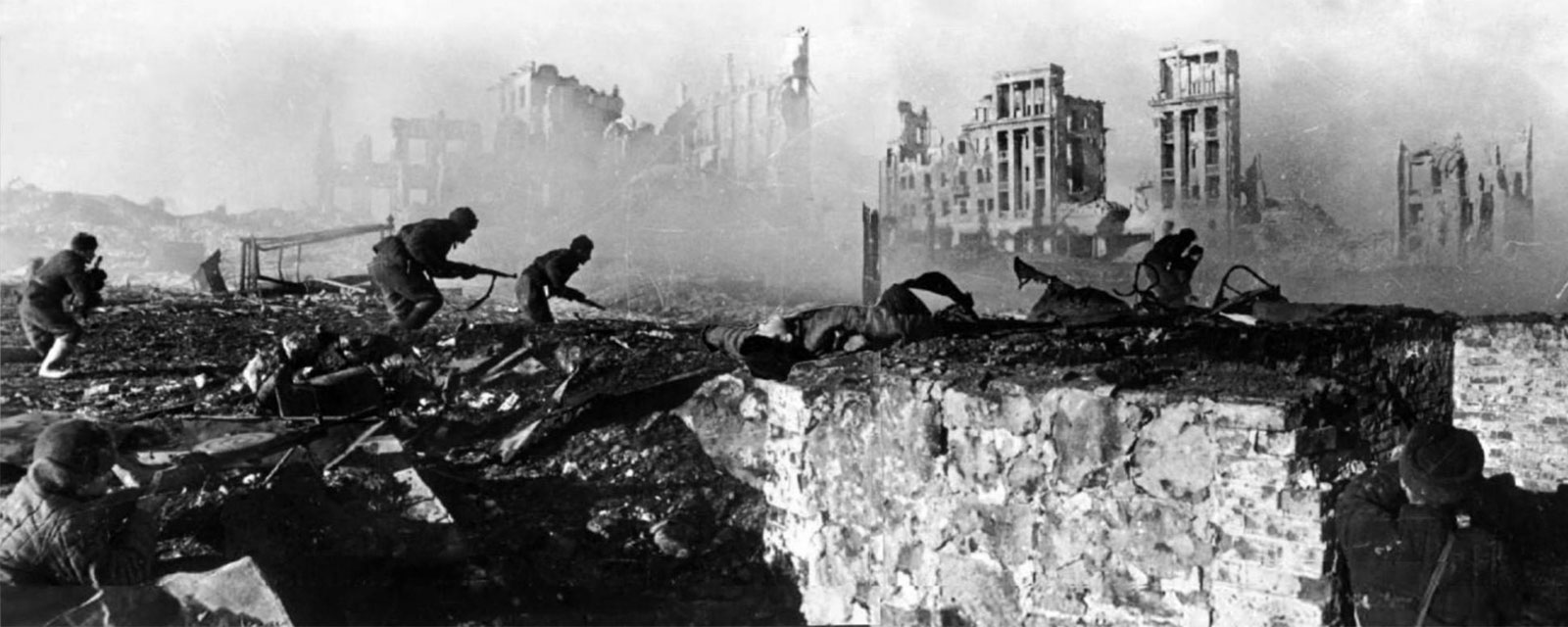
Observe the picture below and answer the questions that follow:
  1. Name the building in Soviet Russia which was devastated in the Second World War.
  2. When did this war break out? Between which two powers was this war fought?
On 13th April the infamous Jallianwalla Bagh incident took place. On that day a large crowd gathered in the enclosed ground of Jallianwalla Bagh. Some came to protest against the government’s new repressive measures. Others had come to attend the annual Baisakhi fair. Dyer entered the area, blocked the exit points, and opened fire on the crowd, killing hundreds. As the news of Jallianwalla Bagh spread, crowds took to the streets in many north Indian towns. There were strikes, clashes with the police and attacks on government buildings. Seeing violence spread, Mahatma Gandhi called off the movement. While the Rowlatt satyagraha had been a widespread movement, it was still limited mostly to cities and towns. Mahatma Gandhi now felt the need to launch a more broad-based movement in India.
i. How did Mahatma Gandhi react to the Rowlatt Act?
ii. What made Mahatma Gandhi call off Rowlatt Satyagraha?
iii. Why did Rowlatt Act enrage people?
The movement started with middle-class participation in the cities. Thousands of students left governmentcontrolled schools and colleges, headmasters and teachers resigned, and lawyers gave up their legal practices. The council elections were boycotted in most provinces except Madras, where the Justice Party, the party of the non-Brahmans, felt that entering the council was one way of gaining some power-something that usually only Brahmans had access to. The effects of non-cooperation on the economic front were more dramatic. Foreign goods were boycotted, liquor shops picketed, and foreign cloth burnt in huge bonfires. The import of foreign cloth halved between 1921 and 1922, its value dropping from Rs. 102 crore to Rs. 57 crore. In many places, merchants and traders refused to trade in foreign goods or finance foreign trade. As the boycott movement spread, and people began discarding imported clothes and wearing only Indian ones, the production of Indian textile mills and handlooms went up.
i. What role did the Justice Party play in boycotting council elections?
ii. How were the effects of non-cooperation on the economic front dramatic?
iii. Explain the effect of the Boycott movement on the foreign textile trade.
Read the given source and answer the questions that follow:
Another important feature of the Civil Disobedience Movement was the large scale participation of women. During Gandhiji's Salt March, thousands of women came out of their homes to listen to him. They participated in protest-marches, manufactured salt and picketed foreign cloth and liquor shops. Many went to jail. In urban areas, these women were from high caste families. In rural areas, they came from rich peasant households.
Moved by Gandhiji's call, they began to see service to the nation as a sacred duty of women. Gandhiji was convinced that it was the duty of women to look after home and hearth, be good mothers and good wives. And for a long time, the Congress was reluctant to allow women to hold any position of authority within the organisation. It was keen only on their symbolic presence.
Q.1. The women from rural areas mainly belonged to which group?
Q.2. Which incident marked the beginning of the Civil Disobedience Movement?
Q.3. How did women participate in the Civil Disobedience Movement?