Question
Show that $\text{f(x)}=\tan^{-1}(\sin\text{x}+\cos\text{x})$ is an increasing function in $\Big(0,\frac{\pi}{4}\Big).$

Answer

We have, $\text{f(x)}=\tan^{-1}(\sin\text{x}+\cos\text{x})$
$\therefore\ \text{f}'(\text{x})=\frac{1}{1+(\sin\text{x}+\cos\text{x})^2}\cdot(\cos\text{x}-\sin\text{x})$
$=\frac{1}{1+\sin^2\text{x}+\cos^2\text{x}+2\sin\text{x}.\cos\text{x}}(\cos\text{x}-\sin\text{x})$
$=\frac{1}{(2+\sin2\text{x})}(\cos\text{x}-\sin\text{x})$
$\big[\because\sin2\text{x}=2\sin\text{x}\cos\text{x and }\sin^2\text{x}+\cos^2\text{x}=1\big]$
For $\text{f}'(\text{x})\geq0.$
$\frac{1}{(2+\sin2\text{x})}\cdot(\cos\text{x}-\sin\text{x})\geq0$
$\Rightarrow\ \cos\text{x}-\sin\text{x}\geq0$ $\Big[\because(2+\sin2\text{x})\geq0\text{ in }\Big(0,\frac{\pi}{4}\Big)\Big]$
$\Rightarrow\ \cos\text{x}\geq\sin\text{x}$
Which is true, if $\text{x}\in\Big(0,\frac{\pi}{4}\Big)$
Hence, f(x) is an increasing function in $\Big(0,\frac{\pi}{4}\Big).$

Need a full question paper?

Generate a complete, print-ready paper with questions like this in minutes — across 16+ boards, with answer keys.
Start Generating Free

Similar questions

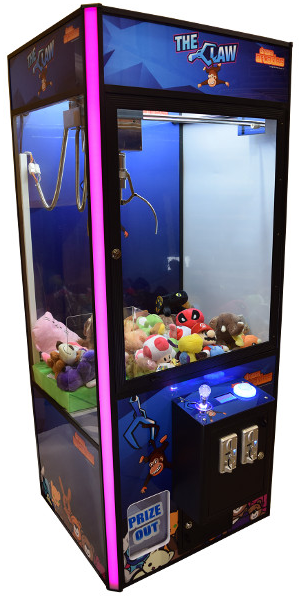
In a play zone, Aastha is playing crane game. It has 12 blue balls, 8 red balls, 10 yellow balls and 5 green balls. If Aastha draws two balls one after the other without replacement, then answer the following questions.
  1. What is the probability that the first ball is blue and the second ball is green?
  1. $\frac{5}{119}$
  2. $\frac{12}{119}$
  3. $\frac{6}{119}$
  4. $\frac{15}{119}$
  1. What is the probability that the first ball is yellow and the second ball is red?
  1. $\frac{16}{119}$
  2. $\frac{8}{119}$
  3. $\frac{24}{119}$
  4. None of these.
  1. What is the probability that both the balls are red?
  1. $\frac{4}{85}$
  2. $\frac{24}{595}$
  3. $\frac{12}{119}$
  4. $\frac{64}{119}$
  1. What is the probability that the first ball is green and the second ball is not yellow?
  1. $\frac{10}{119}$
  2. $\frac{6}{85}$
  3. $\frac{12}{119}$
  4. None of these.
  1. What is the probability that both the balls are not blue?
  1. $\frac{6}{595}$
  2. $\frac{12}{85}$
  3. $\frac{15}{17}$
  4. $\frac{253}{595}$
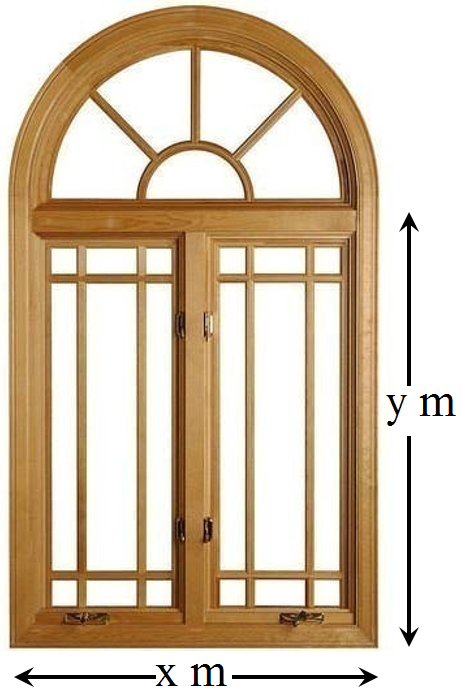
Rohan, a student of class XII, visited his uncle's flat with his father. He observe that the window of the house is in the form of a rectangle surmounted by a semicircular opening having perimeter 10m as shown in the figure.

Based on the above information, answer the following questions.
  1. If x and y represents the length and breadth of the rectangular region, then relation between x and y can be represented as.
  1. $\text{x}+\text{y}+\frac{\pi}{2}=10$
  2. $\text{x}+\text{2y}+\frac{\pi\text{x}}{2}=10$
  3. $\text{2x}+\text{2y}=10$
  4. $\text{x}+\text{2y}+\frac{\pi}{2}=10$
  1. The area (A) of the window can be given by.
  1. $\text{A}=\text{x}-\frac{\text{x}^3}{8}-\frac{\text{x}^2}{2}$
  2. $\text{A}=\text{5x}-\frac{\text{x}^2}{8}-\frac{\pi\text{x}^2}{8}$
  3. $\text{A}=\text{x}+\frac{\pi\text{x}^3}{8}-\frac{\text{3x}^2}{8}$
  4. $\text{A}=\text{5x}+\frac{\text{x}^3}{2}+\frac{\pi\text{x}^2}{8}$
  1. Rohan is interested in maximizing the area of the whole window, for this to happen, the value of x should be.
  1. $\frac{10}{2-\pi}$
  2. $\frac{20}{4-\pi}$
  3. $\frac{20}{4+\pi}$
  4. $\frac{10}{2+\pi}$
  1. Maximum area of the window is.
  1. $\frac{30}{4+\pi}$
  2. $\frac{30}{4-\pi}$
  3. $\frac{50}{4-\pi}$
  4. $\frac{50}{4+\pi}$
  1. For maximum value of A, the breadth of rectangular part of the window is.
  1. $\frac{10}{4+\pi}$
  2. $\frac{10}{4-\pi}$
  3. $\frac{20}{4+\pi}$
  4. $\frac{20}{4-\pi}$
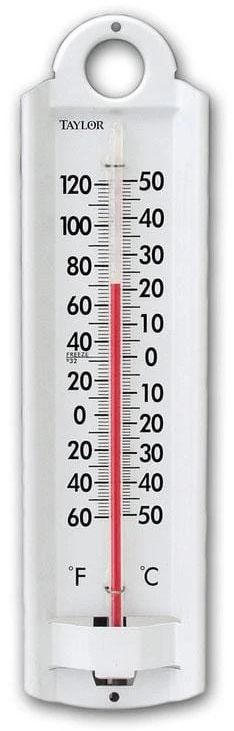
A thermometer reading 80°F is taken outside. Five minutes later the thermometer reads 60°F. After another 5 minutes the thermometer reads 50°F. At any time t the thermometer reading be T°F and the outside temperature be S°F.

Based on the above information, answer the following questions.
  1. If $\lambda$ is posinve constant of propornonality, then $\frac{\text{dn}}{\text{dt}}$ is:
  1. $\lambda(\text{T - S})$
  2. $\lambda(\text{T + S})$
  3. $\lambda\text{T S}$
  4. $-\lambda(\text{T - S})$
  1. The value of T(S) is:
  1. 30°F
  2. 40°F
  3. 5D°F
  4. 60°F
  1. The value of T(10) is:
  1. 50°F
  2. 60°F
  3. 80°F
  4. 90°F
  1. Find the general solution of differential equation fanned in given situation.
  1. $\log\text{T}=\text{St + c}$
  2. $\log(\text{T}-\text{S})=\lambda{\text{t + c}}$
  3. $\log\text{T}=\text{tT + c}$
  4. $\log(\text{T + S})=\lambda{\text{t + c}}$
  1. Find the value of constant of integration c in the solution of differential equation formed in given situation.
  1. $\log(60\ -\ \text{S})$
  2. $\log(80\ +\ \text{S})$
  3. $\log(80\ -\ \text{S})$
  4. $\log(60\ +\ \text{S})$
If y = f(u) is a differentiable function of u and u = g(x) is a differentiable function of x, then y = f(g(x)] is a differentiable function of x and $\frac{\text{dy}}{\text{dx}}=\frac{\text{dy}}{\text{du}}\times\frac{\text{du}}{\text{dx}}.$ This rule is also known as CHAIN RULE.
Based on the above information, find the derivative of functions w.r.t. x in the following questions.
  1. $\cos\sqrt{\text{x}}$
  1. $\frac{-\sin\sqrt{\text{x}}}{2\sqrt{\text{x}}}$
  2. $\frac{\sin\sqrt{\text{x}}}{2\sqrt{\text{x}}}$
  3. $\sin\sqrt{\text{x}}$
  4. $-\sin\sqrt{\text{x}}$
  1. $7^{\text{x}+\frac{1}{\text{x}}}$
  1. $\Big(\frac{\text{x}^2-1}{\text{x}^2}\Big)\cdot7^{\text{x}+\frac{1}{\text{x}}}\cdot\log7$
  2. $\Big(\frac{\text{x}^2+1}{\text{x}^2}\Big)\cdot7^{\text{x}+\frac{1}{\text{x}}}\cdot\log7$
  3. $\Big(\frac{\text{x}^2-1}{\text{x}^2}\Big)\cdot7^{\text{x}-\frac{1}{\text{x}}}\cdot\log7$
  4. $\Big(\frac{\text{x}^2+1}{\text{x}^2}\Big)\cdot7^{\text{x}-\frac{1}{\text{x}}}\cdot\log7$
  1. $\sqrt\frac{{1-\cos\text{x}}}{1+\cos\text{x}}$
  1. $\frac{1}{2}\sec^2\frac{\text{x}}{2}$
  2. $-\frac{1}{2}\sec^2\frac{\text{x}}{2}$
  3. $\sec^2\frac{\text{x}}{2}$
  4. $-\sec^2\frac{\text{x}}{2}$
  1. $\frac{1}{\text{b}}\tan^{-1}\Big(\frac{\text{x}}{\text{b}}\Big)+\frac{1}{\text{a}}\tan^{-1}\Big(\frac{\text{x}}{\text{a}}\Big)$
  1. $\frac{-1}{\text{x}^2+\text{b}^2}+\frac{1}{\text{x}^2+\text{a}^2}$
  2. $\frac{1}{\text{x}^2+\text{b}^2}+\frac{1}{\text{x}^2+\text{a}^2}$
  3. $\frac{1}{\text{x}^2+\text{b}^2}-\frac{1}{\text{x}^2+\text{a}^2}$
  4. None of these.
  1. $\sec^{-1}\text{x}+\text{cosec}^{-1}\frac{\text{x}}{\sqrt{\text{x}^2-1}}$
  1. $\frac{2}{\sqrt{\text{x}^2-1}}$
  2. $\frac{-2}{\sqrt{\text{x}^2-1}}$
  3. $\frac{1}{|\text{x}|\sqrt{\text{x}^2-1}}$
  4. $\frac{2}{|\text{x}|\sqrt{\text{x}^2-1}}$
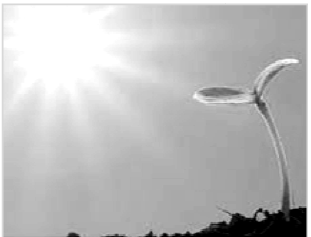
Read the following passage and answer the questions given below: elation between the height of the plant $\left(y^{\prime}\right.$ in cm $)$ with respect to its exposure to is governed by the following equation  $y=4 x-\frac{1}{2} x^2$, where ' $x$ ' is the number of days exposed to the sunlight, for $x \leq 3$

Image

(i) Find  the rate of growth of the plant with respect to the number of days exposed to the sunlight.

(ii) Does the rate of  growth of the plant increase or decrease in the first three days? 
What will be the height of the plant after 2 days?

To teach the application of probability a maths teacher arranged a surprise game for 5 of his students namely Archit, Aadya, Mivaan, Deepak and Vrinda. He took a bowl containing tickets numbered 1 to 50 and told the students go one by one and draw two tickets simultaneously from the bowl and replace it after noting the numbers. Based on the above information, answer the following questions.
  1. Teacher ask Vrinda, what is the probability that both tickets drawn by Arch it shows even number?
  1. $\frac{1}{50}$
  2. $\frac{12}{49}$
  3. $\frac{13}{49}$
  4. $\frac{15}{49}$
  1. Teacher ask Mivaan, what is the probability that both tickets drawn by Aadya shows odd number?
  1. $\frac{1}{50}$
  2. $\frac{2}{49}$
  3. $\frac{12}{49}$
  4. $\frac{5}{49}$
  1. Teacher ask Deepak, what is the probability that tickets drawn by Mivaan, shows a multiple of 4 on one ticket and a multiple 5 on other ticket?
  1. $\frac{14}{245}$
  2. $\frac{16}{245}$
  3. $\frac{24}{245}$
  4. None of these.
  1. Teacher ask Arch it, what is the probability that tickets are drawn by Deepak, shows a prime number on one ticket and a multiple of 4 on other ticket?
  1. $\frac{3}{245}$
  2. $\frac{17}{245}$
  3. $\frac{18}{245}$
  4. $\frac{36}{245}$
  1. Teacher ask Aadya, what is the probability that tickets drawn by Vrinda, shows an even number on first ticket and an odd number on second ticket?
  1. $\frac{15}{98}$
  2. $\frac{25}{98}$
  3. $\frac{35}{98}$
  4. None of these.
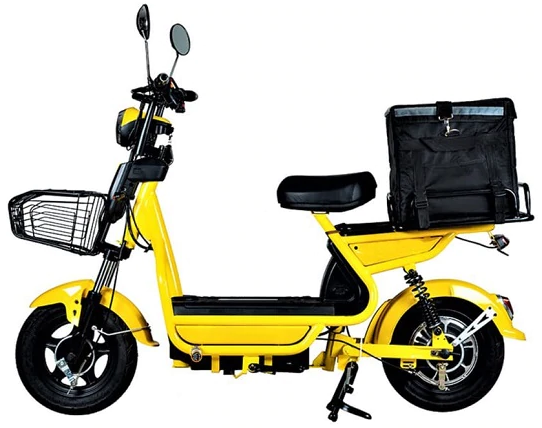
An owner of an electric bike rental company have determined that if they charge customers $₹ x$ per day to rent a bike, where $50 < x < 200,$ then number of bikes $(n),$ they rent per day can be shown by linear function $n(x) = 2000 - 10x$. If they charge $₹ 50$ per day or less, they will rent all their bikes. If they charge $₹ 200$ or more per day, they will not rent any bike.

Based on the above information, answer the following questions.

  1. Total revenue $R$ as a function of $x $ can be represented as.
  1. $2000x - 10x^2$
  2. $2000x + 10x^2$
  3. $2000 - 10x$
  4. $2000 - 5x^2$
  1. If $R(x)$ denote the revenue, then maximum value of $R(x)$ occur when x equals.
  1. $10$
  2. $100$
  3. $1000$
  4. $50$
  1. At $x = 260,$ the revenue collected by the company is.
  1. $₹ 10$
  2. $₹ 500$
  3. $₹ 0$
  4. $₹ 1000$
  1. The number of bikes rented per day, if $x = 105$ is.
  1. $₹ 40,000$
  2. $₹ 50,000$
  3. $₹ 75,000$
  4. $₹ 1,00,000$
Maximum revenue collected by company is.
  1. $850$
  2. $900$
  3. $950$
  4. $1000$
Three friends Ravi, Raju and Rohit were doing buying and selling of stationery items in a market. The price of per dozen of pen, notebooks and toys are Rupees $\mathrm{x}, \mathrm{y}$ and $\mathrm{z}$ respectively.Ravi purchases $4$ dozen of notebooks and sells $2$ dozen of pens and $5$ dozen of toys. Raju purchases $2$ dozen of toy and sells $3$ dozen of pens and $1$ dozen of notebooks. Rohit purchases one dozen of pens and sells $3$ dozen of notebooks and one dozen of toys.
In the process, Ravi, Raju and Rohit earn $₹\ 1500, ₹\ 10$0 and $₹ \ 400$ respectively.
Image
$(i)$ Write the above information in terms of matrix Algebra.
$(ii)$ What is the total price of one dozen of pens and one dozen of notebooks?
$(iii)$ What is the sale amount of Ravi?
$OR$
What is the amount of purchases and sales made by all three friends?
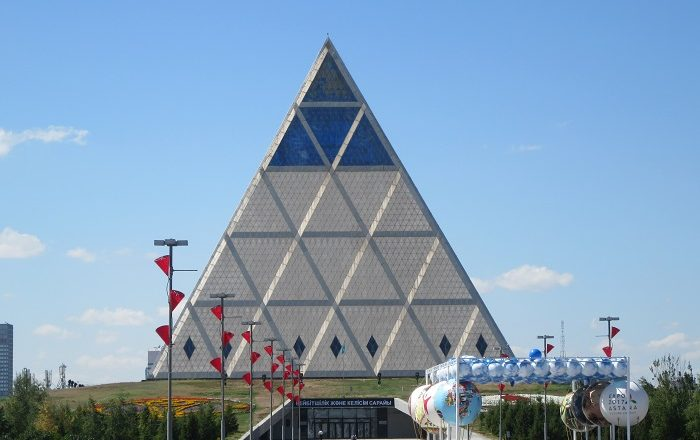
Each triangular face of the Pyramid of Peace in Kazakhstan is made up of $25$ smaller equilateral triangles as shown in the figure.

Using the above information and concept of determinants, answer the following questions.
  1. If the vertices ofoneof the smaller equilateral triangle are $(0, 0), (3,\sqrt{3})$ and $(3,-\sqrt{3}),$ then the area of such triangle is:
  1. $\sqrt{3}\text{ sq}.\text{units}$
  2. $2\sqrt{3}\text{ sq}.\text{units}$
  3. $3\sqrt{3}\text{ sq}.\text{units}$
  4. None of these.
  1. The area of a face of the Pyramid is:
  1. $25\sqrt{3}\text{ sq}.\text{units}$
  2. $50\sqrt{3}\text{ sq}.\text{units}$
  3. $75\sqrt{3}\text{ sq}.\text{units}$
  4. $35\sqrt{3}\text{ sq}.\text{units}$
  1. The length of a altitude of a smaller equilateral triangle is:
  1. $2\ \text{units}$
  2. $3\ \text{units}$
  3. $\sqrt{3}\text{ units}$
  4. $4\ \text{units}$
  1. If $(2, 4), (2, 6)$ are two vertices of a smaller equilateral triangle, then the third vertex will lie on the line represented by:
  1. $\text{x}+\text{y}=5$
  2. $\text{x}=1+\sqrt3$
  3. $\text{x}=2+\sqrt3$
  4. $2\text{x}+\text{y}=5$
  1. Let $A(a, 0), B(0, b)$ and $C(1, 1)$ be three points. If $\frac{1}{\text{a}}+\frac{1}{\text{b}}=1,$ then the three points are:
  1. Vertices of an equilateral triangle.
  2. Vertices of a right angled triangle.
  3. Collinear.
  4. Vertices of an isosceles triangle.