Question

Solid targets of different elements are bombarded by highly energetic electron beams. The frequency (f) of the characteristic X-rays emitted from different targets varies with atomic number Z as

(a) f  

(b) f  

(c) f Z  

(d) f

Answer

(b) f  

Need a full question paper?

Generate a complete, print-ready paper with questions like this in minutes — across 16+ boards, with answer keys.

Start Generating Free

Similar questions

A charge  exerts some force on a second charge . If third charge  is brought  near, the force of  exerted on

(a) Decreases

(b) Increases

(c) Remains unchanged

(d) Increases if  is of the same sign as  and decreases if  is of opposite sign

The $\gamma\ \text{radiations}$ are:

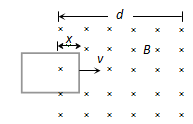
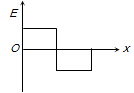
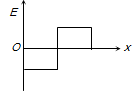
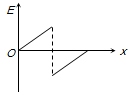
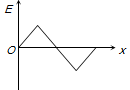
A rectangular loop is being pulled at a constant speed v, through a region of certain thickness d, in which a uniform magnetic field B is set up. The graph between position x of the right hand edge of the loop and the induced emf E will be

(a)

(b)

(c)

(d)

What should be the current in a circular coil of radius 5cm to annul  

(a) 0.4 A 

(b) 4 A

(c) 40 A   

(d) 1 A

The radius of a wavefront as the waves propagate:

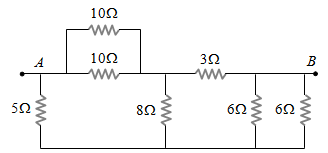
Seven resistances are connected as shown in the figure.  The equivalent resistance between A and B is

(a) 3 W

(b) 4 W

(c) 4.5 W 

(d) 5 W

In a p-n junction:
  1. New holes and conduction electrons are produced continuously throughout the material.
  2. New holes and conduction electrons are produced continuously throughout the material except in the depletion region.
  3. Holes and conduction electrons recombine continuously throughout the material.
  4. Holes and conduction electrons recombine continuously throughout the material except in the depletion region.
The average binding energy per nucleon is maximum for the nucleus:

When the accelerating voltage applied on the electrons increased beyond a critical value

(a) Only the intensity of the various wavelengths is increased

(b) Only the wavelength of characteristic relation is affected

(c) The spectrum of white radiation is unaffected

(d) The intensities of characteristic lines relative to the white spectrum are increased but there is no change in their wavelength

In the above question, potential difference across the 40Ω resistance will be

(a) Zero

(b) 80 V

(c) 40 V

(d) 120 V