Question
Solve for $x, \frac{3 x-5}{17}+\left[\frac{11-x}{76}-\frac{3}{4}\right]=\frac{4+x}{2}-13$.
Answer

We have, $\frac{3 x-5}{17}+\left[\frac{11-x}{76}-\frac{3}{4}\right]=\frac{4+x}{2}-13$
$\Rightarrow \quad \frac{3 x}{17}-\frac{5}{17}+\frac{11}{76}-\frac{x}{76}-\frac{3}{4}=2+\frac{x}{2}-13$
$\Rightarrow \quad \frac{3 x}{17}-\frac{x}{76}-\frac{x}{2}=-11+\frac{5}{17}-\frac{11}{76}+\frac{3}{4}$
$\Rightarrow \frac{456 x-34 x-1292 x}{2584}=\frac{-56848+1520-748+3876}{5168}$
$\Rightarrow \quad \frac{456 x-1326 x}{2584}=-\frac{52200}{5168}$
$\Rightarrow \quad \frac{-870 x}{2584}=\frac{-52200}{5168}$
$\Rightarrow \quad x=\frac{-52200}{5168} \times\left(\frac{-2584}{870}\right)$
$=\frac{60}{2}=30$

Need a full question paper?

Generate a complete, print-ready paper with questions like this in minutes — across 16+ boards, with answer keys.

Start Generating Free

Similar questions

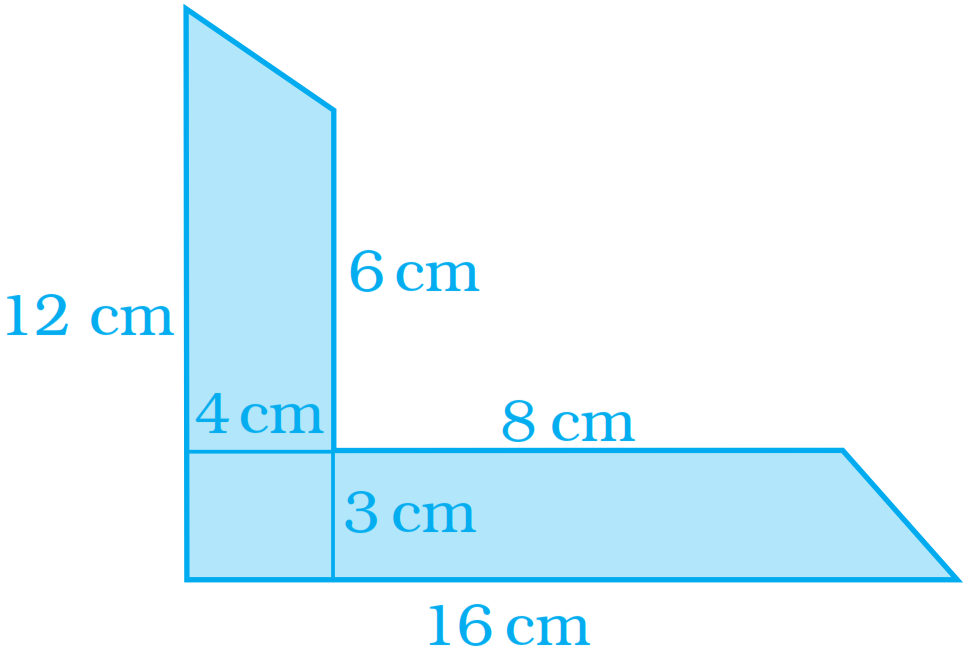
Find the area of the shaded portion in the following figures.
Divide the first polynomial by the second polynomial in the following. Also write the quotient and remainder: $\frac{3\text{x}^2+4\text{x}+5}{\text{x}-2}$
The cells of a bacteria double in every 30 min . A scientist begins with a single cell.
(i) How many cells will be there after
(a) 10 h ? $\qquad$ (b) 25 h ?
(ii) What type of value is depicted by the cells of bacteria?
Construct a quadrilateral $ABCD,$ when $AB = 3\ cm, CD = 3\ cm, DA = 7.5\ cm, AC = 8\ cm$ and $BD = 4\ cm.$
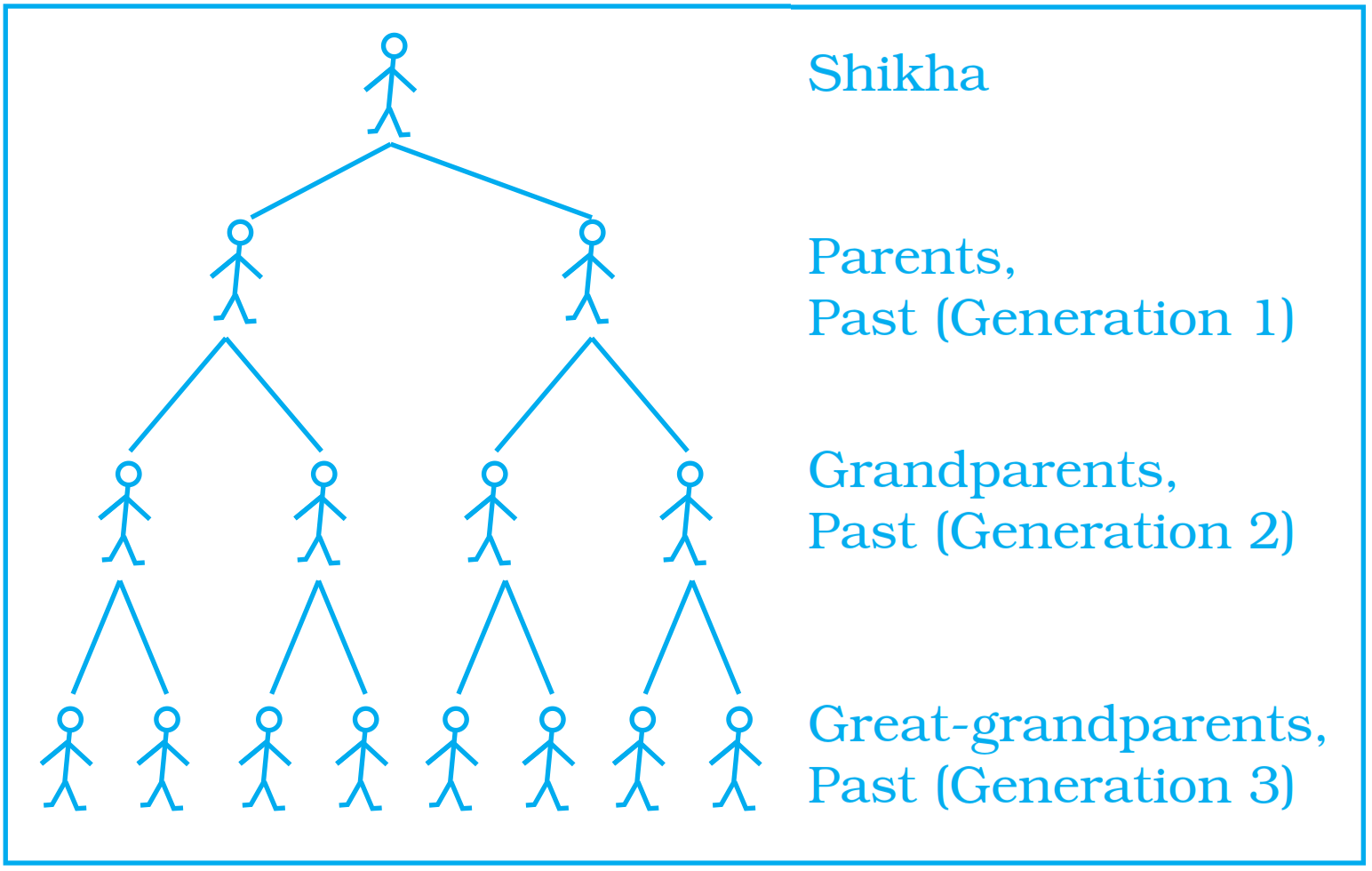
While studying her family’s history. Shikha discovers records of ancestors $12$ generations back. She wonders how many ancestors she has had in the past $12$ generations. She starts to make a diagram to help her figure this out. The diagram soon becomes very complex.

$a.$ Make a table and a graph showing the number of ancestors in each of the $12$ generations.
$b.$ Write an equation for the number of ancestors in a given generation $n.$
Find the surface area of a cuboid whose:
Length $= 2m,$ breadth $= 4m$ and height $= 5m.$
Find the area of a trapezium whose parallel sides are $38.7\ cm$ and $22.3\ cm$, and the distance between them is $16\ cm$.
The curved surface area of a cylinder is $2\pi(\text{y}^2-7\text{y}+12)$ and its radius is $(y - 3)$. Find the height of the cylinder $(C.S.A$. of cylinder = $2\pi\text{rh}$).
An electric pole, $14$ metres high, casts a shadow of $10$ metres. Find the height of a tree that casts a shadow of $15$ metres under similar conditions.
Find following product:
$ 5 x^2 \times 4 x^3 $