MCQ
Some charge is being given to a conductor. Then its potential:
- Ais maximum somewhere between surface and centre.
- Bis maximum at surface.
- Cis maximum at centre.
- Dremains same throughout the conductor.
Explanation:
Given that some charge is given to a conductor then the whole charge is distributed over its surface only. Inside of conductor, electric field is zero whereas potential is same as on the surface. Hence, throughout the conductor, potential is same i.e, the whole conductor is equipotential.
Generate a complete, print-ready paper with questions like this in minutes — across 16+ boards, with answer keys.
Light waves producing interference have their amplitudes in the ratio 3 : 2. The intensity ratio of maximum and minimum of interference fringes is
|
(a) 36 : 1 |
(b) 9 : 4 |
(c) 25 : 1 |
(d) 6 : 4 |
Magnification of an optical instrument is expressed in:
A beam of parallel rays is brought to a focus by a plano-convex lens. A thin concave lens of the same focal length is joined to the first lens. The effect of this is
|
(a) The focal point shifts away from the lens by a small distance |
|
(b) The focus remains undisturbed |
|
(c) The focus shifts to infinity |
|
(d) The focal point shifts towards the lens by a small distance |
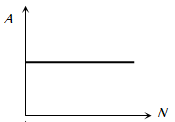
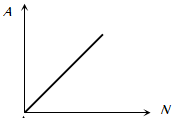
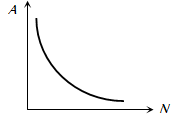
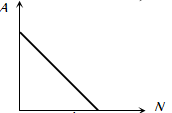
The curve between the activity A of a radioactive sample and the number of active atoms N is
|
(a)
|
(b)
|
(c)
|
(d)
|
Polarised glass is used in sun glasses because
|
(a) It reduces the light intensity to half an account of polarisation |
|
(b) It is fashionable |
|
(c) It has good colour |
|
(d) It is cheaper |

The materials suitable for making electromagnets should have
|
(a) High retentivity and high coercivity |
(b) Low retentivity and low coercivity |
|
(c) High retentivity and low coercivity |
(d) Low retentivity and high coercivity |