Question
Suppose an attractive nuclear force acts between two protons which may be written as $\text{F}=\text{Ce}^{-\text{kr}}/\text{r}^2.$
  1. Write down the dimensional formulae and appropriate SI units of C and k.
  2. Suppose that k = 1 fermi-1 and that the repulsive electric force between the protons is just balanced by the attractive nuclear force when the separation is 5 fermi. Find the value of C.
Answer

Expression of electrical force $\text{F}=\text{C}\times\text{e}^{\frac{-\text{kr}}{\text{r}^2}}$
Since e-kr is a pure number. So, dimensional formulae of $\text{F}=\frac{\text{dimensional formulae of C}}{\text{dimensional formulae of r}^2}$
Or, $\big[\text{MLT}^{-2}\big]\big[\text{L}^2\big]=$ dimensional formulae of $\text{C}=\big[\text{ML}^3\text{T}^{-2}\big]$
Unit of C = unit of force × unit of r2 = Newton × m2 = Newton-m2
Since -kr is a number hence dimensional formulae of
$\text{k}=\frac{1}{\text{dim entional formulae of r}}=\big[\text{L}^{-1}\big]$ Unit of k = m-1

Need a full question paper?

Generate a complete, print-ready paper with questions like this in minutes — across 16+ boards, with answer keys.

Start Generating Free

Similar questions

Two charged particles, having equal charges of 2.0 × 10-5C each, are brought from infinity to within a separation of 10cm. Find the increase in the electric potential energy during the process.
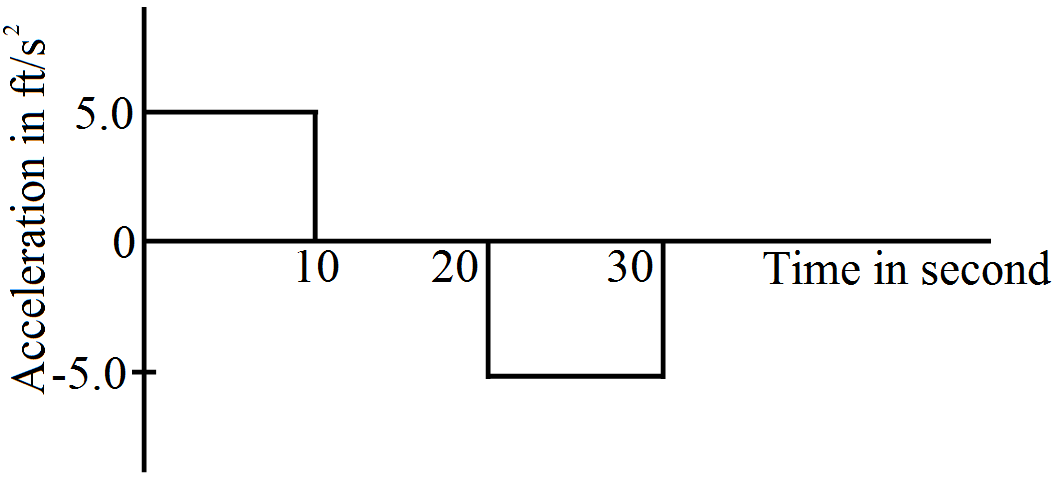
The acceleration of a cart started at t = 0, varies with time as shown in figure. Find the distance travelled in 30 seconds and draw the position-time graph.

When charcoal is prepared from a living tree, it shows a disintegration rate of 15.3 disintegrations of 14C per gram per minute. A sample from an ancient piece of charcoal shows 14C activity to be 12.3 disintegrations per gram per minute. How old is this sample? Half-life of 14C is 5730y.
Derive $\frac{n_1}{-u}+\frac{n_2}{v}=\frac{n_2-n_1}{ R }$ for refraction at a spherical surface.
Consider the situation of the previous question from a frame moving with a speed v0 parallel to the initial velocity of the block.
  1. What are the initial and final kinetic energies?
  2. What is the work done by the kinetic friction?
Explain how resistance of conductor depends on the dimension of the conductor and derive its equation.
A 100W bulb has tungsten filament of total length 1.0m and radius 4 × 10-5m. The emissivity of the filament is 0.8 and $\sigma=6.0\times10^{-8}\text{Wm}^{-2}\text{K}^4.$ Calculate the temperature of the filament when the bulb is operating at correct wattage.
A wave pulse is travelling on a string with a speed v towards the positive X-axis. The shape of the string at t = 0 is given by $\text{g(x)}=\text{A}\sin\big(\frac{\text{x}}{\text{a}}\big),$ where A and a are constants.
  1. What are the dimensions ot A and a?
  2. Write the equation of the wave for a general time t, if the wave speed is v.
It is said that any charge given to a conductor comes to its surface. Should all the protons come to the surface? Should all the electrons come to the surface? Should all the free electrons come to the surface?
To increase the current sensitivity of a moving coil galvanometer by 50%, its resistance is increased so that the new resistance becomes twice its initial resistance. By what factor does its voltage sensitivity change?