MCQ
Suppose the earth suddenly stops attracting objects placed near surface. A person standing on the surface of the earth will:
- ✓Remain standing.
- BFly up.
- CSink into earth.
- DEither $(b)$ or $(c).$
Generate a complete, print-ready paper with questions like this in minutes — across 16+ boards, with answer keys.
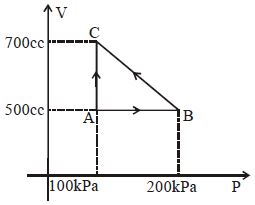
| Physical Quantity | Least count of the Equipment used for measurement | Observed value |
| Mass $({M})$ | $1\; {g}$ | $2\; {kg}$ |
| Length of bar $(L)$ | $1\; {mm}$ | $1 \;{m}$ |
| Breadth of bar $(b)$ | $0.1\; {mm}$ | $4\; {cm}$ |
| Thickness of bar $(d)$ | $0.01\; {mm}$ | $0.4 \;{cm}$ |
| Depression $(\delta)$ | $0.01\; {mm}$ | $5 \;{mm}$ |
Then the fractional error in the measurement of ${Y}$ is
$(A)$ $A$ lives closer to the school
$(B)$ $B$ lives closer to the school
$(C)$ $A$ takes lesser time to reach home
$(D)$ $A$ travels faster than $B$
$(E)$ $B$ travels faster than $A$
Choose the correct answer from the options given below :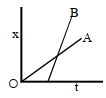
$Statement$ $(I)$ : Planck's constant and angular momentum have same dimensions.
$Statement$ $(II)$ : Linear momentum and moment of force have same dimensions.
In the light of the above statements, choose the correct answer from the options given below :