Question
  1. Taking example of a small pond, explain how the four components of an ecosystem function as a unit.
  2. Name the type of food chain that exist in a pond.

Answer

  1. The four component in an ecosystem functions as unit as follows:
  1. Productivity: This is represented by the autotrophic phytoplanktons same algae and the floating and marginal plants found at the edges.

  2. Energy flow: Represented by water in the pond with all the dissolved organic and inorganic substances, the solar energy and other climate conditions that regulate the rate of function of the pond. The consumers are represented by the 200 planktons and bottom dwelling forms.

  3. Decompositions: The decomposers are the fungi bacteria and flagellates abundant at the bottom of the pond.

  4. Nutrient cycling: The pond ecosystem converts inorganic material into organic material using solar energy by the autotrophs. The autotrophs are eaten up by hetrotrophs, decomposition and mineralisation of dead matter for resuse by autotrophy is done by decomposers.

  1. Grazing food chain exists in a pond.

Need a full question paper?

Generate a complete, print-ready paper with questions like this in minutes — across 16+ boards, with answer keys.
Start Generating Free

Similar questions

Answer the following questions:
Mention the functions of acrosome and middle piece.
What is the mechanism by which the AIDS virus causes deficiency of immune system of the infected person?
Read the following and answer any four questions from (i) to (v) given below:

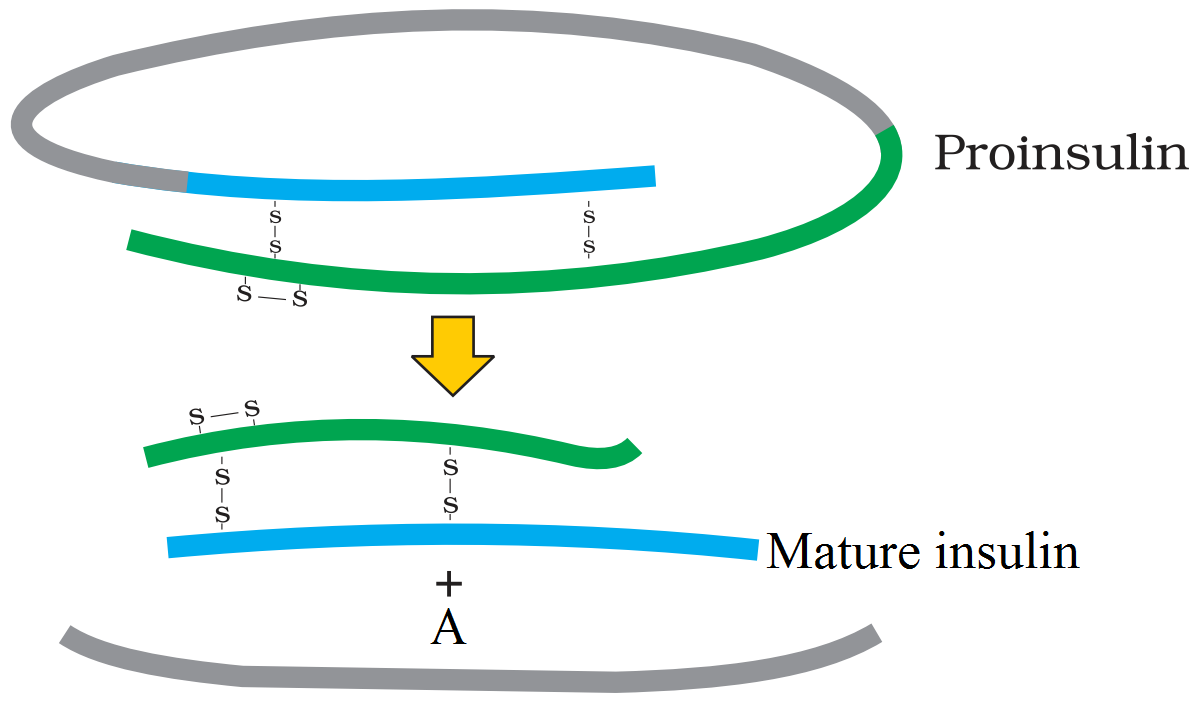
Insulin used to cure diabetes was earlier extracted from pancreas of slaughtered cattle and pigs. Insulin extracted from an animal source, though caused some patients to develop allergy or other types of reactions to the foreign protein. Human insulin consists of two short polypeptide chains : chain A and chain B, that are linked together by disulphide bridges. In mammals including humans, insulin is synthesised as a pro-hormone which contains an extra stretch called the C-peptide. This C peptide is not present in mature insulin and is removed during maturation into insulin.

  1. Identify A in the given figure.

  1. Polypeptide chain A.
  2. Polypeptide chain B.
  3. Polypeptide chain C.
  4. None of these.
  1. The following is a list of some stages involved in producing human insulin from genetically engineered bacteria.
  1. The bacteria are cultured in a fermenter for large scale production.
  2. Recombinant insulin is extracted from the bacterial cells that expresses insulin gene.
  3. The same restriction enzyme is used again to cut the bacterial plasmid for insertion of the human insulin gene.
  4. Bacteria take up the plasmid carrying the insulin gene.
  5. A restriction enzyme is used to cut human DNA to extract the insulin gene.

Select the correct order of these stages.

  1.  1, 5, 3, 4, 2
  2. 2, 4, 3, 5, 1
  3. 4, 5, 3, 2, 1
  4. 5, 3, 4, 1, 2
  1. To insert the insulin gene into bacterial DNA, both the bacterial plasmid and the human chromosome containing the insulin gene are treated with the same restriction enzyme. Using the same restriction enzyme ensures that
  1. DNA ligase is able to join the segments of human and bacterial DNA.
  2. The exact length of nucleotides matching the insulin gene is removed from the plasmid.
  3. Both the bacterial and human DNA will contain sticky ends.
  4. Sticky ends in the cut plasmid and insulin gene are complementary.
  1. Why is the fermentor important for the production of human insulin by transgenic bacteria?
  1. It provides optimal conditions for the transgenic to multiply rapidly.
  2. It facilitates the extraction and purification of insulin from the transgenic bacteria.
  3. It maximise the rate of fermentation of the transgenic bacteria.
  4. It provides the low-oxygen conditions that are important for insulin production.
  1. A bacteriologist carries out his first attempt at engineering E.coli with the gene for human insulin. During the process, he realises that his stock of DNA ligase has depleted but decides to continue anyway. What is a likely consequence of his decision?
  1. Bacteria with the rDNA will not be able to form colonies in a fermenter.
  2. The resulting plasmids are not able to enter the E.coli bacteria even after applying heat shock.
  3. The resulting E.coli bacteria do not contain the human insulin gene.
  4. The bacterial plasmids do not have sticky ends and are unable to accommodate the human gene.
  1. How does a chromosomal disorder differ from a Mendelian disorder?
  2. Name any two chromosomal aberration associated disorders.
  3. List the characteristics of the disorders mentioned above that help in their diagnosis.
Which statement among the following are true and which are false :
  1. Describe the characteristics a cloning vector must possess.
  2. Why DNA cannot pass through the cell membrane? Explain. How is a bacterial cell made ‘competent’ to take up recombinant DNA from the medium?
Answer the following questions:
Four children with four different blood groups are born to parents where the mother has blood group ‘A’ and the father has blood group ‘B’. Work out the cross to show the genotypes of the parents and all four children.
What is opioid drug. Write the chemical name of smack. From which plant is smack obtained. Draw the structure of cannabinoid molecule.
What is meant by R cells and S cells with which Frederick Griffith carried out this experiments on Streptococcus pneumoniae? What did he prove from these experiments?
"Plasmid is the boon to Biotechnology'. Justify the statement quotaing the production of human insulin as an example.###How did an American Company Eli Lilly use the knowldege of DNA technology to produced human insulin?