Question
The continuous X-rays spectrum produced by an X-ray machine at constant voltage has
| (a) A maximum wavelength | (b) A minimum wavelength |
|
(c) A single wavelength |
(d) A minimum frequency |
The continuous X-rays spectrum produced by an X-ray machine at constant voltage has
| (a) A maximum wavelength | (b) A minimum wavelength |
|
(c) A single wavelength |
(d) A minimum frequency |
(b) A minimum wavelength
Generate a complete, print-ready paper with questions like this in minutes — across 16+ boards, with answer keys.
If potential V = 100 ± 0.5 Volt and current I = 10 ± 0.2 amp are given to us. Then what will be the value of resistance
|
(a) 10 ± 0.7 ohm |
(b) 5 ± 2 ohm |
(c) 0.1 ± 0.2 ohm |
(d) None of these |
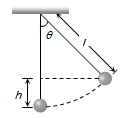
A simple pendulum with bob of mass m and conducting wire of length L swings under gravity through an angle 2θ. The earth’s magnetic field component in the direction perpendicular to swing is B. Maximum potential difference induced across the pendulum is
|
(a) 2BL sin |
(b) BL sin |
|
(c) BL sin |
(d) 2BL sin |
To produce magnified erect image of a far object, we will be required along with a convex lens, is
|
(a) Another convex lens |
(b) Concave lens |
(c) A plane mirror |
(d) A concave mirror |
A point source of light is placed at a distance, of 2f from a converging lens of focal length f. The intensity on the other side of the lens is maximum at a distance:
By ammeter, which of the following can be measured
|
(a) Electric potential |
(b) Potential difference |
(c) Current |
(d) Resistance |
A NPN transistor conducts when
|
(a) Both collector and emitter are positive with respect to the base |
|
(b) Collector is positive and emitter is negative with respect to the base |
|
(c) Collector is positive and emitter is at same potential as the base |
|
(d) Both collector and emitter are negative with respect to the base |