MCQ
The correct geometry and hybridization for $XeF_4$ are
  • octahedral, $sp^3 d^2$
  • B
    trigonal bipyramidal, $sp^3 d$
  • C
    planar triangle, $sp^3d^3$
  • D
    square planar, $sp^3d^2$

Answer

Correct option: A.
octahedral, $sp^3 d^2$
a
$\mathrm{XeF}_{4},$ has octahedral geometry where hybridization of $\mathrm{Xe}$ is $s p^{3} d^{2}$

Need a full question paper?

Generate a complete, print-ready paper with questions like this in minutes — across 16+ boards, with answer keys.

Start Generating Free

Similar questions

Which of the following has maximum mass
The size of the iso-electronic species $Cl^-$ , $Ar$ and $Ca^{2+}$ is affected by
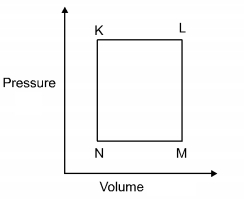
A fixed mass ' $m$ ' of a gas is subjected to transormation of states from $K$ to $L$ to $M$ to $N$ and back to $K$ as shown$Image$

$1.$ The succeeding operations that enable this transformation of states are

$(A)$ Heating, cooling, heating, cooling

$(B)$ Cooling, heating, cooling, heating

$(C)$ Heating, cooling, cooling, heating

$(D)$ Cooling, heating, heating, cooling

$2.$ The pair of isochoric processes among the transormation of states is

$(A)$ $K$ to $L$ and $L$ to $M$

$(B)$ $L$ to $M$ and $N$ to $K$

$(C)$ $L$ to $M$ and $M$ to $N$

$(D)$ $M$ to $N$ and $N$ to $K$

Give the answer question $1$ and $2.$
Two elements whose electronegativities are $1.2$ and $3.0$ the bond formed between them would be
Which of the following is not correctly matched :
Which of the following conditions regarding a chemical process ensures its spontaneity at all temperature ?
Which statement is correct about $CO_2$. If central atom use $s + P_x$ orbitals in hybridisation
$(i)$ $\pi $ bond will be formed by $P_Y$ and $P_Z$
$(ii)$ molecule can be in $XY$ plane
$(iii)$ molecule can be in $XZ$ plane
$(iv)$ molecule can be in infinite plane
$(v)$ molecule can be in $YZ$ plane
Correct code is
The geometry of ethyne molecule is:
How many $g$ of a dibasic acid (Mol. wt. $= 200$) should be present in $100 \,ml$ of its aqueous solution to give decinormal strength ............ $\mathrm{g}$
The standard electrode potential of $M ^{+} / M$ in aqueous solution does not depend on