MCQ
The de-Broglie wavelength associated with a hydrogen molecule moving with a thermal velocity of $3 \mathrm{~km} / \mathrm{s}$ will be
  • A
    $1 \mathring A$
  • $0.66 \mathring A$
  • C
    $6.6 \mathring A$
  • D
    $66 \mathring A$

Answer

Correct option: B.
$0.66 \mathring A$
$\lambda=\frac{h}{m v_{m s}} \Rightarrow \lambda=\frac{6.6 \times 10^{-34}}{2 \times 1.67 \times 10^{-27} \times 3 \times 10^3}=0.66 \mathring A$

Need a full question paper?

Generate a complete, print-ready paper with questions like this in minutes — across 16+ boards, with answer keys.
Start Generating Free

Similar questions

A particle moves under the effect of a force $F=C x$ from $x=0$ to $x=x_1$. The work done in the process is
A person wears glasses of power $-2.5\ D.$ The defect of the eye and the far point of the person without the glasses are respectively
In the above question, the impulse acting on the object is

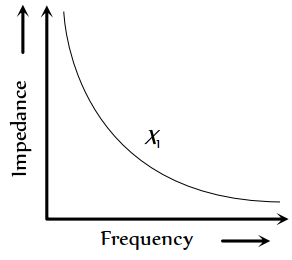
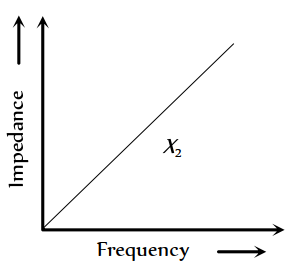
The graphs given below depict the dependence of two reactive impedances $X$ and $X$ on the frequency of the alternating e.m.f. applied individually to them. We can then say that
Image
Image
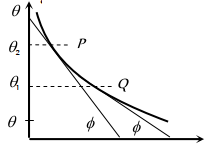
A body cools in a surrounding which is at a constant temperature of $\theta_0$. Assume that it obeys Newton's law of cooling. Its temperature $\theta$ is plotted against time $t$. Tangents are drawn to the curve at the points $P\left(\theta=\theta_1\right)$ and $Q\left(\theta=\theta_2\right)$. These tangents meet the time axis at angles of $\phi_2$ and $\phi_1$, as shown
Image
The average force necessary to stop a bullet of mass $20 g$ moving with a speed of $250 m / s$, as it penetrates into the wood for a distance of $12 cm$ is
A ball $P$ is dropped vertically and another ball $Q$ is thrown horizontally with the same velocities from the same height and at the same time. If air resistance is neglected, then
With the propagation of a longitudinal wave through a material medium, the quantities transmitted in the propagation direction are
A body is executing Simple Harmonic Motion. At a displacement $x$ its potential energy is $E_1$ and at a displacement $y$ its potential energy is $E_2$. The potential energy $E$ at displacement $(x+y)$ is
One mole of an ideal monoatomic gas is heated at a constant pressure of one atmosphere from $0^{\circ} \mathrm{C}$ to $100^{\circ} \mathrm{C}$. Then the change in the internal energy is