MCQ
The enzymes act between the temperature range of:
  • A
    35 - 40 degrees
  • B
    30 - 35 degrees
  • C
    40 - 45 degrees
  • D
    50 degrees and above

Answer

  1. 35 - 40 degrees

Explanation:

Enzymes are biological catalysts which accelerate chemical reactions in organisms.

Optimum temperature is the temperature at which enzyme activity is maximum.

In humans, this temperature is 37.5°C that is same as the normal body temperature.

A rise in temperature above 40°C results in denaturation of the proteins of enzyme.

Most enzymes in humans act between the temperature range of

Need a full question paper?

Generate a complete, print-ready paper with questions like this in minutes — across 16+ boards, with answer keys.

Start Generating Free

Similar questions

How much amount of $\mathrm{NaCl}$ should be added to $600\; \mathrm{g}$ of water $(\rho=1.00\; \mathrm{g} / \mathrm{mL})$ to decrease the freezing point of water to $-0.2^{\circ} \mathrm{C} ?$ ............. $\mathrm{gm}$

(The freezing point depression constant for water $=2\; \mathrm{K}\; \mathrm{kg} \;\mathrm{mol}^{-1}$ )

In which one of the following the central atom is sp3 hydridised?
For the reaction $A + B \to $products, doubling the concentration of $A$ the rate of the reaction is doubled, but on doubling the concentration of $B$ rate remains unaltered. The over all order of the reaction is
General electronic configuration of actionoids is $\text{(n}-2)\text{f}^{1-14}\text{(n}-1)\text{d}^{0-2}\text{ns}^2$.Which of the following actinoids have one electron in 6d orbital?
When initial concentration of a reactant is doubled in a reaction, its half-life period is not affected. The order of the reaction is
Match each of the reactions given in Column $I$ with the corresponding product$(s)$ given in Column $II$.
Column $I$ Column $II$
$(A)$ $\mathrm{Cu}+$ dil $\mathrm{HNO}_3$ $(p)$ NO
$(B)$ $\mathrm{Cu}+$ conc $\mathrm{HNO}_3$ $(q)$ $\mathrm{NO}_2$
$(C)$ $\mathrm{Zn}+$ dil $\mathrm{HNO}_3$ $(r)$ $\mathrm{N}_2 \mathrm{O}$
$(D)$ $\mathrm{Zn}+$ conc $\mathrm{HNO}_3$ $(s)$ $\mathrm{Cu}\left(\mathrm{NO}_3\right)_2$
  $(t)$ $ \mathrm{Zn}\left(\mathrm{NO}_3\right)_2$
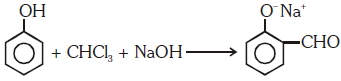
In the reaction the electrophile involved is
Which is most reactive halide towards ${{S}_{{{N}^{1}}}}$ reaction
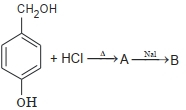
In the above reaction product $B$ is:
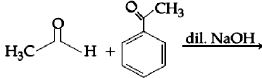
The major product formed in the following reaction is