MCQ
The following equations represent progressive transverse waves $ Z_1=A \cos (\omega t-k x), Z_2=A \cos (\omega t+k x) \text {, } Z_3=A \cos (\omega t+k y)$ and $Z_4=A \cos (2 \omega t-2 k y)$. A stationary wave will be formed by superposing
  • $Z_1$ and $Z_2$
  • B
    $Z_1$ and $Z_4$
  • C
    $Z_2$ and $Z_3$
  • D
    $Z_3$ and $Z_4$

Answer

Correct option: A.
$Z_1$ and $Z_2$
When two waves of equal frequency and travelling in opposite direction superimpose, then the stationary wave is produced. Hence $Z$ and $Z$ produces stationary wave.

Need a full question paper?

Generate a complete, print-ready paper with questions like this in minutes — across 16+ boards, with answer keys.

Start Generating Free

Similar questions

The image formed by a convex mirror of focal length $30 \mathrm{~cm}$ is a quarter of the size of the object. The distance of the object from the mirror is
A plano convex lens is made of glass of refractive index $1.5.$ The radius of curvature of its convex surface is $R$. lts focal length is
When light rays from the sun fall on a convex lens along a direction parallel to its axis
Liquid is filled in a vessel which is kept in a room with temperature $20^{\circ} \mathrm{C}$. When the temperature of the liquid is $80^{\circ} \mathrm{C}$, then it loses heat at the rate of $60 \mathrm{cal} / \mathrm{sec}$. What will be the rate of loss of heat when the temperature of the liquid is $40^{\circ} \mathrm{C}$
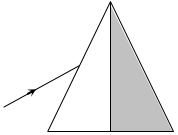
A light ray is incident upon a prism in minimum deviation position and suffers a deviation of $34^{\circ}$. If the shaded half of the prism is knocked off, the ray will
Image
Which of the following has negative temperature coefficient of resistance
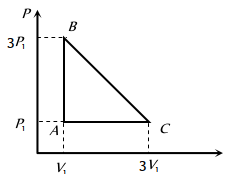
An ideal gas is taken around the cycle $A B C A$ as shown in the $P-V$ diagram. The net work done by the gas during the cycle is equal to
Image
A house is served by $220 V$ supply line in a circuit protected by a 9 ampere fuse. The maximum number of $60 W$ lamps in parallel that can be turned on, is
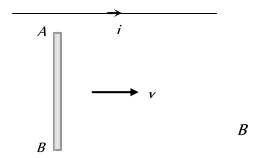
The current carrying wire and the $\operatorname{rod} A B$ are in the same plane. The rod moves parallel to the wire with a velocity $v$. Which one of the following statements is true about induced emf in the rod

Image

To convert a galvanometer into a ammeter, one needs to connect a