MCQ
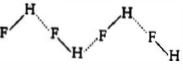
The $H-$ bonds in solid $HF$ can be best represented as
- A$H-F-H-F-H-F$
- B
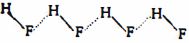
- ✓
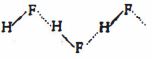
- D
Generate a complete, print-ready paper with questions like this in minutes — across 16+ boards, with answer keys.
$I$. Valence bond theory cannot explain the color exhibited by transition metal complexes
$II$. Valence bond theory can predict quantitatively the magnetic properties of transition metal complexes
$III$. Valence bond theory cannot distinguish ligands as weak and strong field ones
$A$ is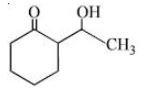
| Complexes | No. of unpaired electron | ||
| $A$ | $[CrF_6]^{-4}$ | $P$ | $5$ |
| $B$ | $[MnF_6]^{-4}$ | $Q$ | $2$ |
| $C$ | $[Cr(CN)_6]^{-4}$ | $R$ | $1$ |
| $D$ | $[Mn(CN)_6]^{-4}$ | $S$ | $4$ |
when attached to $sp^3$ hybridised carbon, their leaving group ability in nucleophilic substitution reaction decrease in the order.