MCQ
The pair having similar geometry is
- A$PC{l_3},\;N{H_3}$
- B$BeC{l_2},\;{H_2}O$
- C$C{H_4},CC{l_4}$
- ✓$IF_5, PF_5$
$C{H_4},\;CC{l_4} \to $ Tetrahedral.
Generate a complete, print-ready paper with questions like this in minutes — across 16+ boards, with answer keys.
$(A)$ The compound is optically active
$(B)$ The compound possesses centre of symmetry
$(C)$ The compound possesses plane of symmetry
$(D)$ The compound possesses axis of symmetry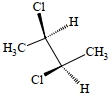
$(a)$ $Be _{2} C$
$(b)$ $CaC _{2}$
$(c)$ $Mg _{2} C _{3}$
$(d)$ $Al _{4} C _{3}$
$(A)$ The total number of stereoisomers possible for ${X}$ is $6$
$(B)$ The total number of diastereomers possible for ${X}$ is $3$
$(C)$ If the stereochemistry about the double bond in ${X}$ is trans, the number of enantiomers possible for ${X}$ is $4$
$(D)$ If the stereochemistry about the double bond in ${X}$ is cis, the number of enantiomers possible for ${X}$ is $2$
$(a)$ $AgF$ is soluble and colourless is aqueous medium
$(b)$ For $LiF$ solubility and Melting point both are lower as compair to $NaF$
$(c)$ Solubility of $Rb_2SO_4$ is less as compair to $BaSO_4$
$(d)$ If $AgI$ is added to water colour of water will turned yellow from colourless
| List $-I$ (Molecule / Species) | List $-II$ |
| $(P)$ $NO_2$ (Unpaired electron in) | $(1)$ Vacant $p-$ orbital involved in hybridization |
| $(Q)$ $B_2H_6$ | $(2)$ $sp^2-$ orbital |
| $(R)$ $ClO_3$ (Unpaired electron in) | $(3)$ $sp^3-$orbital |
| $(S)$ $CH_3^+$ | $(4)$ $120^o$ Bond angle |