MCQ
The photoelectric effect proves that light consists of :
- APhotons
- BElectrons
- CElectromagnetic waves
- DMechanical waves
Explanation:
It's been determined experimentally that when light shines on a metal surface, the surface emits electrons. For example, you can start a current in a circuit just by shining a light on a metal plate. we were saying earlier that light is made up of electromagnetic waves, and that the waves carry energy. So if a wave of light hit an electron in one of the atoms in the metal, it might transfer enough energy to knock the electron out of its atom. Light has sometimes been viewed as a particle (photon) rather than a wave. If it's waves, the energy contained in one of those waves should depend only on its amplitude--that is, on the intensity of the light.
Generate a complete, print-ready paper with questions like this in minutes — across 16+ boards, with answer keys.
Two unlike charges of magnitude q are separated by a distance 2d. The potential at a point midway between them is
|
(a) Zero |
(b) |
(c) |
(d) |
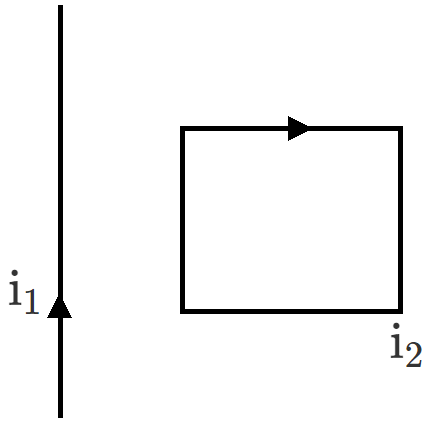
A current of 1 ampere is passed through a straight wire of length 2.0 metres. The magnetic field at a point in air at a distance of 3 metres from either end of wire and lying on the axis of wire will be
|
(a) |
(b) |
(c) |
(d) Zero |
The amplification factor of a triode valve is 15. If the grid voltage is changed by 0.3 volt the change in plate voltage in order to keep the plate current constant (in volt) is
|
(a) 0.02 |
(b) 0.002 |
(c) 4.5 |
(d) 5.0 |
Bonding in a germanium crystal (semi- conductor) is
| (a) Metallic | (b) Ionic |
(c) Vander Waal's type |
(d) Covalent |
Assertion : The electrical conductivity of earth’s atmosphere decrease with altitude.
Reason : The high energy particles (i.e. g-rays and cosmic rays) coming from outer space and entering our earth’s atmosphere causes ionisation of the atoms of the gases present there and the pressure of gases decreases with increase in altitude.
|
(a) If both assertion and reason are true and the reason is the correct explanation of the assertion. |
|
(b) If both assertion and reason are true but reason is not the correct explanation of the assertion. |
|
(c) If assertion is true but reason is false. |
|
(d) If assertion is false but reason is true. |


