MCQ
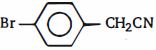
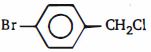
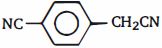
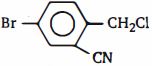
The product obtained from the reaction is

  • B

  • C

  • D

Answer

Correct option: A.

a
$(a)$ Because of double bond character in carbon-bromine it will not undergo $S_{N^2}$ .

Need a full question paper?

Generate a complete, print-ready paper with questions like this in minutes — across 16+ boards, with answer keys.

Start Generating Free

Similar questions

Using the data given below find out the strongest reducing agent. $\text{E}^\ominus_{\text{cr}_2\text{O}^{2-}_7/\text{cr}^{3+}}=1.33\text{V}\ \ \ \text{E}^\ominus_{\text{Cl}_2/\text{Cl}^-}=1.36\text{V}$ $\text{E}^\ominus_{\text{MnO}^-_4/\text{Mn}^{2+}}=1.51\text{V}\ \ \ \ \text{E}^\ominus_{\text{Cr}^{3+}/\text{Cr}}=-0.74\text{V}$
Simplified absorption spectra of three complexes $((i),$$( ii)$ and $( iii ))$ of $M ^{ n +}$ ion are provided below; their $\lambda_{\max }$ values are marked as $A, B$ and $C$ respectively. The correct match between the complexes and their $\lambda_{\max }$ values is

$(i)$ $\left[ M ( NCS )_{6}\right]^{(-6+ n )}$

$(ii)$ $\left[ MF _{6}\right]^{(-6+ n )}$

$(iii)$ $\left[ M \left( NH _{3}\right)_{6}\right]^{ n ^{+}}$

Which one of the following statements regarding helium is incorrect
For the reaction ${H_2}(g) + B{r_2}(g) \to 2HBr(g)$, the experimental data suggest, rate $ = K[{H_2}]{[B{r_2}]^{1/2}}$. The molecularity and order of the reaction are respectively
$N{H_3}{\mkern 1mu} {\mkern 1mu}  + {\mkern 1mu} {\mkern 1mu} {O_2}{\mkern 1mu} \xrightarrow[{500K\,}]{{Pt}}{\mkern 1mu} A{\mkern 1mu}  + {\mkern 1mu} {H_2}O$

$A\, + \,{O_2}\, \to \,B\,\,\,;\,\,\,B\, + \,{H_2}O\, \to \,C\, + \,A$

$A\,\,B$ and $C$ respectively are

When glycerine is added to a litre of water which of the following behaviour is observed
$CH _3 COOAg + Br _2 \xrightarrow{ CCl _4} CH _3 Br + CO _2+ AgBr$
The above reaction is :
Among the following the correct statement is:
The carbonyl carbon is:
Secondary alcohol is