MCQ
The sky would appear red instead of blue if
  • A
    Atmospheric particles scatter blue light more than red light
  • B
    Atmospheric particles scatter all colours equally
  • Atmospheric particles scatter red light more than the blue light
  • D
    The sun was much hotter

Answer

Correct option: C.
Atmospheric particles scatter red light more than the blue light
Colour of the sky is highly scattered light (colour).

Need a full question paper?

Generate a complete, print-ready paper with questions like this in minutes — across 16+ boards, with answer keys.

Start Generating Free

Similar questions

Which of the accompanying $P V$, diagrams best represents an isothermal process
Absolute scale of temperature is reproduced in the laboratory by making use of a
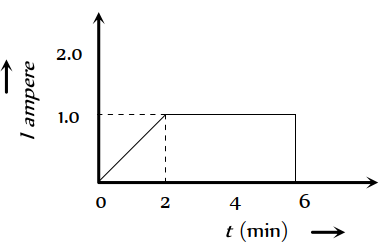
In a copper voltameter, mass deposited in 6 minutes is $m$ gram. If the current-time graph for the voltameter is as shown here, then the E.C.E of the copper is

Image

A uniform plank of Young's modulus $Y$ is moved over a smooth horizontal surface by a constant horizontal force $F$. The area of cross section of the plank is $A$. The compressive strain on the plank in the direction of the force is
A perfect gas goes from state $A$ to another state $B$ by absorbing $8 \times 10^5 J$ of heat and doing $6.5 \times 10^5 J$ of external work. It is now transferred between the same two states in another process in which it absorbs $10^5 \mathrm{~J}$ of heat. Then in the second process
A simple pendulum hangs from the ceiling of a car. If the car accelerates with a uniform acceleration, the frequency of the simple pendulum will
A container that suits the occurrence of an isothermal process should be made of
A ray passes through a prism of angle $60^{\circ}$ in minimum deviation position and suffers a deviation of $30^{\circ}$. What is the angle of incidence on the prism
In an isochoric process if $T_1=27^{\circ} \mathrm{C}$ and $T_2=127^{\circ} \mathrm{C}$, then $P_1 / P_2$ will be equal to
A force $\vec{F}=(5 \hat{i}+3 \hat{j}) N$ is applied over a particle which displaces it from its original position to the point $\vec{s}=(2 \hat{i}-1 \hat{j}) m$. The work done on the particle is