MCQ
The stopping potential $(v_0)$
  • A
    Depends upon the angle of incident light
  • B
    Depends upon the intensity of incident light
  • C
    Depends upon the surface nature of the substance
  • Is independent of the intensity of the incident light

Answer

Correct option: D.
Is independent of the intensity of the incident light

Need a full question paper?

Generate a complete, print-ready paper with questions like this in minutes — across 16+ boards, with answer keys.
Start Generating Free

Similar questions

The angle of minimum deviation measured with a prism is $30^\circ$ and the angle of prism is $60^\circ .$ The refractive index of prism material is
The unit of mutual conductance of a triode valve is
The wave front due to a source situated at infinity is:
Refraction of light occurs:
A small object is placed 10 cm infront of a plane mirror. If you stand behind the object 30 cm from the mirror and look at its image, the distance focused for your eye will be(a) 60 cm(b) 20 cm(c) 40 cm(d) 80 cm
       
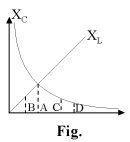
The point representing reso- nant condition in the figure given is:
Image
A pellet carrying charge of 0.5 coulombs is accelerated through a potential of 2,000 volts. It attains  a kinetic energy equal to(a) 1000 ergs(b) 1000 joules(c) 1000 kWh(d) 500 ergs
       
Assertion :   The stars twinkle while the planets do not.
Reason     :  The stars are much bigger in size than the planets.(a) If both assertion and reason are true and the reason is the correct explanation of the assertion.(b) If both assertion and reason are true but reason is not the correct explanation of the assertion.(c) If assertion is true but reason is false.(d) If the assertion and reason both are false.


A straight wire of diameter 0.5 mm carrying a current of 1 A is replaced by another wire of 1 mm diameter carrying the same current. The strength of magnetic field far away is(a) Twice the earlier value(b) Half of the earlier value(c) Quarter of its earlier value(d) Unchanged
   
   
If a copper rod carries a direct current, the magnetic field associated with the current will be(a) Only inside the rod(b) Only outside the rod(c) Both inside and outside the rod(d) Neither inside nor outside the rod