MCQ
The waves which are electromagnetic in nature are:
- ASound waves and light waves
- BWater waves and radio waves
- CLight waves and X-rays
- DSound waves and water waves
Explanation:
Light waves and X-rays are electromagnetic waves.
Generate a complete, print-ready paper with questions like this in minutes — across 16+ boards, with answer keys.
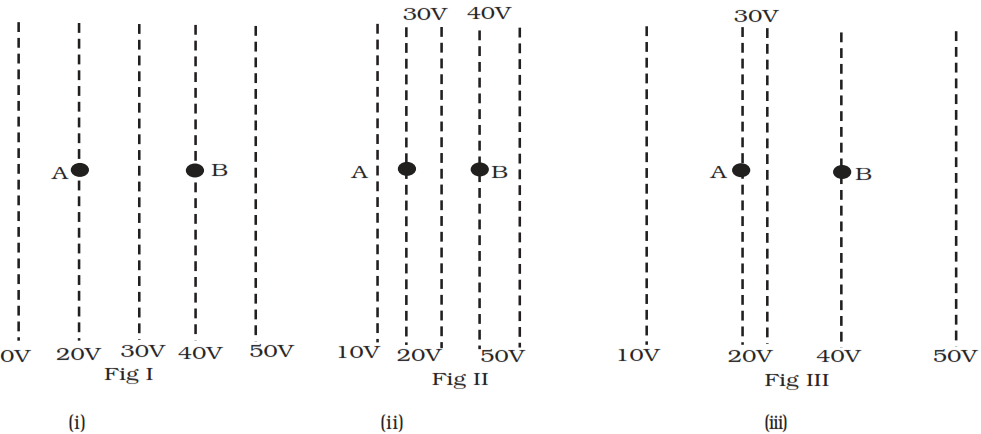
In the shown circuit, what is the potential difference across A and B

|
(a) 50 V |
(b) 45 V |
(c) 30 V |
(d) 20 V |
A charge moving with velocity v in X-direction is subjected to a field of magnetic induction in the negative X-direction. As a result, the charge will
|
(a) Remain unaffected |
|
(b) Start moving in a circular path Y-Z plane |
|
(c) Retard along X-axis |
|
(d) Move along a helical path around X-axis |
The strength of the magnetic field in which the magnet of a vibration magnetometer is oscillating is increased 4 times its original value. The frequency of oscillation would then become
| (a) Twice its original value | (b) Four times its original value |
| (c) Half its original value | (d) One-fourth its original value |
For a colour of light the wavelength for air is 6000 Å and in water the wavelength is 4500 Å. Then the speed of light in water will be
|
(a) 5 |
(b) 2.25 |
(c) 4.0 |
(d) Zero |
$8\ \pi\text{r}^2\text{S}$
$12\ \pi\text{r}^2\text{S}$
$16\ \pi\text{r}^2\text{S}$
$24\ \pi\text{r}^2\text{S}\cdot$


