MCQ
There is a solid sphere of radius $' R\ '$ having uniformly distributed charge. What is the relation between electric field $'E\ ' ($inside the sphere$)$ and radius of sphere $' R\ '$ is
 
  • A
    $E \propto R ^{-2}  $
  • B
    $E \propto R ^{-1} $
  • $E \propto \frac{1}{ R ^3} $
  • D
    $E \propto R ^2$

Answer

Correct option: C.
$E \propto \frac{1}{ R ^3} $

Need a full question paper?

Generate a complete, print-ready paper with questions like this in minutes — across 16+ boards, with answer keys.

Start Generating Free

Similar questions

The half life of radioactive Radon is $3.8$ days. The time at the end of which $1/20 th$ of the Radon sample will remain undecayed is  $($Given $\log_{10} e=0.4343)$
How many spectral lines does hydrogen have?
The charge on electron was discovered by (a) J.J. Thomson(b) Neil Bohr(c) Millikan(d) Chadwick
       
The relative atomic masses of many elements are not whole numbers because:
Two charges $q_1, q_2$ exert some amount of force on each other. What will happen to the force on $q_1$ if another charge $q_3$ is brought close to them?
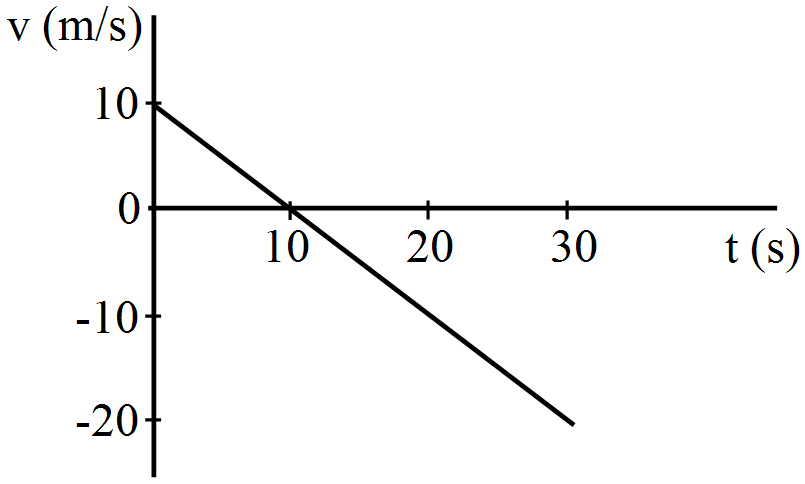
The velocity-time plot for a particle moving on a straight line is shown in the figure:
  1. The particle has a constant acceleration.
  2. The particle has never turned around.
  3. The particle has zero displacement.
  4. The average speed in the interval 0 to 10s is the same as the average speed in the interval 10s to 20s.
Electromagnetic waves travel in a medium which has relative permeability $1.3$ and relative permittivity $2.14.$ Then the speed of the electromagnetic wave in the medium will be
A transistor has three impurity regions. All the three regions have different doping levels. In order of increasing doping level, the regions are:
In a laboratory experiment on emission from atomic hydrogen in a discharge tube, only a small number of lines are observed whereas a large number of lines are present in the hydrogen spectrum of a star. This is because in a laboratory:
  1. The amount of hydrogen taken is much smaller than that present in the star.
  2. The temperature of hydrogen is much smaller than that of the star.
  3. The pressure of hydrogen is much smaller than that of the star.
  4. The gravitational pull is much smaller than that in the star.
A condenser of capacitance 10 μF has been charged to 100 volts. It is now connected to another uncharged condenser in parallel. The common potential becomes 40 volts. The capacitance of another condenser is(a) 15 μF (b) 5 μF(c) 10 μF(d) 16.6 μF