MCQ
Thermoelectric thermometer is based on
  • A
    Photoelectric effect
  • Seeback effect
  • C
    Compton effect
  • D
    Joule effect

Answer

Correct option: B.
Seeback effect
(b) Thermoelectric thermometer is based on Seeback Effect.

Need a full question paper?

Generate a complete, print-ready paper with questions like this in minutes — across 16+ boards, with answer keys.

Start Generating Free

Similar questions

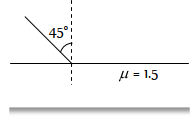
One side of a glass slab is silvered as shown. A ray of light is incident on the other side at angle of incidence $i=45^{\circ}$. Refractive index of glass is given as $1.5.$ The deviation of the ray of light from its initial path when it comes out of the slab isImage
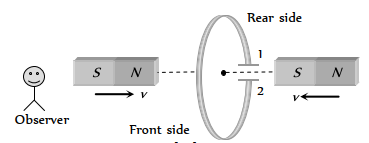
The north and south poles of two identical magnets approac., a coil, containing a condenser, with equal speeds from opposite sides. Then
Image
The mutual characteristic of triode is
A ray of light incidents on a plane mirror at an angle of $30^{\circ}$. The deviation produced in the ray is
An air column in a pipe, which is closed at one end, will be in resonance with a vibrating body of frequency $166 \mathrm{~Hz}$, if the length of the air column is
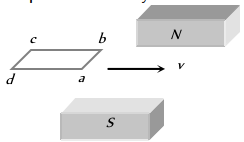
A horizontal loop abcd is moved across the pole pieces of a magnet as shown in fig. with a constant speed $v$. When the edge $a b$ of the loop enters the pole pieces at time $t=0 \mathrm{sec}$. Which one of the following graphs represents correctly the induced emf in the coil
Image
The average force necessary to stop a bullet of mass $20 g$ moving with a speed of $250 m / s$, as it penetrates into the wood for a distance of $12 cm$ is
Magnets cannot be made from which of the following substances
A body has a weight $90 \mathrm{~kg}$ on the earth's surface, the mass of the moon is $1 / 9$ that of the earth's mass and its radius is $1 / 2$ that of the earth's radius. On the moon the weight of the body is
A man can see the objects upto a distance of one metre from his eyes. For correcting his eye sight so that he can see an object at infinity, he requires a lens whose power is or A man can see upto $100 \mathrm{~cm}$ of the distant object. The power of the lens required to see far objects will be